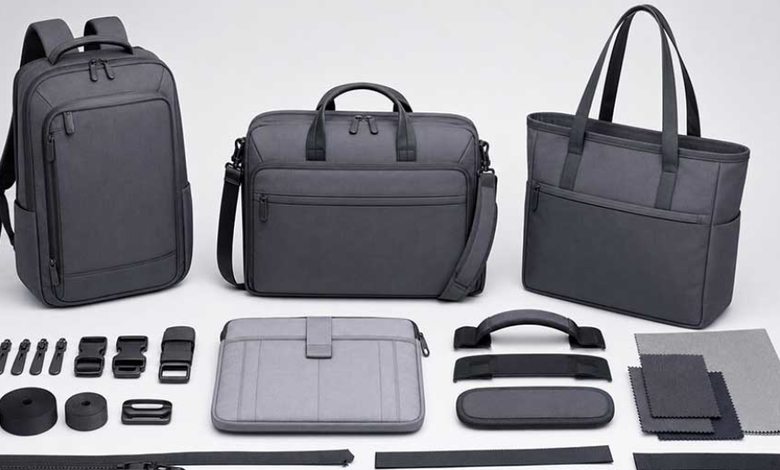
Business backpacks have become a practical alternative to traditional briefcases for professionals who need to carry laptops, documents, chargers, personal items, and travel essentials in a more comfortable format.
For brands developing products for office workers, commuters, business travelers, and corporate programs, a successful business backpack needs to combine professional appearance with reliable everyday performance.
This means product development should consider much more than exterior styling. Materials, laptop protection, internal organization, straps, hardware, reinforcement, manufacturing methods, and quality standards all influence how the finished bag performs.




Start With the Intended User
A business backpack designed for daily commuting may have different priorities from one intended for frequent air travel.
A commuter may value a compact profile, laptop protection, comfortable shoulder straps, water resistance, and organized storage.
A business traveler may additionally need a luggage sleeve, passport storage, quick-access pockets, larger capacity, and stronger handles.
Corporate gift programs may prioritize logo placement, cost efficiency, and consistent appearance across large production quantities.
Brands should therefore define several questions before beginning development:
- Who is the target customer?
- What laptop size should the bag carry?
- Will the backpack be used mainly for commuting or travel?
- How much additional storage is required?
- What level of water resistance is expected?
- Should the design look formal, minimalist, technical, or casual?
- What retail or promotional price range is being targeted?
Clear answers help guide every later design decision.
See also: Cleveland Business Tech Services: Local Expertise, Global Infrastructure
Professional Appearance Depends on Proportion
Business backpacks often need to look cleaner and more structured than casual school or outdoor bags.
Width, height, depth, zipper placement, panel shape, and reinforcement all influence the final silhouette.
A bag that is too deep may appear bulky when worn with business clothing. A design that is too narrow may not provide enough capacity for everyday work items.
Some brands prefer a structured body that maintains its shape even when partially empty. Others choose softer construction to reduce weight.
The right approach depends on the intended customer and positioning.
Laptop Protection Is a Core Requirement
Laptop storage is usually one of the most important features of a business backpack.
The compartment should match the intended device size and include appropriate padding around impact areas.
Brands should also consider how the laptop sits inside the bag.
A raised compartment can help keep the device away from direct impact when the backpack is placed on the floor. Foam, lining, reinforcement, and internal structure can provide additional protection.
The laptop should also remain easy to access when the rest of the backpack is fully loaded.
For frequent travelers, some designs may use a dedicated rear laptop compartment to improve convenience at airports and during meetings.
Internal Organization Should Support Work Routines
Professionals often carry many smaller items in addition to a laptop.
These may include:
- Chargers
- Cables
- Power banks
- Phones
- Documents
- Pens
- Notebooks
- Headphones
- Keys
- Business cards
- Water bottles
- Travel documents
A well-designed backpack should help users organize these items without creating unnecessary complexity.
Possible features include:
- Padded laptop compartments
- Tablet sleeves
- Document sections
- Zippered security pockets
- Cable organizers
- Pen holders
- Quick-access exterior pockets
- Bottle holders
- Key clips
- Luggage sleeves
More compartments are not automatically better.
Every pocket should have a clear purpose.
Material Selection Affects Both Style and Durability
The exterior material has a strong influence on how professional the backpack appears.
Polyester is widely used because it offers durability, color consistency, availability, and reasonable cost.
Nylon can provide improved abrasion resistance and lighter weight, making it useful for travel-oriented business products.
PU and microfiber materials can create a more refined leather-like appearance for fashion-focused or premium collections.
Some brands also use coated fabrics to improve resistance to rain.
However, the exterior is only one part of the product.
Lining, foam, reinforcement materials, webbing, thread, zippers, and hardware all contribute to the final quality.
A clean-looking exterior may still feel inexpensive if the zipper movement, lining, or strap construction performs poorly.
Shoulder Strap Comfort Matters During Commuting
Business users may carry their backpacks for extended periods on trains, buses, through airports, or between meetings.
Shoulder strap construction therefore deserves careful attention.
Brands should evaluate:
- Strap width
- Padding thickness
- Adjustment range
- Attachment position
- Stitch reinforcement
- Back-panel padding
- Weight distribution
A backpack that feels comfortable when empty may perform very differently once a laptop, charger, documents, and personal items are added.
Real-world carrying tests during sampling are important.
Hardware Should Match the Product Positioning
Zippers, buckles, metal logos, magnetic closures, and adjustment hardware all affect how customers perceive the finished bag.
A premium business backpack may use clean metal zipper pulls and subtle logo hardware.
A minimalist design may prefer matte black components with very little visible branding.
Brands should consider not only appearance but also reliability.
Zipper smoothness, puller strength, plating consistency, corrosion resistance, and compatibility with surrounding materials should be evaluated during development.
Sampling Helps Identify Practical Problems
Technical drawings cannot reveal every issue.
Physical samples allow brands to evaluate:
- Overall proportions
- Laptop fit
- Pocket accessibility
- Shoulder comfort
- Zipper operation
- Material feel
- Reinforcement
- Bag structure
- Weight distribution
A first prototype may reveal that the laptop compartment is too narrow, an exterior pocket is difficult to reach, the shoulder straps need more padding, or the backpack becomes too bulky when fully loaded.
For brands developing professional bag collections, working with an experienced business backpack manufacturer during sampling can help translate product concepts into practical, production-ready construction.
Small technical adjustments at this stage can improve both usability and manufacturing consistency.
Customization Helps Differentiate the Product
Private-label business backpacks can be customized far beyond simple logo printing.
Brands may customize:
- Dimensions
- Materials
- Colors
- Lining
- Laptop compartment sizes
- Internal layouts
- Shoulder straps
- Handles
- Zipper pulls
- Metal logo plates
- Embroidery
- Printing
- Woven labels
- Packaging
The appropriate level of customization depends on target quantity, budget, brand positioning, and intended retail price.
Companies such as Tamador support OEM and ODM bag development, helping brands develop customized backpacks around their own functional, material, branding, and packaging requirements.
The goal should be to create a product that feels deliberately designed for the brand rather than simply placing a logo on a generic backpack.
Manufacturing Feasibility Should Be Considered Early
A business backpack that looks good as one prototype still needs to be repeatable in mass production.
Every seam, material layer, reinforcement, zipper, and assembly step should be designed with consistency in mind.
Complex hidden compartments may increase labor time. Custom hardware may require molds. Specialty materials can affect purchasing lead times.
Brands should therefore evaluate manufacturability alongside appearance and function.
This does not mean removing useful features.
It means understanding which design details add meaningful customer value and which may only increase cost or production risk.
Quality Control Supports Product Consistency
Quality standards should be established before bulk production begins.
Common inspection points may include:
- Fabric color consistency
- Stitch quality
- Seam alignment
- Zipper operation
- Laptop compartment dimensions
- Shoulder strap strength
- Handle reinforcement
- Hardware finish
- Logo position
- Internal cleanliness
- Packaging condition
Approved samples and clearly defined tolerances provide useful references during manufacturing.
Quality checks can also be performed throughout production instead of relying only on final inspection.
Business Backpacks Need to Balance Appearance and Function
The strongest business backpacks combine clean styling with practical organization, reliable laptop protection, comfortable carrying, and consistent manufacturing.
Every feature should support how professionals actually use the product.
A backpack should look appropriate in business environments while remaining practical enough for commuting and travel.
For brands entering or expanding in the professional bag market, thoughtful development can turn a simple backpack concept into a product customers use every day.
When materials, structure, comfort, organization, customization, sampling, and quality control work together, the result is a business backpack that supports both brand identity and real-world performance.