Restaurant kitchens are designed to cope with heat, grease, steam, heavy equipment and long operating hours. That makes them some of the hardest-working environments in the hospitality sector, but it also means small maintenance problems can quickly become operational or safety issues.
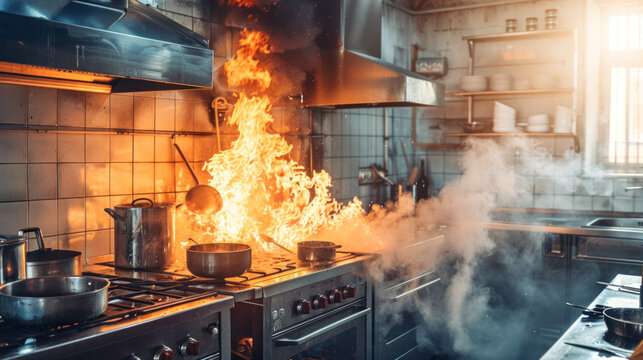
Two restaurant fires reported by the London Fire Brigade in 2026 have brought that reality into sharp focus. In June, a takeaway restaurant on Great West Road in Hounslow suffered extensive fire damage, with part of the ground floor, half of the roof and the entire extraction ducting destroyed. In September, a fast-food restaurant on Mile End Road in Stepney Green was damaged after a commercial fryer fault reportedly ignited oil, with around half of the ducting between the restaurant and roof also affected. The Brigade specifically warned operators about grease accumulation and the importance of regularly maintaining extraction systems.
These incidents are not evidence that restaurants are inherently unsafe. They are a reminder that the infrastructure behind a busy kitchen deserves the same attention as the food, staff and front-of-house operation.



The 2026 incidents highlight how quickly a kitchen problem can spread
The Hounslow fire on 15 June required eight fire engines and around 60 firefighters. According to the London Fire Brigade, cooking oil ignited in a commercial deep-fat fryer, while the resulting fire destroyed the extraction ducting leading from the ground floor to the roof. The Brigade subsequently advised restaurants and takeaways to have extraction ducting cleaned regularly, ensure it is installed correctly and take particular care when cooking with hot oil.
Three months later, another restaurant fire in Stepney Green produced a similar warning. Six fire engines and approximately 40 firefighters attended the incident on 11 September. The Brigade said a fault in a commercial fryer was believed to have ignited oil, damaging part of the restaurant and half of the ducting running to the roof. It again stressed the importance of keeping ducting, cooker hoods, extractor fans and cooking equipment clean.
The significance is not simply the number of appliances or firefighters involved. Both incidents show how a problem originating around cooking equipment can interact with the wider infrastructure of a commercial kitchen. Heat, grease, airflow, electrical systems and equipment positioning are not isolated considerations. They operate together every time a restaurant opens its doors.
See also: Cleveland Business Tech Services: Local Expertise, Global Infrastructure
Extraction is a safety system as much as an environmental one
Kitchen extraction is often thought of primarily in terms of keeping chefs comfortable and removing smoke or cooking smells. In reality, its role is considerably broader.
A commercial extraction system has to deal with heat, steam, airborne grease and cooking fumes while moving contaminated air safely away from the kitchen. Where grease accumulates inside ductwork, the risk changes. The London Fire Brigade has repeatedly warned that grease and fat deposits can ignite, particularly where extraction systems are not cleaned and maintained appropriately.
That makes commercial kitchen ventilation installation a design issue rather than simply an equipment purchase. The canopy, filters, fans, ductwork, discharge point and make-up air all need to work together. Poorly designed or poorly maintained systems can create excessive heat, uncomfortable working conditions and unnecessary energy consumption, while inadequate cleaning can increase fire risk.
The Hounslow incident is particularly relevant because the Brigade’s advice covered both installation and maintenance. It told operators to ensure ducting was installed correctly as well as cleaned regularly. For restaurant owners, that is an important distinction: a system can be functional without necessarily being correctly specified for the kitchen in which it operates.
Refrigeration creates a different kind of operational risk
The other major systems in a commercial kitchen tend to attract attention when something goes wrong, but refrigeration failures can be less dramatic while still being expensive.
A restaurant may rely on upright refrigerators, under-counter units, prep counters, freezers, cold rooms and other temperature-controlled equipment throughout the working day. If one unit fails during service, the consequences can include spoiled ingredients, menu changes, emergency repairs and lost trading time. If several units are affected, the financial impact can increase quickly.
The Food Standards Agency’s current guidance for food businesses covers food safety management, hygiene, chilling, allergens and operational safety. Its updated resources in 2026 reinforce the fact that food safety is an ongoing operational responsibility rather than something that can be dealt with only when an inspection is approaching.
For that reason, a commercial refrigeration service should be viewed as part of business continuity as well as routine maintenance. Checking equipment condition, temperatures, seals, controls and overall performance can help identify problems before a breakdown turns into a stock-loss event.
Energy efficiency is becoming part of the equipment conversation
Energy performance is another reason restaurant operators are looking more closely at the systems behind their kitchens.
Commercial kitchens consume substantial amounts of energy because refrigeration, cooking, extraction, lighting and other equipment may operate for many hours each day. The challenge is not simply to buy equipment with a low quoted energy consumption. Operators also need to consider how equipment behaves in the real working environment.
A useful example comes from Whitbread’s Oxford Beefeater “Kitchen of the Future” project. An Energy Technology List case study reported a 46% reduction in refrigeration energy consumption after the restaurant trialled refrigerated drawer units. The project also reported an estimated four hours of staff time saved per day because ingredients could be accessed more quickly. These figures relate to that particular installation and should not be treated as a universal saving, but they illustrate the potential relationship between equipment design, energy consumption and kitchen productivity.
The ETL’s latest guidance for commercial kitchens, published in September 2026, also highlights refrigeration equipment and heating, ventilation and air-conditioning technologies as areas where operators can consider efficiency improvements.
| Kitchen area | What operators need to consider | Potential consequence of neglect |
| Cooking equipment | Heat, oil, electrical condition and maintenance | Fire, equipment failure or downtime |
| Extraction | Airflow, grease control, ductwork and cleaning | Fire risk, excessive heat and poor working conditions |
| Refrigeration | Temperature, seals, controls and servicing | Food waste, stock loss and disruption |
| Cold rooms | Temperature stability, doors and equipment condition | Spoilage and emergency repair costs |
| Electrical systems | Testing, loading and equipment condition | Faults, outages and potential fire risk |
| Overall maintenance | Planned inspections and documented servicing | Unexpected failures and operational disruption |
Restaurant design increasingly has to consider systems together
One of the lessons from these incidents is that restaurant infrastructure cannot be planned entirely in separate compartments.
A kitchen may have a refrigeration contractor looking after cold rooms, a ventilation specialist responsible for extraction, an electrician handling power and a catering-equipment supplier installing cooking equipment. Each specialist has a legitimate role, but the systems ultimately occupy the same physical environment.
Consider a compact restaurant kitchen. Refrigeration equipment releases heat into the surrounding space. Cooking equipment generates further heat and steam. Extraction removes contaminated air but also affects pressure and airflow. If the system is poorly balanced, the kitchen can become uncomfortable for staff and less efficient to operate.
This is why equipment selection should be considered alongside kitchen layout, airflow, heat loads and maintenance access. A system that looks suitable on paper may perform differently once it is surrounded by cooking equipment, refrigeration units, staff and customers.
Specialist provision varies considerably across the UK
Restaurant operators do not have to rely on a single national model for maintaining these systems. There is a broad network of regional and specialist contractors working across the country.
In Leicester and the wider East Midlands, Leicester Air Conditioning Services provides commercial refrigeration alongside commercial ventilation work. Its refrigeration service covers areas including catering refrigeration and cold-room installation and maintenance, while the company’s wider services include ventilation installation and servicing. That combination reflects the increasingly connected nature of commercial kitchen infrastructure.
In Birmingham, Braywhite & Co has provided commercial refrigeration, HVAC and related engineering services across the West Midlands since 1966. Its refrigeration operation covers supply, installation, repair and maintenance, including systems used by restaurants and other commercial premises.
Further north, Manchester-based Enable Cooling works with restaurants on air conditioning, commercial kitchen ventilation and make-up air, while also supporting areas such as cellar cooling and cold rooms. The company states that it operates across England, Scotland and Wales.
London has its own concentration of specialist contractors. Commercial Fan Pro, for example, designs and installs commercial ventilation systems for restaurants and other hospitality sites, covering areas such as canopies, ductwork, fans and make-up air. Its published service information also highlights design, installation, commissioning and maintenance as connected stages of a project.
The point is not that every restaurant needs the same contractor or equipment. It is that operators have access to specialists with different regional footprints and technical focuses, making it possible to build a maintenance approach around the actual requirements of the premises.
Maintenance should be planned before the equipment becomes an emergency
The most expensive time to discover a problem is usually during service.
A failed refrigerator on a quiet Tuesday afternoon is inconvenient. The same failure during a fully booked Saturday evening can affect food preparation, customer service and stock simultaneously. Likewise, an extraction problem during a busy service can create an uncomfortable working environment and, depending on its cause and condition, introduce more serious safety concerns.
A practical maintenance programme should therefore consider:
- scheduled inspection and servicing of refrigeration equipment;
- temperature monitoring and appropriate food-safety procedures;
- regular inspection and cleaning of extraction systems;
- checks on cooker hoods, filters, fans and ductwork;
- electrical testing and equipment condition;
- access to emergency repair support;
- clear records of maintenance and remedial work;
- review of equipment performance when kitchens are refurbished or expanded.
This does not eliminate every possible failure. Commercial kitchens are demanding environments, and equipment will eventually need repair or replacement. What planned maintenance can do is make failures more predictable and reduce the likelihood that a relatively minor issue becomes a major interruption.
The real lesson from 2026 is about what happens behind the scenes
Restaurant customers rarely think about the equipment operating behind the kitchen walls. They notice the food, the service and the atmosphere. Operators, however, have to think about everything that makes those three things possible.
The two 2026 London fires demonstrate the point particularly clearly. In Hounslow, a fryer-related fire destroyed a substantial section of a restaurant’s extraction system. In Stepney Green, another commercial fryer fault was believed to have ignited oil, with ducting again affected. Neither incident can be reduced to a simple argument about one piece of equipment. The surrounding kitchen infrastructure influenced how the fires developed and what was damaged.
At the same time, refrigeration failures may never produce dramatic headlines but can quietly create significant losses through spoiled stock and lost trading time. Energy efficiency adds another consideration, while food-safety obligations mean temperature control and hygiene cannot be treated as optional extras.
For restaurant owners planning a new kitchen, refurbishing an existing site or simply trying to reduce unexpected downtime, the broader lesson is straightforward: the equipment behind the kitchen deserves a joined-up approach. Good design, correct installation, regular cleaning, planned servicing and appropriate specialist support all contribute to a kitchen that is safer, more reliable and better prepared for the demands of everyday service.