Previously, operating a farm or worksite involved having a fleet of machines, each performing a specific task. A tractor to till the ground, a loader to pick up, a different machine to dig-the expenses added up, and so did the idle time in switching machines. Today, the story has undergone significant changes. Equipment that was a single-purpose tool can now perform several tasks, and all the operator needs is a change of attachment to complete a task that previously required multiple pieces of machinery and several hours. That is not a happenstance shift. Organisations such as Progressive Automations have changed what is possible by manufacturing precision motors, intelligent controllers, and stiff linkages, enabling operators to interchange attachments without removing power. Think about how much time would be saved by completing a plowing operation and turning to stacking bales without exiting the cab and keeping equipment moving to consume fuel.
Built for the Job: What Progressive Automations Offers
The promise of flexibility on a farm or job site only works if the components behind it are reliable. Progressive Automations comes in handy to help in this. They do not provide a theoretical solution; they are designed to meet the requirements of real-world use, where service outages cost money and efficiency can not be sacrificed. Applying engineering skills with on-the-ground tested design, they have developed components that enable a single machine to perform the activities of many. You can explore their full range of solutions specifically for mobile machinery here https://www.progressiveautomations.ca/collections/mobile-machinery/.
- Electric actuators and motors that handle lifting, tilting, and rotating with consistent strength, turning a single machine into a true multitasker.
- Smart controllers that enable operators to fine-tune speed and force, providing precision where brute power alone would fall short.
- Mounting kits and brackets are designed for quick integration, eliminating compatibility issues and reducing installation time.
See also: Understanding Electric Bicycle Battery Life and Charging Tips


One Base, Many Tools
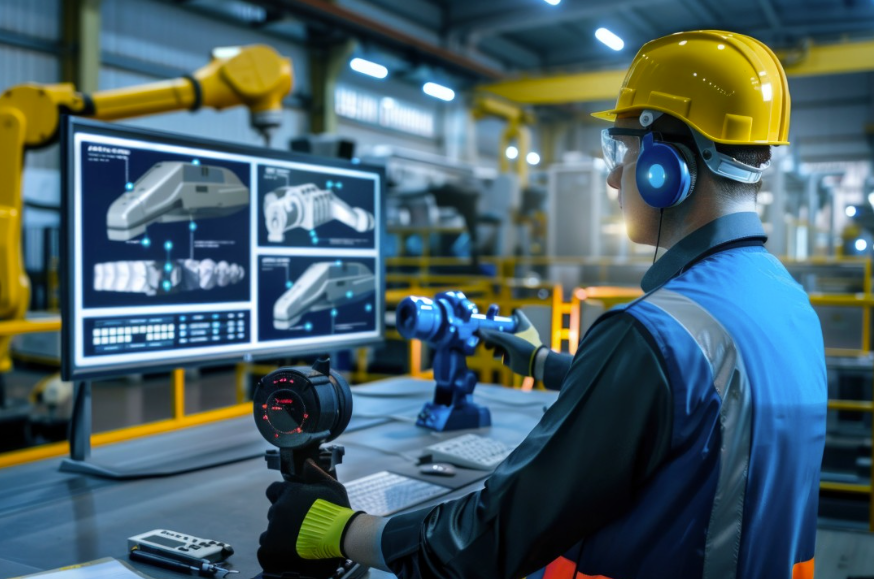
Consider having a machine that can perform the tasks of three or four machines without requiring additional storage space, maintenance, or fuel. That is the promise of a base machine complemented with the advanced attachments that Progressive Automations offer. By installing the right combination of actuators, controllers, and mounting solutions, it is possible to equip a single piece of equipment with the capacity to lift/tilt/rotate or perform many other functions, depending on the task at hand. This is an efficiency model, not about convenience, and it streamlines operations, slims down downtime, and makes each investment in equipment pay off.
A practical example is that an operator can change the attachment to a tilting setup within minutes after completing a lifting operation. The procedure is supervised using accurate controllers that set the force and speed to operate the loads without straining the machine. The electric actuators ensure uniform performance in all tasks, providing the equipment with a longer lifespan and high productivity. With versatility concentrated in a single base machine, operators can process a variety of workflows without interruption. This can reduce overhead and, at the same time, enable teams to handle diverse tasks without the need for additional, unrelated equipment, as adaptability is as valuable as strength.
Cutting the Clutter on the Job Site
Handling multiple machines usually requires frequent handling of controls, tools, and schedules, which can slow even the most skilled individuals. Progressive Automations reduces this difficulty by providing plug-and-play systems that cut down on setup time and minimize errors. Fewer machines mean fewer controls to learn, maintain, and troubleshoot, allowing operators to focus on the task itself rather than the machine. Quick change-outs of attachments eliminate long transfer times between jobs, and downtimes are significantly reduced. The trick is simple: change the instrument, continue the work. Not only is this approach efficient in workflow, but it is also cost-effective and helps maintain a site that is orderly, secure, and productive.
What’s Next for Multi-Functional Attachments
The future of multi-functional attachments lies in intelligence and adaptability, transforming how operators approach complex tasks. Progressive Automations is already exploring innovations that make machines more responsive and capable of handling a broader range of work with minimal intervention. Key developments include:
- Smarter attachments with sensors and adaptive control, allowing machines to respond to changes in load or terrain in real time.
- Controllers that automatically recognize the attachment, adjusting force, speed, and operational parameters without manual input.
- Expansion into diverse industries such as agriculture, mining, and construction demonstrates the versatility and growing demand for multi-purpose solutions.
Why Flexibility Matters Today
Attachments are no longer optional accessories, as they are the foundation on which any machine is based nowadays. Progressive Automations is at the forefront of this evolution with motors, controllers, and mounting solutions that enable operators to adjust on the fly. Being able to lift, tilt, rotate, or perform a variety of tasks simply by switching an attachment, such machines are not only convenient but also efficient in terms of these functionalities, which can be costly and dangerous. In farming, building, and transportation applications, an operator with flexible equipment will react quickly to emerging situations, spend less time, and maximize the machine’s efficacy. The future clearly champions this practice by matching the pace of machines that can adapt quickly to new forms of work.