Using an Outdoor Wood Boiler Heat Exchanger for Domestic Hot Water: What You Need to Know

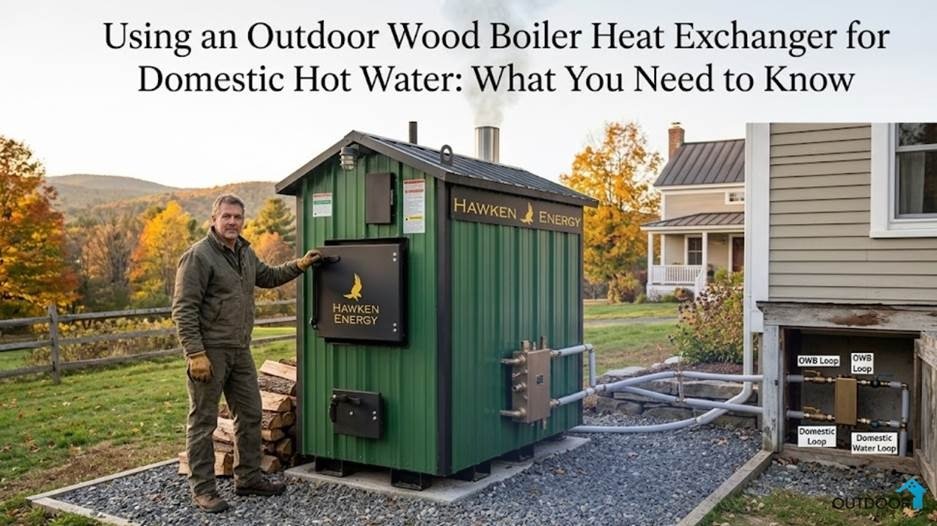
Yes, an outdoor wood boiler heat exchanger can heat your domestic hot water efficiently when it is sized correctly and installed to match your household demand. It works by transferring heat from the boiler water to the clean water you use for showers, sinks, laundry, and daily household tasks.
If you already use an outdoor wood boiler for home heating, adding a heat exchanger can help you get more value from the heat your system already produces.
How Does an Outdoor Wood Boiler Heat Exchanger Heat Domestic Hot Water?
A heat exchanger transfers heat from one water source to another without mixing them. In this setup, hot water from the outdoor boiler circulates through one side of the exchanger. Cold domestic water passes through the other side and absorbs that heat.



That separation matters. Boiler water may contain treatment chemicals and sediment, while domestic water needs to stay clean and safe for household use.
Many homeowners connect a heat exchanger to an existing water heater. In that arrangement, the exchanger preheats incoming cold water before it enters the tank. The water heater then only needs to raise the temperature a little more, which reduces workload and improves overall efficiency.
According to the U.S. Department of Energy, water heating is one of the largest energy uses in many homes. That is one reason many homeowners look for ways to capture available heat more effectively.
Why Do People Use a Heat Exchanger Instead of Sending Boiler Water Directly Into the Home?
The short answer is safety and system protection.
Boiler water often contains corrosion inhibitors and can carry small particles from the heating loop. You do not want that water flowing through faucets, showers, or appliances.
A heat exchanger creates a barrier between the two systems. It allows heat to move while keeping each water supply separate.
That also helps reduce wear on plumbing fixtures and can make maintenance more manageable over time.
What Type of Heat Exchanger Works Best for Domestic Hot Water?
The right choice depends on your home’s hot water demand, flow rate, and existing plumbing layout.
Plate Heat Exchangers
Plate heat exchangers are common because they are compact, efficient, and respond quickly. Thin metal plates create a large surface area, which allows fast heat transfer.
They are often a practical option for households that want strong hot water performance without taking up much space.
Sidearm Heat Exchangers
A sidearm heat exchanger usually connects to a storage tank. Hot boiler water circulates through the sidearm while natural convection gradually warms the water inside the tank.
This approach can work well when hot water use is steady rather than sudden.
How Do You Know What Size Heat Exchanger You Need?
Sizing matters more than many people realize.
A unit that is too small may struggle to keep up during showers, laundry, and dishwashing happening close together. A unit that is too large may add unnecessary cost and may not operate as efficiently as expected.
A few things affect sizing:
● Number of people in the home
● Flow rate of fixtures and appliances
● Boiler water temperature
● Distance between the boiler and the house
● Desired domestic water temperature
If several family members use hot water around the same time, your demand can rise quickly. That is why sizing should be based on real household use rather than guesswork.
Can You Use a Heat Exchanger With Your Existing Water Heater?
In many homes, yes.
A common setup uses the heat exchanger as a preheating stage. Cold water enters the exchanger first. It picks up heat from the outdoor boiler, then flows into the existing electric or gas water heater.
That means your water heater is finishing the job rather than starting from cold water.
Many homeowners like this arrangement because it usually works with equipment already installed in the home.
What Installation Details Matter Most?
A heat exchanger can perform well only when the rest of the system supports it.
Pipe Sizing
Undersized piping can reduce flow and limit heat transfer.
Pump Performance
Circulation must be strong enough to move hot boiler water consistently through the exchanger.
Insulated Underground Lines
Heat loss between the outdoor boiler and the home can affect water temperature before it even reaches the exchanger.
Water Quality
Mineral buildup can reduce efficiency over time, especially in areas with hard water.
These details often make a bigger difference in real-world performance than many homeowners expect.
Will It Provide Endless Hot Water?
Not exactly.
The available hot water depends on the boiler output, exchanger size, flow rate, and how many fixtures are being used at once.
A properly designed system can provide a very strong supply of hot water. But if several showers, washing machines, and sinks all run together, demand can exceed available heat transfer.
Thinking about peak usage helps set realistic expectations.
Does a Heat Exchanger Need Maintenance?
Yes, but usually not complicated maintenance.
It is smart to inspect connections, check circulation performance, and watch for mineral buildup. If domestic water contains high mineral content, scale can collect inside the exchanger and reduce efficiency.
Routine inspection can help catch performance issues before they become bigger problems.
What Are The Most Common Mistakes Homeowners Make?
A few issues often come up.
Choosing Based Only on Price
Lower upfront cost does not always mean better long-term performance.
Guessing the Size
Improper sizing can create hot water shortages.
Ignoring Heat Loss
Long pipe runs and poor insulation can reduce available heat before water reaches the exchanger.
Overlooking Household Demand
A home with multiple bathrooms and high simultaneous use usually needs more planning.
FAQs
Can an outdoor wood boiler heat exchanger replace a water heater completely?
In some setups, it can, but many homeowners use it with an existing storage tank because it offers more stable household performance.
How hot can domestic water get?
That depends on boiler temperature, exchanger size, and flow rate. In some systems, water can become very hot, so temperature control and mixing protection are important.
Is a plate heat exchanger better than a sidearm?
Not always. Plate units transfer heat quickly, while sidearm units often work well with storage tanks and steady demand.
Does distance from the boiler matter?
Yes. Longer distances can increase heat loss, especially if underground lines are not insulated properly.
Can hard water affect performance?
Yes. Mineral deposits can reduce heat transfer over time and may require periodic cleaning.
Conclusion
An outdoor wood boiler heat exchanger can be a smart way to supply domestic hot water while making better use of the heat your system already produces. The best results usually come from proper sizing, thoughtful installation, and understanding how your household actually uses hot water.
If you are planning a new setup or want help understanding what may fit your home, contact us. A clear conversation early in the process can help you make informed decisions and avoid costly surprises later.