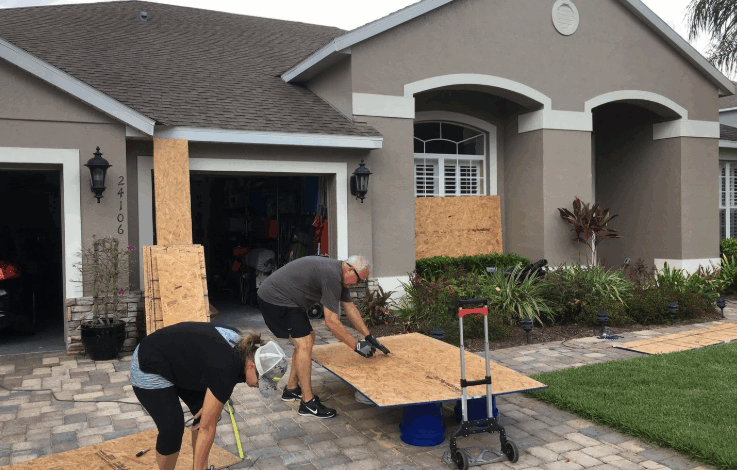
Every coastal homeowner knows the drill. A storm is brewing in the Atlantic, the cone of uncertainty shifts, and suddenly, the annual hurricane scramble begins. It’s a stressful, time-consuming ritual of trips to the hardware store, wrestling with unwieldy sheets of plywood, and racing against the clock to board up your home. For years, plywood has been the default, but is it really the best we can do to protect our most valuable asset?
The stakes are incredibly high. Hurricanes cause staggering damage, with expected annual economic losses from wind and flooding totaling $54 billion, with $34 billion of that affecting households alone. When you’re facing that level of risk, you need a solution you can count on—one that is effective, reliable, and doesn’t add to the pre-storm stress.
Key Takeaways
- Superior Protection: Engineered hurricane fabric is designed and tested to withstand major Category 5 hurricanes. In contrast, plywood’s effectiveness is often limited to weaker storms and relies heavily on perfect, labor-intensive installation.
- Long-Term Value: While the initial cost is higher, hurricane fabric is a one-time investment. It saves you money on potential replacements and eliminates the immense “sweat equity” required each season, unlike plywood, which can degrade over time.
- Unmatched Convenience: Custom-manufactured fabric systems can be installed in minutes and stored compactly in integrated pouches. This ends the yearly struggle of cutting, hauling, and finding space for bulky, heavy plywood sheets.
- Enhanced Safety & Livability: Hurricane fabric is translucent, allowing natural light in and maintaining visibility outside during a storm. This prevents the dark, claustrophobic, and isolating environment created by boarded-up windows.
The Annual Hurricane Scramble: Is Plywood Really the Best We Can Do?
That pre-hurricane ritual is a familiar burden for millions. You rush to the hardware store, hoping they haven’t sold out of the right thickness of plywood. You spend hours measuring, cutting, and drilling, often needing a partner to help lift the heavy, awkward boards into place. It’s a physically demanding and frustrating process at a time when you should be focusing on your family’s safety.
This annual scramble leads many homeowners to seek a more permanent, less stressful solution. Modern advances in material science have led to the development of engineered hurricane fabrics—lightweight, reusable screens designed for superior protection without the drawbacks of plywood. These aren’t just rolls of fabric; they are a custom-manufactured DIY hurricane fabric system. It’s a solution designed for the proactive homeowner who values preparedness, efficiency, and peace of mind.
The Hidden Flaws of Plywood Protection
Plywood has been the traditional choice because it’s accessible and perceived as cheap. However, relying on it for hurricane protection comes with significant, often overlooked, flaws that compromise its effectiveness and add to your workload.
- Questionable Strength: Plywood’s protective capability is often overestimated. While it can seem tough, its strength against high-velocity impacts is limited. In fact, according to experts at Angi, even properly installed plywood is only considered sufficient for Category 1 and 2 hurricanes, not for the major, more destructive storms.
- Labor-Intensive & Difficult: The installation process is physically demanding. From lifting 50-pound sheets up a ladder to the precise work of securing them with screws or bolts, it can take hours or even days to protect an entire home. This is precious time you don’t have when a storm is bearing down.
- Bulky and Awkward Storage: Once the storm passes, you’re left with a dozen or more large wood panels. They take up an enormous amount of space in a garage or shed and are susceptible to warping, rot, and mildew, which can compromise their structural integrity for the next season.
- The “Cave Effect”: Boarding up your windows plunges your home into complete darkness. This can increase anxiety and stress, especially for children, and makes it impossible to see what’s happening outside. You’re left feeling isolated and blind to the storm’s progress and potential dangers.
A Head-to-Head Comparison: Hurricane Fabric vs. Plywood
Strength & Debris Protection
Many people wonder how a flexible fabric can be stronger than a solid sheet of wood. The answer lies in advanced material science. Engineered hurricane fabric is not just cloth; it’s a high-tech material made from densely woven ballistic nylon fibers. Its advanced basket-weave design is engineered to deflect wind and absorb the energy of flying debris.
Rather than shattering or puncturing like plywood, the fabric catches and decelerates projectiles, with a burst strength tested to handle Category 5 hurricane conditions. This prevents the catastrophic window failure that can lead to rapid pressurization of your home—a primary cause of roof lift-off during a major storm. Plywood, which can be punctured by high-velocity debris in stronger hurricanes, simply can’t offer the same level of engineered defense.
Installation & Deployment Speed
Here, the difference is night and day. Preparing plywood involves a multi-day checklist: measure, cut, drill, haul, lift, and secure each panel with dozens of screws or bolts. It’s a project in itself.
A custom-manufactured fabric system transforms this ordeal into a simple three-step process: unroll, attach, and tighten. Because the fabric is incredibly lightweight and comes with pre-installed straps and grommets, a single person can secure an entire home in minutes, not hours. This minimal installation time is a critical advantage when a storm is approaching and every minute counts. You can wait for a more certain forecast before deploying your protection, saving you from unnecessary work.
Storage, Reusability, & Long-Term Value
After the storm, the convenience gap widens. Plywood panels are a storage nightmare. Hurricane fabric rolls up neatly and fits into an integrated, weather-proof storage pouch that can be stored on a shelf or in a closet.
While the upfront cost of fabric is higher, it’s a one-time investment in a permanent solution. A study comparing costs for a 2,400 sq. ft. home found that standard plywood panels cost around $1,008, while hurricane fabric was about $1,665. However, plywood degrades. It chips, warps, and can rot, meaning you may need to replace panels every few years. High-quality hurricane fabric is designed for years of repeated use without losing its protective qualities. When you factor in the recurring labor and potential replacement costs of plywood, the long-term value of fabric becomes undeniable.
Safety & Livability
Living in a boarded-up home is an unpleasant experience. The complete darkness caused by plywood creates a disorienting and stressful environment. You’re cut off from the outside world, unable to monitor the storm’s conditions or see emerging dangers like rising water or falling trees.
The translucent nature of hurricane fabric is a game-changing feature. It allows 80-90% of natural light to enter your home, keeping interiors bright and reducing the feeling of being trapped. You can safely see what’s happening outside, which provides vital information and a significant psychological boost. This visibility also allows you to assess damage immediately after the storm passes and know if it’s safe to go outside. Furthermore, fabric panels can be quickly detached from the inside for emergency egress, a task that is much more difficult with plywood screwed into the wall.
See also: Minimalist Living: How to Keep Your Home Tidy
Meeting Codes and Earning Trust: Are Fabric Systems Approved?
A common concern for proactive homeowners is whether a newer solution like hurricane fabric meets official safety standards. The answer is a resounding yes. Reputable systems are rigorously tested to meet or exceed the strictest building codes in the nation. For example, Cat 5 screens are Florida Approved, a benchmark for hurricane protection products.
This level of protection is critical because, as FEMA states, storm shutters are a key way to protect windows and doors, which are the most common points of failure in a home during a hurricane. By preventing this initial breach, you protect the entire structure.
To build further trust, top manufacturers stand behind their products with multi-year warranties. A track record of zero warranty claims speaks volumes about a product’s real-world performance. As an added benefit, many insurance providers offer premium discounts for homes protected by certified systems; it’s worth checking with your agent.
Make the Smarter Choice for Your Home’s Protection
While plywood is a familiar option, it is an outdated one. When compared side-by-side with modern, engineered solutions, its flaws in strength, convenience, and safety become impossible to ignore. Custom-manufactured hurricane fabric offers objectively superior strength, incredible ease of use, compact storage, and a safer, more humane living experience during a storm.
For the proactive coastal homeowner who values their time, their property, and their family’s peace of mind, the choice is clear. Investing in a permanent DIY fabric system is the logical, long-term decision. It’s time to end the cycle of annual stress and upgrade to a solution that is always ready to defend your home at a moment’s notice.