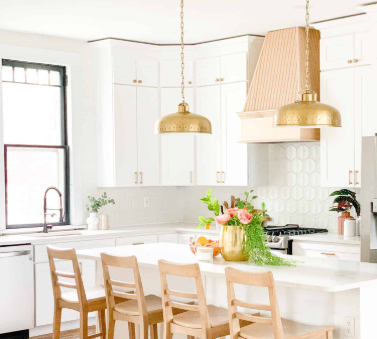
A pendant light does something almost no other fixture in a home does: it lights the room and it hangs there as a piece of furniture in its own right, visible day and night whether it’s switched on or not. That dual role is exactly why sizing and placement matter so much more with pendants than with a ceiling downlight, which mostly disappears once installed. Get the proportions right, and a pendant becomes the anchor of a room; get them wrong, and even a beautiful fixture looks like an afterthought.
The most common sizing question is simply how many pendants a space needs, and the answer usually comes down to the surface below. For a round or square dining table under roughly four feet across, a single larger pendant centred over the table tends to work best. For a longer rectangular table or a wide kitchen island, two or three smaller pendants spaced evenly look more proportional than one oversized fixture stretched across the whole surface, and they distribute light more evenly along the table’s length. A simple sizing guideline is to aim for a total pendant diameter roughly half to two-thirds of the table’s width — so a 150cm table suits a spread somewhere between 75cm and 100cm, whether that’s one statement piece or a cluster of smaller fixtures. A good showroom will typically display several pendant sizes side by side, which makes this kind of proportional comparison much easier than estimating from a product photo alone.
Hanging height is where many otherwise well-chosen pendants go wrong. Over a dining table, positioning the bottom of the fixture around 75 to 90cm above the tabletop tends to strike the right balance: low enough to create intimacy and direct light where it’s needed, but high enough that people aren’t ducking around the fixture or losing eye contact across the table. Over a kitchen island used for food preparation, aiming slightly higher keeps the fixture clear of anyone leaning over the counter to work. In homes with lower ceiling heights, a flatter, wider pendant silhouette tends to deliver visual presence without eating into limited headroom the way a long, narrow drop fixture would.


Material choice affects both the room’s feel and how the fixture performs visually from different angles, which matters more than people expect in today’s open-concept layouts. Glass pendants read as lighter and less visually heavy, suiting smaller spaces or lower ceilings. Rattan and woven pendants bring warmth and texture, pairing well with timber furniture and natural colour palettes. Metal pendants, particularly in matte black or brushed brass, suit more contemporary interiors and tend to make a stronger design statement. In open-plan homes where a pendant is visible from the living area, kitchen, and dining space simultaneously, choosing a fixture with an interesting silhouette from below — rather than one designed only to be viewed head-on — tends to perform better across all the angles it’s actually seen from.
Whatever material is chosen, the light source itself deserves equal attention. Colour temperature has a real effect on how a space feels: warmer tones around 2700K to 3000K suit dining rooms and living areas, creating a cosy, inviting glow, while cooler tones better suit task-focused zones like a kitchen island. One of LED lighting’s key advantages over older lighting technology is precisely this flexibility in colour temperature and dimming, making it easier to fine-tune a room’s mood without changing the fixture itself. Browsing a full pendant lighting collection in person makes it much easier to compare how different glass, rattan, and metal finishes actually look under varying colour temperatures, rather than relying on product photos alone.
For homeowners planning a pendant purchase alongside other lighting decisions, it’s worth browsing a ceiling fan and lighting range at the same time, since pendant placement often needs to be coordinated with ceiling fan positioning in open-plan living and dining areas to avoid the two fixtures competing for the same ceiling space.
See also: Public Liability Claims Under Australian Negligence Law
What to Do Next
Before choosing a pendant, measure the table or island it will hang above, decide between a single statement piece or a cluster based on that measurement, and confirm the hanging height against your ceiling height before ordering. Visit the Regal Lighting Gallery homepage to see pendant styles and sizes in person.