Mechanical Kinematics, Counterbalance Physics, and Diagnostic Protocols in Residential Overhead Garage Door Assemblies

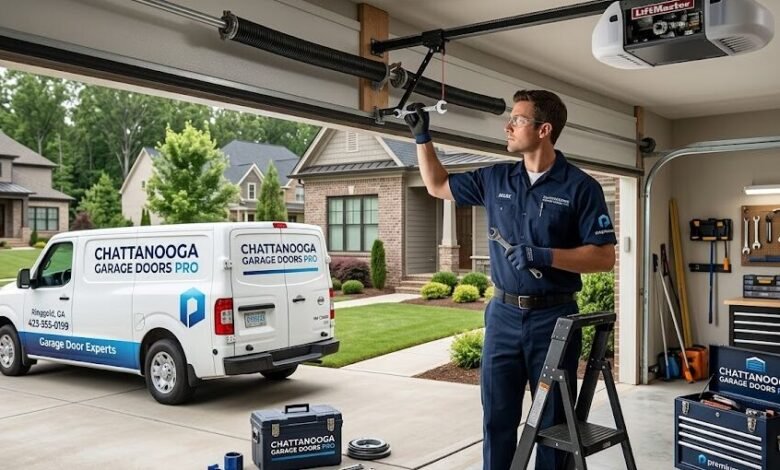
The modern overhead sectional garage door represents the single largest and heaviest moving electro-mechanical assembly within a residential building envelope. Serving as both a primary vehicular portal and a major structural component of modern residential architecture, a multi-panel overhead door must withstand continuous cyclical operation, dynamic atmospheric wind pressures, and thermal expansion cycles. Despite its ubiquitous presence, the underlying physics governing overhead door movement involve high-tension kinematic systems, complex torque distributions, and precise spatial tolerances across parallel tracking channels. When structural misalignment, metal fatigue, or component deformation occurs, the operational balance of the entire assembly is disrupted, leading to increased physical wear, motor drive burnouts, or catastrophic mechanical failure.
Safeguarding residential access and preserving mechanical safety requires a rigorous understanding of the assembly as an integrated dynamic system rather than an isolated collection of discrete components. When addressing structural imbalances, cable unspooling, or broken counterbalance mechanisms, property owners seeking qualified garage door repair near me require professional diagnostic evaluations that incorporate precise spring torque calibration, track squareness verification, and dynamic optical safety testing. Investigating the maintenance engineering and failure modes of overhead garage door assemblies requires an analytical examination of counterbalance spring physics, lift cable tensile dynamics, track geometry and roller friction, electro-mechanical operator transmission trains, and standardized cyclical safety protocols.
Counterbalance System Mechanics: Torsion Springs versus Extension Assemblies
An overhead sectional garage door typically weighs between one hundred and three hundred and fifty pounds, depending on its structural gauge, internal polyurethane insulation core, and architectural glazing inserts. Human operators and residential electric opener motors cannot safely lift this unassisted deadweight on a continuous daily basis. The primary lifting force of an overhead door is provided entirely by a mechanical counterbalance system designed to neutralize gravitational mass and convert physical weight into a state of neutral buoyancy.




The standard counterbalance assembly utilizes oil-tempered helical torsion springs mounted on a cold-rolled steel shaft directly above the door header. These springs store mechanical potential energy through angular deflection. When the door is closed manually or by motor drive, the steel shaft rotates, winding the spring coils tighter and storing torsional energy according to Hooke’s Law of elasticity. As the door opens, the stored torsional energy uncoils, transferring rotational torque through the shaft into flanged aluminum cable drums positioned at both outer ends. The cable drums pull braided aircraft cables upward, lifting the door sections through their vertical travel arc. Calibrating torsion springs requires calculating the wire gauge, internal coil diameter, and total active spring length to match the precise weight and vertical track radius of the door, ensuring the door remains stationary when stopped midway through its operational stroke.
Older or builder-grade installations frequently employ extension spring configurations mounted horizontally above the horizontal overhead tracks. Extension springs operate via linear elongation rather than torsional twisting, stretching backward along the track as the door descends. Because extension springs store immense energy in physical tension, a structural fracture along the spring wire can launch high-velocity metallic fragments across the garage interior. Consequently, safety regulations mandate that all extension assemblies must incorporate a continuous internal safety containment cable anchored directly to the structural track brackets, preventing the fractured spring coils from whipping outward if tensile failure occurs.
Tensile Cable Dynamics and Drum Winding Failure Modes
The physical bridge between the overhead counterbalance shaft and the lower door panel consists of high-tensile galvanized aircraft cables. These cables are fabricated from multiple strands of cold-drawn carbon steel wire wound in a flexible seven-by-nineteen or seven-by-seven cross-sectional pattern. The bottom loop of each cable is secured directly to a heavy-gauge steel bottom bracket fastened to the lowest corners of the bottom door panel, while the upper termination anchors inside a retention slot on the grooved aluminum cable drum.
Because the bottom brackets carry the full lifting tension of the counterbalance spring system, they are under extreme mechanical stress at all times. Attempting to loosen, adjust, or remove bottom bracket fasteners while the counterbalance springs remain wound represents one of the most hazardous failure modes in residential maintenance, frequently causing violent bracket expulsion. Over extended operational lifecycles, lift cables experience continuous bending fatigue as they spool and unspool around the circular drum grooves. Exposure to ambient moisture, road salt tracked in by vehicles, or chemical cleaners accelerates electrochemical corrosion, causing individual outer steel strands to fray, snap, and develop sharp bird-caging anomalies.
If one lift cable snaps or slips off its drum alignment track while the door is moving, the door assembly immediately loses lateral equilibrium. The side retaining full spring tension accelerates upward while the unsupported side drops, driving the horizontal panel hinges into an acute trapezoidal skew. This extreme angular distortion jams the steel or nylon rollers inside the vertical tracks, binding the door tightly between the structural jambs and frequently bending the vertical track extrusions or stripping internal opener drive gears before the system can be mechanically shut down.
Track Geometry, Plumb Tolerances, and Roller Tribology
Overhead sectional doors translate from a vertical resting orientation into a horizontal overhead resting position via a dual track system manufactured from galvanized structural steel. The track assembly consists of vertical track sections fastened to the wall framing, a curved transitional section known as the track radius, and horizontal tracks suspended from the ceiling joists by perforated angle-iron brackets.
Maintaining proper track geometry requires strict adherence to vertical plumb, horizontal level, and lateral squareness tolerances. The vertical tracks must not be mounted completely parallel to the door face; instead, they are slightly tapered outward from bottom to top at a rate of approximately one-sixteenth of an inch per vertical foot. This intentional wedge geometry ensures that when the door reaches its fully closed position, the multi-panel perimeter is compressed tightly against the exterior vinyl weatherstripping to create an air seal. During the initial lifting phase, this taper immediately releases the door panels from the weatherstripping, reducing operational friction against the perimeter seals as the door ascends.
Guiding the door panels through the track channels are roller assemblies, which significantly dictate the operating acoustic signature and kinetic smoothness of the door. Basic residential assemblies often incorporate unsealed, stamped-steel seven-ball rollers. Over time, metal-on-metal contact within unsealed races causes ball bearing pitting, rotational wobble, and loud vibration resonance that echoes through living spaces directly above the garage. Upgrading to high-density polyoxymethylene or nylon rollers featuring precision-machined, sealed thirteen-ball bearing races dramatically reduces rolling friction and dampens structural vibrations. Sealed bearing architectures also prevent airborne dust, sawdust, and ambient debris from contaminating the internal lubrication race, extending the component lifespan to over one hundred thousand continuous cycles.
Electro-Mechanical Operator Transmission Trains and Motor Dynamics
The motorized garage door opener functions as an automated control unit that governs travel velocity, establishes travel limits, and provides electronic locking security. Modern residential openers rely on fractional horsepower motors, typically alternating current induction motors or high-torque brushless direct current motors ranging from one-half to one-and-one-quarter horsepower equivalents. Brushless direct current motors offer superior operational efficiency, allowing variable acceleration and deceleration profiles that provide soft-start and soft-stop functionality, preventing mechanical shock loads against hinges and cables at the travel limits.
Motor torque is transmitted to the door assembly via three primary drive configurations: chain drive, belt drive, or direct-drive jackshaft mechanisms. Chain-drive systems utilize a continuous looped steel bicycle-style chain running inside a structural steel T-rail or I-beam carriage rail. While chain drives deliver high tensile durability and low fabrication costs, the mechanical interaction between steel links and metal sprockets generates significant acoustic noise. Belt-drive systems replace the steel chain with a steel-reinforced polyurethane or rubber cogged belt, eliminating metal-on-metal contact and delivering virtually silent operation ideal for garages situated beneath bedrooms.
For architectural garages with high ceilings, cathedral rooflines, or limited overhead clearance, wall-mounted jackshaft operators are increasingly deployed. Rather than utilizing an overhead central rail assembly, a jackshaft operator mounts directly to the perimeter wall and connects directly to the torsion counterbalance shaft. By turning the torsion shaft directly, the jackshaft unit eliminates the need for an overhead motor carriage, freeing up overhead storage space and removing ceiling-transmitted motor vibrations entirely.
Entrapment Protection, Optical Sensors, and Force Sensitivity Protocols
Because overhead garage doors possess sufficient mass and downward momentum to cause physical crushing injuries or structural property damage, residential installations are legally governed by comprehensive safety mandates, primarily the Underwriters Laboratories UL 325 standard. Modern automated door systems must incorporate redundant external and internal safety systems to detect physical obstructions and reverse downward travel automatically.
The primary external non-contact entrapment protection device is the photoelectric safety sensor system. Mounted on opposing sides of the door tracks no higher than six inches above the finished garage floor, the system consists of an infrared emitting unit and an optical photo-receptor unit. The emitter projects a continuous modulated infrared light beam across the threshold of the door opening. If an individual, vehicle, or pet breaks this invisible infrared beam while the door is descending, the receiver instantly breaks its closed circuit loop, prompting the electronic logic board in the opener motor to halt downward travel and reverse the door to the fully open position within fractions of a second.
Complementing optical sensors is internal mechanical force sensitivity. Opener control boards continuously monitor motor current draw or rotational revolutions per minute via hall-effect sensors on the motor shaft. If the downward travel of the door encounters physical resistance—such as an obstacle striking the bottom panel before breaking the optical beam—the sudden rise in electrical amperage or drop in shaft velocity triggers an emergency mechanical reversal routine. Technicians test this mechanical safety feature by placing a standard two-by-four wooden block flat on the concrete threshold beneath the center of the door; upon striking the solid timber boundary, the descending door must sense the obstruction and reverse fully without crushing the wood.
Thermal Performance, Weather Sealing, and Wind-Load Structural Resistance
The garage door represents a massive thermal barrier within the residential building envelope, particularly when the garage is structurally integrated into the primary dwelling footprint. Uninsulated, single-skin stamped sheet metal doors function as thermal bridges, radiating intense exterior heat into the garage interior during summer and conducting freezing air during winter.
Modern high-performance sectional doors utilize multi-layer sandwich construction, bonding an exterior galvanized steel or aluminum architectural skin to an internal metal backing using high-density expanded polystyrene or foamed-in-place polyurethane insulation. Polyurethane injection provides superior thermal resistance, delivering thermal performance ratings ranging from R-12 to R-18 within a two-inch panel thickness. The dense polyurethane foam adheres firmly to both outer metal skins, creating a composite structural panel that exhibits high flexural rigidity and dampens ambient exterior noise transmission.
In addition to internal core insulation, perimeter sealing systems prevent air infiltration and draft convection. Heavy-duty ethylene propylene diene monomer rubber bottom astragal seals fit into an extruded aluminum bottom retainer, conforming to uneven concrete floors to block dust, moisture, and pests. Simultaneously, exterior perimeter vinyl jamb seals with flexible co-extruded sealing fins press continuously against the face of the closed door panels, minimizing wind infiltration. In coastal and hurricane-prone geographical corridors, building codes mandate wind-load rated garage doors equipped with heavy-gauge horizontal U-bar reinforcement struts, high-tensile track mounting brackets, and commercial-grade commercial hinges designed to prevent inward pressure blow-in or outward vacuum blow-out failures during severe storms.
See also: How California Injury and Employment Law Attorneys Prove Liability?
Comprehensive Cyclical Tune-Up Protocols and Preventative Diagnostics
Preserving the structural integrity and operational safety of an overhead garage door requires regular preventative maintenance and mechanical inspections. A standard residential torsion spring possesses a finite fatigue lifespan, typically rated for ten thousand to twenty thousand operational cycles, with a single cycle defined as one complete opening and closing sequence.
A thorough preventative maintenance protocol begins with checking door balance. With the opener disconnected via the manual emergency release cord, the technician raises the door manually to the midpoint of its travel path and releases it. A properly balanced door remains stationary, suspended purely by spring counter-torque; if the door drops toward the floor, the springs have lost rotational tension, whereas if the door drifts upward, the springs are over-tensioned. Following balance evaluation, all structural fasteners—including hinge carriage bolts, track bracket lag screws, and bearing plate anchor bolts—must be torqued to manufacturer specifications to counteract vibrational loosening.
Lubrication tribology is equally critical. Applying heavy automotive grease or multi-purpose household oils to garage door tracks is counterproductive, as thick lubricants attract airborne particulate dust, sawdust, and grit, forming an abrasive paste that accelerates roller and track wear. Instead, track running surfaces should be wiped clean with solvent degreasers, while high-temperature silicone or non-stick synthetic lubricants are applied specifically to hinge pivot pins, roller bearing races, lift cable pulleys, and torsion spring coils. Lubricating spring coils reduces inter-coil friction as the metal wires twist, dampening noise and extending spring fatigue life. By adhering to structured diagnostic protocols, property owners ensure that the complex mechanical systems operating their overhead doors deliver quiet, predictable, and safe operation throughout their design lifecycle.