Q: Which welding machine is better for lithium battery pack assembly?
A: It depends on the battery structure. Spot welding is ideal for cylindrical packs such as 18650, 26650, and 32650, while ultrasonic welding is better for connecting battery tabs and electrodes. The right choice depends on cell type, welding materials, production volume, and automation requirements.
What Are the Differences Between Spot Welding and Ultrasonic Welding for Lithium Battery Pack?
Introduction




1. Spot Welding Machine: Ideal for Cylindrical Battery packs
1.1 What Does a Spot Welding Machine Do?
1.2 Why Is Spot Welding Popular?
2. Ultrasonic Welding Machine: Designed for Tabs and Electrodes
2.1 What Does an Ultrasonic Welding Machine Do?
2.2 Why Choose Ultrasonic Welding?
3. Spot Welding vs Ultrasonic Welding: Which One Should You Choose?
3.1 Start With the Welding Object
3.2 Consider Materials and Production Volume
4.1 Match the Machine to Your Battery
4.2 Check Welding Quality and Control
4.3 Consider Future Production
5. How to Make the Final Decision?
5.1 When to Choose Spot Welding?
5.2 When to Choose Ultrasonic Welding?
5.3 Think About the Complete Pack Process
6. Conclusion
Introduction
When building a lithium battery pack, welding is one of the most important production steps. A poor welding connection can cause high resistance, unstable electrical performance, weak mechanical strength, or even safety problems. For consumers and battery manufacturers, choosing the correct welding technology is therefore a practical decision, not simply a question of machine price.
The two common solutions are spot welding and ultrasonic welding. They work in different ways and are designed for different battery structures. Spot welding is widely used for cylindrical battery packs, while ultrasonic welding is commonly used for connections between battery tabs and electrodes.
This guide compares both machines from a buyer’s perspective and explains when each option makes more sense.
1. Spot Welding Machine: Ideal for Cylindrical Battery packs
1.1 What Does a Spot Welding Machine Do?
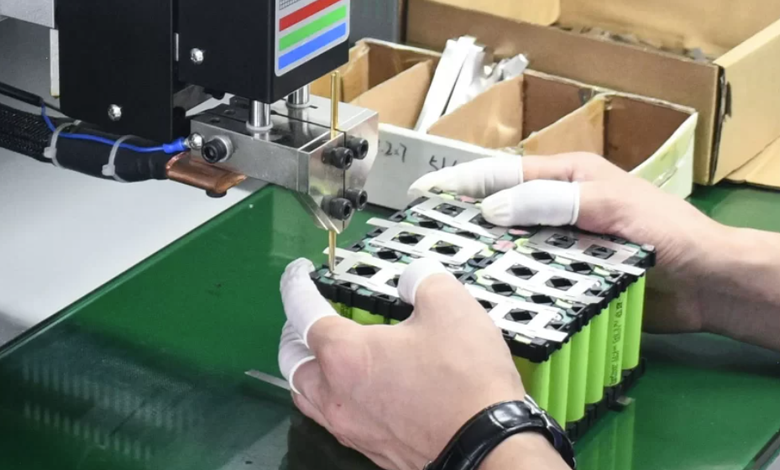
A spot welding machine is commonly used to connect cylindrical lithium-ion cells with nickel strips or other conductive connectors. The machine uses controlled electrical resistance to generate heat at specific welding points, creating a connection between the cell terminal and conductive strip.
This makes spot welding especially suitable for cylindrical cells such as 18650, 26650, and 32650.
During pack assembly, many cylindrical cells are arranged in series and parallel configurations. The welding machine then connects the cells according to the designed electrical layout.
For buyers working with these battery formats, a lithium battery welding machine based on resistance spot welding can provide a straightforward and efficient connection solution.
See also: Cleveland Business Tech Services: Local Expertise, Global Infrastructure
1.2 Why Is Spot Welding Popular?
Spot welding has become popular because the process is relatively fast and easy to understand. Multiple welding points can be completed within a short time, making it suitable for laboratory development, small-batch manufacturing, and automated pack production.
Modern machines may include automatic positioning, programmable welding parameters, current monitoring, welding-point control, and error alarms.
These functions help operators maintain consistent welding quality. For manufacturers producing 18650, 26650, or 32650 battery packs, this type of equipment can significantly reduce repetitive manual work.
Another advantage is flexibility. Depending on the machine design, operators can adjust welding parameters for different cell sizes and conductive materials. This is useful when a factory produces several cylindrical pack models.
2. Ultrasonic Welding Machine: Designed for Tabs and Electrodes
2.1 What Does an Ultrasonic Welding Machine Do?
An ultrasonic welding machine uses high-frequency mechanical vibration to join conductive materials. In battery manufacturing, it is commonly used for welding between battery tabs and electrodes.
This application is different from cylindrical cell-to-nickel-strip welding. Battery tabs may be made from aluminum, copper, nickel, or other conductive materials, while electrodes can contain thin metal foil layers.
Ultrasonic welding creates a solid-state connection through vibration and pressure. The process can form a strong electrical and mechanical bond without depending on conventional resistance heating.
For battery manufacturers working with pouch cells or other tab-based structures, a lithium battery welding machine using ultrasonic technology can be a useful choice.
2.2 Why Choose Ultrasonic Welding?
One major advantage of ultrasonic welding is its ability to handle thin and layered conductive materials. It can create reliable connections between tabs and electrodes while helping maintain low electrical resistance.
The process can also reduce thermal influence on surrounding battery materials. This is particularly useful when excessive heat could damage sensitive components.
Another important benefit is consistency. When pressure, vibration amplitude, welding time, and other parameters are properly controlled, the machine can repeat the same welding process across large numbers of battery cells.
For manufacturers that require precise tab-to-electrode connections, ultrasonic welding can provide a more suitable solution than conventional spot welding.
3. Spot Welding vs Ultrasonic Welding: Which One Should You Choose?3.1 Start With the Welding Object
The easiest way to make a decision is to identify exactly what needs to be connected.
If you are manufacturing cylindrical battery packs with 18650, 26650, or 32650 cells, spot welding is usually the more direct solution. It is commonly used to connect cylindrical cells with nickel strips.
If your main requirement is welding battery tabs to electrodes, ultrasonic welding is generally more appropriate. It is designed for conductive tab, foil, and electrode connections.
Therefore, the right lithium battery welding machine should be selected according to the battery structure and welding location.
3.2 Consider Materials and Production Volume
Material compatibility is another important consideration. Spot welding is commonly associated with nickel strips and cylindrical cell terminals. Ultrasonic welding can be used for various conductive materials, including aluminum and copper components.
Production volume also matters. A manual or semi-automatic spot welding machine may be enough for laboratory testing or small production runs. A fully automatic system becomes more attractive when production volume increases.
Ultrasonic welding equipment can also be integrated with automated battery assembly lines. Before purchasing, buyers should compare welding speed, material compatibility, positioning accuracy, maintenance requirements, and operator skill requirements.
A lithium battery welding machine should fit the complete production process instead of being selected only according to its initial purchase price
4. What Should Consumers Check Before Buying?
4.1 Match the Machine to Your Battery
Before comparing brands or prices, identify your battery format. If your project focuses on cylindrical 18650, 26650, or 32650 packs, look for spot welding equipment designed around these cell sizes.
If the main application involves tab-to-electrode connections, focus on ultrasonic equipment and confirm that the machine supports the required electrode and tab materials.
A lithium battery welding machine should match your actual production requirements rather than simply having the highest specifications.
4.2 Check Welding Quality and Control
Welding quality directly affects battery performance and reliability. Buyers should check whether the equipment provides stable welding energy, accurate positioning, adjustable parameters, and suitable quality monitoring functions.
It is also important to consider machine operation. A clear HMI, simple parameter settings, convenient maintenance, and reliable safety protection can make daily production much easier.
For new battery manufacturers, these details can have a major impact on production efficiency and operator training.
4.3 Consider Future Production
Do not only consider today’s production volume. If you expect your battery business to expand, choose equipment that can support increased automation and future capacity requirements.
A scalable lithium battery welding machine can reduce the need to replace equipment when production increases. Buyers should also check whether the machine can be integrated with conveyors, automatic loading systems, testing equipment, and other pack production equipment.
5. How to Make the Final Decision?
5.1 When to Choose Spot Welding?
Choose spot welding when your main products are cylindrical battery packs using 18650, 26650, or 32650 cells.
It is particularly suitable when the production process requires repeated connections between cylindrical cells and nickel strips. Its simple working principle, high productivity, and compatibility with automated pack assembly make it attractive for many battery manufacturers.
For this type of application, a lithium battery welding machine can help improve welding consistency while reducing repetitive manual operations.
5.2 When to Choose Ultrasonic Welding?
Choose ultrasonic welding when your main task is connecting battery tabs with electrodes. This technology is especially useful for pouch cells and battery structures containing thin aluminum or copper foils.
It can provide strong electrical connections while limiting unnecessary heat around sensitive battery components.
For tab and electrode welding applications, a lithium battery welding machine using ultrasonic technology may provide better process compatibility.
5.3 Think About the Complete Pack Process
The welding machine is only one part of battery pack manufacturing. A complete production process may also include cell sorting, automatic loading, insulation, welding, BMS installation, performance testing, aging, and final inspection.
For this reason, buyers should consider how the equipment will connect with the rest of the production line. A well-matched lithium battery welding machine can help create a smoother workflow and make future automation easier.
6. Conclusion
Spot welding and ultrasonic welding serve different purposes in lithium battery pack manufacturing. Spot welding is a strong choice for cylindrical 18650, 26650, and 32650 battery packs, while ultrasonic welding is better suited to welding between battery tabs and electrodes.
For consumers, the most important factors are battery format, welding material, connection location, production volume, automation level, and future expansion plans.
Choosing the right lithium battery welding machine becomes much easier once these requirements are clearly defined. The goal is not to find the most expensive machine, but to find the technology that fits your battery structure, production process, and long-term manufacturing needs.