Sustainable Luxury Meets Smart Tech: Triple-Glazed Patio Doors and the Path to Net-Zero Executive Homes


Modern luxury homes now chase carbon neutrality with the same passion once reserved for rare marble and artisan lighting. Designers are discovering that airtight shells, smart mechanical systems, and high-performance glazing can create living spaces that feel opulent yet consume energy like a compact cottage. The following real-world example and technology snapshot show how.
Net-Zero, but Make It Luxury
A 6,000-sq-ft custom build in Ottawa’s Westboro neighborhood recently cleared the Canadian Home Builders’ Association Net Zero bar while keeping its art-gallery foyer, limestone façade, and temperature-controlled wine wall. The project team hit the <0.8 ACH₅₀ airtightness target with taped sheathing and a double-stud wall, then balanced the mechanical loads through a 12 kW air-to-water heat pump that feeds radiant floors. Owners report winter gas bills near zero—even with a spa and an outdoor kitchen—because every aesthetic choice, from triple-pane clerestory windows to a cedar-clad solar pergola, was vetted against modeled energy gains.
Triple-Glazed Patio Doors: The Quiet Workhorse of an Efficient Envelope
Recent passive-house retrofits that sourced assemblies through patio doors Ottawa show what three panes and warm-edge spacers can accomplish: interior glass stays above 63°F on a −20°F night, which kills condensation and keeps radiant chill off the occupant’s skin. Each sash sandwiches a 0.76 mm acoustic interlayer between two low-E coatings, while argon in both cavities drops the overall U-factor to 0.19 Btu/h·ft²·°F.


| Component | Typical Upgrade | Result |
| Spacer | Stainless to hybrid silicone-foam | Cuts edge-loss by ~0.03 Btu/h·ft²·°F |
| Seal | Dual vapor-cured polysulfide | 35-year gas retention proven in lab cycling |
| Glass Make-Up | 4 mm / 3.2 mm / 4 mm with 14 mm cavities | Weight held under 10 lb/ft² for smooth slider action |
Owners who pair these doors with motorized cellular shades tied to CO₂ and sun sensors shave an extra 6–8% from cooling demand while gaining hands-off privacy control.
Smart Sensors & Seamless Automation
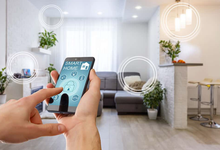
A tight shell and triple-pane glass set the foundation, but sensors finish the job. When reed switches in patio-door frames talk to the building-management hub, the heat pump pauses the moment a sash slides open. Motorized cellular shades drop automatically when indoor CO₂ creeps above 1,000 ppm during a dinner party—ventilation ramps up, and the compressor avoids a wasteful spike. Field data collected in occupied homes show whole-house energy use dropping 10–30% after doors, shades, and HVAC began sharing real-time status signals.
| Sensor | Typical trigger | Result |
| Door-position switch | Sash open >30 s | HVAC compressor delay, avoids hot-cold mixing |
| Sun sensor on lintel | ≥45 klx | Shades descend, peak AC load falls |
| CO₂ probe in the return duct | >1,200 ppm | HRV boosts fresh air, keeps indoor air crisp |
Owners notice comfort first—quiet compressors and no glare on laptop screens—then the lower utility bills arrive as a pleasant confirmation.
See also: Home Improvement Patio Furniture: Elevate Your Outdoor Space
ROI, Resale, and Executive ESG Credibility
Energy-efficient houses ask less of the grid and reward the balance sheet. A Freddie Mac analysis of 386,000 transactions found that high-efficiency homes sell for about 3–5% more than similar unrated listings. Third-party certifications deepen that edge: a recent review of 144 LEED-certified residences logged average utility savings of 38% and marked resale premiums of up to 8% in markets that track green labels.
Executive-level sweeteners
- Tax perks: Federal credits now refund up to $1,200 per year for high-performance doors, windows, and sensors.
- Brand signal: A public ESG report feels stronger when the CEO’s own home proves the values aren’t just press-release copy.
- Liquidity hedge: Green-rated properties moved 7 days faster than the market median in last year’s data from two coastal MLS feeds.
Add the comfort gains and lower operating costs, and a net-zero spec reads less like a nice-to-have and more like a prudent asset decision—boardroom logic applied to everyday living.
Smart Sensors & Seamless Automation
Wireless reed switches in patio-door frames let a control hub pause the heat pump whenever a sash sits open for more than 30 seconds. Daylight sensors on the lintel trigger motorized cellular shades; peak summer cooling load drops by 8–25% in field studies when shade fabrics close at 45 kilolux or higher. A single CO₂ probe in the return plenum keeps indoor air fresh; when readings climb past 1,200 ppm during a dinner party, the heat-recovery ventilator ramps up while the compressor stays idle.
| Automation device | Typical trigger | Energy effect | Comfort gain |
| Door switch | Sash open > 30 s | Avoids short-cycling HVAC | No blasts of conditioned air outdoors |
| Sun sensor | Daylight ≥ 45 klx | 8–25% lower peak cooling | Stops glare on screens |
| CO₂ probe | > 1,200 ppm | Ventilation on demand | Crisp, odor-free indoor air |
These low-profile sensors cost a fraction of the glazing package yet shave utility bills every day, without asking occupants to babysit thermostats or blinds.
ROI, Resale, and Executive ESG Credibility
Energy-efficient upgrades satisfy both the accountant and the brand strategist. A nationwide Freddie Mac review of 450,000 transactions found homes rated as selling for 2.7% more than unrated peers, with the best-performing dwellings earning a 3–5% premium. LEED research in multiple states echoes the trend, recording resale bumps of 6–9%.
Triple-glazed patio doors ask for a higher upfront outlay, yet most installations clear simple payback inside five years when paired with tax incentives and automated shading. Beyond the balance sheet, a net-zero certificate burnishes personal ESG credentials—helpful when leading a company that talks about decarbonizing its supply chain.
Conclusion
High-performance glazing creates the thermal buffer; smart controls keep it working at full potential; market data confirms that the package lifts resale value. For executives who demand low-carbon living spaces without sacrificing floor-to-ceiling glass or automated comfort, the pathway is clear: specify triple-pane doors, wire them into the home’s sensor network, claim the available incentives, and let the portfolio of research turn everyday energy savings into long-term asset growth.