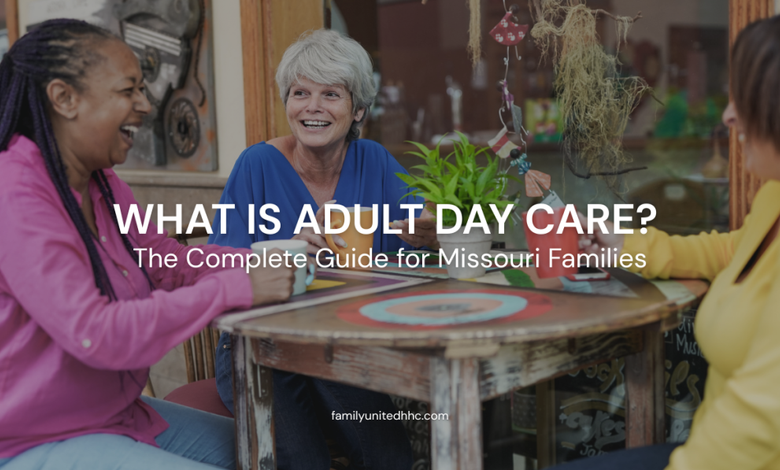
Caring for an older adult often involves balancing several needs at the same time. Families may want their loved one to remain at home and maintain as much independence as possible, while also making sure they have supervision, social interaction, regular meals, and meaningful activities during the day.
For some households, adult day programs can become part of that balance.
Unlike residential care, adult day services generally provide support during daytime hours while participants continue living at home. Depending on the program, services may include supervised activities, meals, exercise, personal care, social opportunities, and certain health-related support.




Understanding how these programs work can help families decide whether daytime care could complement the support they already provide at home.
Social Connection Matters as People Age
Living at home can provide familiarity and independence, but it can sometimes result in long periods without meaningful social interaction.
This may be particularly noticeable when an older adult no longer drives, has mobility limitations, has lost friends or a spouse, or lives far from relatives.
Adult day programs can create opportunities for regular interaction with other people through group activities, shared meals, games, conversations, music, crafts, and other structured events.
The specific activities matter less than the opportunity to remain engaged.
Having somewhere to go and people to interact with can add structure to the week and provide a change from spending most of the day at home.
See also: Different Ways to Use Garden Lights Around Your Home
A Regular Routine Can Make the Day More Predictable
Routine can be useful for people of any age, but it may become particularly important when someone requires assistance with everyday activities.
A consistent daytime schedule might include:
- Arrival and social time
- Meals and snacks
- Light exercise
- Recreational activities
- Rest periods
- Personal care assistance
- Health-related monitoring when provided
- Transportation home
A predictable routine can make each day easier to understand and organize.
Families may also find that regularly scheduled daytime care helps them coordinate work, medical appointments, errands, household responsibilities, and other commitments.
Adult Day Services Can Also Support Caregivers
Caregiving is often described only in terms of what the person receiving care needs. However, sustainable caregiving also depends on the well-being and availability of the caregiver.
Family caregivers may be responsible for preparing meals, helping with dressing and bathing, arranging appointments, providing transportation, managing household tasks, and remaining available in case something goes wrong.
Those responsibilities can be difficult to combine with employment and other family obligations.
The National Institute on Aging notes that adult day services can provide caregivers with a break while an older adult spends time in a supervised setting.
That time can be used for work, errands, appointments, rest, or simply attending to responsibilities that are difficult to complete while providing continuous supervision.
Different Programs Offer Different Levels of Support
Families should not assume every adult day program operates in the same way.
Some programs focus primarily on social activities and supervision. Others may provide additional personal care or health-related services.
Before choosing a program, families should ask what is included during a typical day.
Useful questions include:
- What type of supervision is provided?
- What activities are available?
- Are meals included?
- Is transportation available?
- Can staff assist with personal care?
- Are health professionals available?
- How are medications handled?
- How does the program respond to emergencies?
- What happens if someone’s care needs change?
Looking beyond the program’s name and understanding what actually happens during the day can make it easier to compare options.
Resources published by organizations such as Family United Home Health Care can also help families understand the different types of community and home-based support that may be available.
Consider the Person’s Interests, Not Only Their Care Needs
Safety and supervision are important, but they should not be the only considerations.
The individual attending the program should ideally have opportunities to participate in activities they enjoy.
Someone interested in music may appreciate programs that regularly include musical activities. Another person might prefer gardening, exercise, games, crafts, reading, cooking activities, or community outings.
A program that matches the person’s interests may feel more like a meaningful part of their routine and less like an obligation.
Families touring a program can pay attention to whether participants appear engaged and whether activities are actively taking place rather than simply appearing on a schedule.
Think About Transportation Early
Transportation can determine whether an otherwise suitable adult day program is practical.
Families should ask whether transportation is offered, what geographic areas are covered, how pickup and drop-off are scheduled, and whether transportation can accommodate mobility equipment when necessary.
If family members will provide transportation themselves, they should consider how the schedule fits with employment and other responsibilities.
Planning this before enrollment can prevent transportation from becoming an unexpected daily problem.
Give the Adjustment Process Time
An older adult may not immediately feel comfortable attending a new program.
They may be unfamiliar with the environment, worried about losing independence, or reluctant to spend time with people they do not know.
Families can make the transition easier by introducing the idea gradually and involving the person in the decision whenever possible.
A tour can help. So can discussing specific activities rather than focusing entirely on the need for care or supervision.
Families should also ask how the program introduces new participants and how staff respond when someone needs additional time to adjust.
Adult Day Care Can Be One Part of a Larger Care Plan
Daytime programs do not necessarily replace family caregiving, in-home assistance, medical care, or other forms of support.
Instead, they can be one component of a broader plan.
For example, an individual might receive help at home in the morning and evening while attending a daytime program several days each week. Another family may use adult day services only on certain days when the primary caregiver is working.
The right arrangement depends on the person’s abilities, preferences, health needs, family circumstances, and available resources.
Families considering this option should understand what adult day care includes and how it differs from residential or in-home care. For a more detailed overview of the model and questions families may want to consider, Read the article.
Focus on a Sustainable Arrangement
The goal of long-term caregiving is not simply to get through the next few days.
Families often need arrangements that can continue for months or years while circumstances gradually change.
That makes sustainability important.
A good care plan considers the older adult’s safety and independence while also recognizing the limits of family caregivers.
Adult day programs are one option families can explore when they need additional daytime structure, social engagement, supervision, or caregiver relief.
The best decision is usually based not on one factor, but on how well a particular arrangement supports the needs of everyone involved.