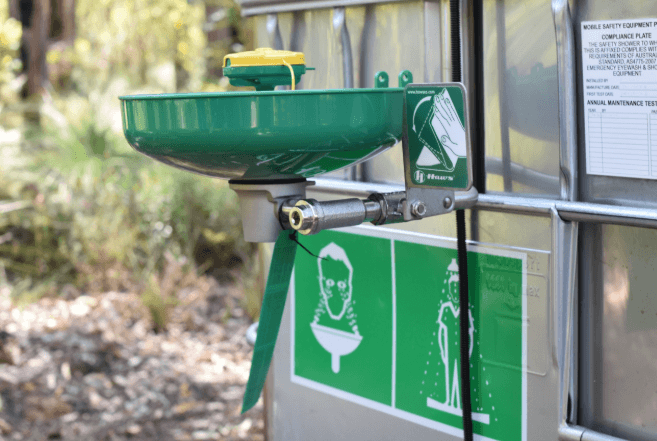
A portable emergency shower can provide immediate flushing where hazardous substances may contact the body. For Australian construction sites, maintenance areas and temporary workplaces, suitability depends on more than mobility. Water supply, flushing performance, location and maintenance must match the exposure risks. Some portable units provide supplementary flushing rather than replacing a full-duration emergency shower.
Key Takeaways
- Select equipment using the chemical hazards and safety data sheets.
- Confirm documented flow, flushing duration and usable water capacity.
- Check whether the unit provides supplementary or full-duration flushing.
- Keep equipment accessible and protect stored water from unsuitable temperatures.
- Train workers and maintain a documented inspection programme.
Assess the Exposure Risks First
Identify the Required Emergency Facilities
Review the chemicals, handling activities and potential exposure routes. Use current safety data sheets (SDS) and a workplace risk assessment to identify suitable emergency facilities.
Body showers and eyewash equipment perform different functions. Where eye exposure is possible, assess the need for a dedicated eyewash or eye/face wash rather than relying on the shower head.




Check Performance Requirements
Assess applicable work health and safety requirements and relevant guidance, including AS 4775. Request documentation for the exact model and proposed installation.
A product description alone does not establish compliance. Confirm which requirements the equipment meets and any limitations on its use.
Choose a Suitable Portable Emergency Shower
When comparing a portable emergency shower, explain the site hazards, available water supply and expected environmental conditions.
Verify Capacity and Flushing Duration
Ask for the usable water capacity, delivered flow and operating duration. Tank volume alone does not demonstrate adequate flushing performance.
Confirm performance when the shower and any attached eyewash operate together. If the unit supplies only interim flushing, establish how continued decontamination will be provided without avoidable delay.
Consider Temperature and Placement
Stored water can become too hot or cold for suitable emergency use. Check the manufacturer’s operating limits and whether insulation, heating or cooling is needed.
Position equipment for immediate access, with clear signs and an unobstructed route. Reassess its location whenever work areas move. Plan drainage without obstructing access or delaying flushing.
See also: Getting a Landscaping Business Found Online
Maintain Operational Readiness
Follow manufacturer instructions and applicable inspection requirements. Check water condition, supply levels, activation mechanisms, hoses and visible damage.
Keep records of inspections, water replacement and servicing. Refill and restore equipment promptly after use, providing suitable alternative protection while it is unavailable.
Train Workers Before an Incident
Practise locating and activating the equipment. Training should cover raising the alarm, obtaining assistance and following the SDS and site first-aid procedure.
When comparing options, ask Australia’s leading Safety equipment supplier for model-specific performance and maintenance information.
Summary
Before purchasing, document exposure risks, flushing requirements and site conditions. Select equipment with verified performance, then plan access, maintenance and worker training around the complete emergency response.