A small precision part can generate a surprisingly complicated quotation. The CAD model may show every diameter, hole, slot, and thread, yet the supplier may still need to ask which features control assembly, whether burrs are permitted, what material condition is required, and how many parts will be ordered after approval. These details influence bar stock, guide-bushing strategy, tooling, spindle transfer, inspection, finishing, and packaging. Without them, two suppliers may quote different manufacturing assumptions while appearing to price the same drawing. A production-ready RFQ should therefore do more than describe the finished geometry. It should explain the conditions under which the component must function and be delivered. The clearer those conditions are, the easier it becomes to compare process plans—not merely unit prices.
A CAD Model Shows Geometry, Not the Entire Requirement
A three-dimensional model is an essential RFQ file, but it usually does not communicate every production decision. It can show the shape of a part without explaining which surface locates it in the final assembly or which edge must remain free of burrs.
The model normally communicates:




- Overall geometry
- Feature locations
- Nominal diameters and lengths
- Hole, slot, and thread placement
- Basic relationships between surfaces
The RFQ may still need to define:
- Functional datums and critical-to-fit features
- Final tolerance and surface-finish requirements
- Material grade, condition, and permitted substitutions
- Burr, cleanliness, and cosmetic expectations
- Inspection documentation
- Prototype, order, and annual quantities
- Finishing and packaging responsibilities
These points help the supplier distinguish a visual feature from one that controls motion, sealing, alignment, or service life.
Describe the Part by Its Manufacturing Risks
Calling a component “small” does not describe how difficult it is to produce. A short bushing with open access may be straightforward. A long pin with a small cross-hole near one end may require a completely different support, tool, and inspection strategy.
Length-to-Diameter Ratio Influences Support
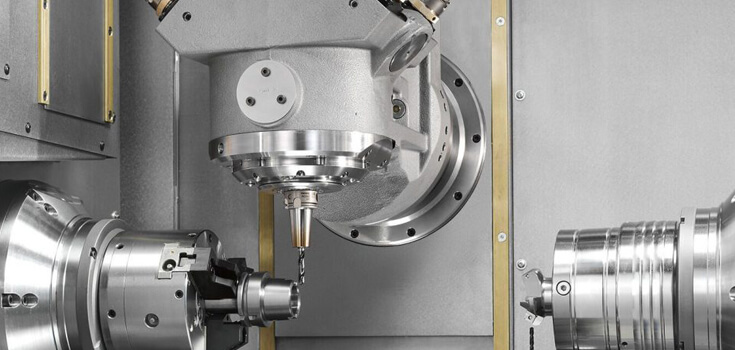
Long, slender stock can deflect when a cutting tool works too far from the support point. A cnc swiss lathe addresses this condition by bringing the cutting zone close to a guide bushing while the sliding headstock feeds the bar.
An RFQ should therefore provide the complete part length, smallest finished diameter, critical straight sections, and any features that interrupt the main shaft. The supplier needs the full geometry—not just the maximum outside diameter—to determine whether swiss machining is appropriate.
Small Features Can Control the Process
The most expensive or risky feature may occupy only a small area of the drawing. Examples include:
- A deep micro-hole
- A cross-hole breaking into a bore
- A narrow groove near the cutoff end
- A thin wall behind a threaded section
- A flat that must align with another feature
- A small thread with a tightly controlled start
- A rear feature requiring sub-spindle access
Material Information Must Go Beyond the Alloy Name
“Stainless steel,” “aluminum,” or “brass” is rarely a sufficient material callout for Swiss screw machining. The grade and condition can affect strength, cutting behavior, tool wear, chip formation, finishing, and the availability of suitable bar stock.
The material section of the RFQ should address:
- Exact grade or accepted equivalents
- Temper, heat treatment, or hardness when relevant
- Bar-stock form and certification requirements
- Restricted substances or compliance documentation
- Whether substitutions require written approval
- Final plating, passivation, anodizing, or other treatment
Bar diameter, straightness, and surface condition affect guide-bushing support. Any substitution that could change the manufacturing route should receive review.
Every Tight Tolerance Needs Functional Context
A tolerance tells the supplier the acceptable range. It does not explain why that range matters. Functional context helps determine which features should be completed in a common setup and where inspection effort should be concentrated.
| RFQ Requirement | What the Supplier Needs to Understand | Possible Production Impact |
| Tight diameter | Fit, motion, or sealing function | Tool choice and process measurement |
| Concentric features | Which surfaces must share an axis | Setup and datum-transfer planning |
| Cross-hole position | The functional locating reference | Live tooling and inspection method |
| Burr-free edge | Which edge contacts or moves | Tool order and deburring method |
| Surface finish | Sliding, sealing, or cosmetic role | Finishing method and inspection requirements |
Finishing pass and post-processing
Applying tight tolerances to every visible dimension can increase quotation uncertainty and inspection work without improving function. Engineers should place the strongest control on features that influence assembly or performance and allow practical tolerance elsewhere.
Define What Should Happen Inside One Machine Cycle
When evaluating Swiss machining services for small precision parts, buyers should understand how turning, drilling, milling, cutoff, and back working will be divided. A supplier cannot assume that every operation belongs inside one machine simply because the equipment is capable of doing so.
Main-Spindle Work Creates the Primary Features
The main spindle may support swiss turning operations such as external diameters, shoulders, grooves, bores, chamfers, and front-side threads. When related features share a functional axis, completing them under a common location can simplify process control.
Live Tools and the Sub-Spindle Extend the Route
Swiss turn machining may use live tools for cross-holes, flats, slots, or radial threads. The sub-spindle can receive the part before cutoff and present the rear face for additional drilling, threading, facing, or chamfering.
The RFQ should reveal whether these features have important positional relationships. A clearance hole may tolerate a separate setup, while a locating hole relative to a bearing diameter may justify keeping more work inside the coordinated cycle.
A Useful Quote Explains the Proposed Process Route
A supplier response becomes more useful when it explains the manufacturing assumptions behind the price. It does not need to disclose confidential programming details, but it should clarify the broad route and any conditions that could change cost or lead time.
Buyers can ask the supplier to address:
- Why the geometry suits a Swiss-type process
- Whether a guide-bushing strategy is planned
- Which features are completed on the main spindle
- What live-tool work is required
- Whether the sub-spindle completes the cutoff side
- Which operations occur outside the Swiss machine
- How critical burrs and edges will be controlled
- Which features require recorded inspection results
This information makes competing quotations easier to compare. One supplier may include back working, cleaning, and inspection while another assumes that those items are separate. A lower number is not necessarily a lower total manufacturing cost if important operations are missing.
Quantity Changes the Production Plan, Not Just the Price
Prototype quantities favor flexibility. The initial objective may be to verify geometry, assembly, or material choice while leaving room for design changes. The supplier may inspect more features and accept a less optimized cycle during this stage.
Repeat production requires stronger process memory. Effective swiss precision manufacturing may need to preserve:
- Approved drawing and program revisions
- Material and bar-stock requirements
- Tooling and replacement criteria
- Critical inspection results
- Accepted engineering deviations
- Finishing and packaging instructions
Annual demand is also more useful than one purchase-order quantity. It helps the supplier decide how much production preparation, tooling, automation, and inspection planning is justified.
Burrs and Finishing Belong in the RFQ
The phrase “deburr all edges” can be too broad for swiss machined parts. A slightly broken external edge, a clean thread start, and a burr-free cross-hole intersection may require different methods and acceptance criteria.
The RFQ should identify:
- Functional edges that contact mating components
- Intersecting holes that must be clear
- Threads requiring protection during finishing
- Edges that must remain sharp for function
- Cosmetic surfaces with handling restrictions
- Dimensions inspected after coating or treatment
Cleaning requirements should also be stated when residue, loose particles, or finishing chemicals could affect assembly. If the customer expects a defined final condition, that condition belongs in the quotation request.
Supplier Evaluation Should Follow the RFQ into Production
A capable machine list is not the same as a controlled production plan. Buyers should confirm how the supplier handles drawing questions, material substitutions, first-piece approval, tool changes, secondary processes, revision control, and batch documentation.
Reviewing Yueyi Precision’s custom manufacturing capabilities can provide broader context when an RFQ requires Swiss machining to be coordinated with CNC operations, finishing, inspection, and protected delivery.
The strongest supplier response does not simply say, “We can make this part.” It explains which requirement controls the process, what assumptions were used in the quotation, and which unanswered questions must be resolved before production.
A Better RFQ Produces a More Defensible Manufacturing Plan
A production-ready Swiss machining RFQ is more than a CAD model and an order quantity. It connects geometry with function, material condition, critical tolerances, machine-cycle requirements, burr control, finishing, inspection, and packaging. This information reduces the assumptions hidden inside a quotation and makes supplier comparisons meaningful. Engineers do not need to prescribe every cutting tool or program movement, but they should identify what the component must do and how it must arrive. Procurement teams should then ask suppliers to explain the proposed route rather than offering only a unit price. A small part may contain demanding manufacturing decisions, but a clear RFQ gives those decisions a reliable starting point.