Building a home is a major investment, but the expenses do not end when construction is complete. Over the years, homeowners may need to deal with damp walls, leaking terraces, loose tiles, cracked joints and damaged plaster.
Many of these problems begin in the hidden layers of the building. A tile may look perfectly installed but fail later because the bonding material was unsuitable. A freshly painted wall may develop damp patches because the surface below was not properly waterproofed.
This is where construction chemicals can make a meaningful difference. When used at the right stage, they help prevent common building problems and reduce the need for repeated repairs.



The cheapest construction option may not be the most economical
During construction, it is natural to look for ways to control the budget. However, choosing the lowest-cost material for every application can create larger expenses later.
Consider the cost of repairing a leaking bathroom. The homeowner may need to:
- Remove existing tiles
- Repair the waterproofing layer
- Replace damaged plumbing or surfaces
- Fix new tiles
- Repaint the ceiling below
- Pay for labour more than once
The original waterproofing product may represent only a small part of the bathroom cost, but its failure can affect several other materials.
Construction chemicals should therefore be viewed as preventive building solutions, not optional additions. They help protect the money already being spent on cement, blocks, plasters, tiles and finishes.
1. Waterproofing reduces repeated seepage repairs
Water damage is one of the most frustrating maintenance problems in a home. It may appear as:
- Damp patches on walls
- Peeling paint
- Swollen wooden furniture
- Mould or unpleasant odours
- Water stains on ceilings
- Cracks around wet areas
- Leakage from terraces or water tanks
Repainting a damp wall without fixing the source of moisture usually provides only temporary relief. The patch may return because the underlying problem remains untreated.
Waterproofing should be considered in areas such as:
- Bathrooms
- Kitchens and utility spaces
- Roofs and terraces
- Balconies
- External walls
- Basements
- Water tanks
- Wall and floor junctions
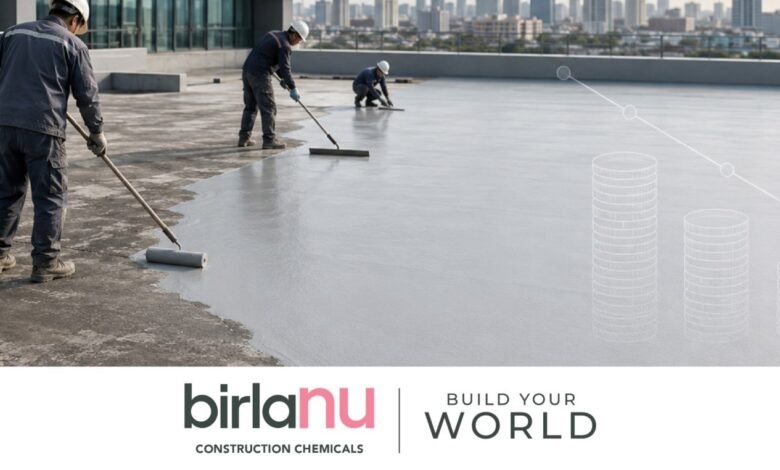
BirlaNu’s Waterproofing range offers easy-to-use waterproofing and repair solutions for different stages of a home, from construction to maintenance. The range is intended to address concerns such as dampness, seepage, cracks and leakage before they spread further.
For a homeowner, this can mean fewer cycles of repairing plaster, replacing paint and correcting water-damaged finishes.
A practical homeowner check
Before bathroom or terrace tiles are installed, ask the contractor:
- Has the surface been properly prepared?
- Have corners, pipe openings and joints been treated?
- Has the waterproofing layer been allowed to dry or cure?
- Has a water-retention or ponding test been carried out?
- Was any leakage corrected before tiling?
The waterproofing layer should be inspected before it is permanently covered.
2. Tile adhesives help prevent loose and hollow tiles
Tiles are expensive to purchase and replace. A failed tile installation can also damage nearby tiles during removal.
Common warning signs include:
- Hollow sounds when tiles are tapped
- Cracked joints
- Tiles moving under pressure
- Wall tiles separating from the surface
- Water entering through tile gaps
- Uneven tile levels
Traditional cement-based fixing methods may not be suitable for every modern tile. Vitrified tiles, natural stone and large-format tiles can have different bonding requirements.
A suitable tile adhesive provides a more controlled bond between the tile and the surface. BirlaNu Tough Tile Adhesives are available for applications involving ceramic tiles, vitrified tiles, natural stone and large-format tiles. The range features TruBond Technology and is designed to support strong adhesion, water resistance and crack prevention.
Using the appropriate adhesive can help homeowners avoid the cost and inconvenience of:
- Removing loose tiles
- Buying replacement tiles
- Repairing the base surface
- Paying for repeat installation
- Correcting damage to nearby finishes
What homeowners should check
Before installation, confirm that:
- The adhesive matches the tile type and size
- The floor or wall surface is clean and even
- The product is mixed according to instructions
- The installer does not prepare more material than can be used in time
- Large tiles receive proper adhesive coverage
- Newly fixed tiles are not disturbed too early
A premium tile cannot compensate for poor surface preparation or incorrect installation.
3. Tile grout protects the joints between tiles
Grout may appear to be only a finishing material, but tile joints are frequently exposed to water, dirt and regular cleaning.
Poor or damaged grout can result in:
- Water entering below the tiles
- Dark and dirty joints
- Crumbling gaps
- Damaged tile edges
- An untidy finish
- Frequent joint repairs
BirlaNu Tough Tile Grouts are designed to provide strong and durable tile joints. The wider BirlaNu Construction Chemicals portfolio includes products for tiling, waterproofing, repairs and maintenance.
Homeowners should pay particular attention to grout in bathrooms, kitchens, balconies and utility areas where the surface is frequently exposed to moisture.
Avoid these common grout mistakes
- Filling joints before the adhesive has set
- Using an unsuitable grout for the application
- Adding excess water during mixing
- Leaving joints partly empty
- Ignoring cracked grout
- Using harsh cleaning tools that damage the joints
Small cracks in grout should be inspected early. They may be a local surface issue or a sign of movement or moisture below the tiles.
See also: Accounting Services in Toronto: What Growing Businesses Actually Need
4. Bonding agents reduce plaster and repair failures
New material does not always bond well with an old or smooth surface. This can become a concern during:
- Plastering over concrete
- Repairing damaged walls
- Adding new mortar to an existing surface
- Patching broken areas
- Renovating an older home
Weak bonding can cause plaster or repair patches to separate, crack or fall away. The area then needs to be broken and repaired again.
BirlaNu Universal Bonding Systems are designed to improve adhesion, strength and durability in mortars, plasters and repair mixes. Better bonding and workability can support more dependable repairs when the product is used with proper surface preparation.
Surface preparation still matters
Before repair or plastering work begins, the surface should generally be:
- Strong enough to receive the new layer
- Free from loose plaster
- Clean and dust-free
- Free from oil or grease
- Prepared according to the product instructions
A bonding agent cannot permanently hold new material to an unstable or crumbling surface. The weak portion must first be removed and repaired.
5. Block jointing mortar can reduce recurring wall cracks
The quality of a wall depends not only on the blocks but also on the material joining them.
Site-mixed cement and sand mortar can vary from batch to batch because of:
- Incorrect proportions
- Uneven mixing
- Poor-quality sand
- Excess water
- Inconsistent workmanship
These variations may affect wall alignment and joint quality.
BirlaNu Block Jointing Mortar is a ready-to-use dry mix designed for smooth and crack-resistant block jointing. It provides a more controlled alternative for masonry work and forms part of BirlaNu’s wider construction chemicals portfolio.
For homeowners building with AAC or other compatible blocks, a suitable block jointing mortar can support:
- More uniform joints
- Cleaner application
- Reduced site mixing
- Better wall alignment
- Lower material wastage
- More consistent masonry work
This can reduce the likelihood of repairing avoidable joint-related cracks after the home is occupied.
How homeowners can make better product decisions
Homeowners do not need to become construction experts, but they should ask a few basic questions before approving a product.
Ask the contractor or applicator:
- What exact problem is this product solving?
- Is it suitable for the surface and location?
- Is it meant for interior or exterior use?
- How should the surface be prepared?
- What is the correct mixing method?
- How long should it dry or cure?
- Will the work be tested before being covered?
- Are the complete product instructions being followed?
BirlaNu offers construction chemical solutions across waterproofing, tile fixing, grouting, bonding, masonry, repairs and maintenance. Its portfolio is designed around different construction requirements rather than a one-product-fits-all approach.
Spend at the right stage to save later
Construction chemicals may remain hidden after a home is completed, but their performance becomes visible over time.
The right products can help protect:
- Paint and plaster
- Tiles and flooring
- Walls and masonry
- Bathrooms and kitchens
- Roofs and terraces
- Repair work
- The overall appearance of the home
The objective is not simply to reduce the initial construction cost. It is to build a home that requires fewer disruptive repairs over its lifetime.
By combining suitable products, correct application and proper site supervision, homeowners can reduce avoidable maintenance and protect the value of their property. BirlaNu Construction Chemicals supports this approach with practical solutions for the areas where homes commonly need stronger bonding, water protection and long-lasting performance.
FAQs
1. Do construction chemicals increase the cost of building a home?
Construction chemicals add to the initial material cost, but they can help prevent expensive problems such as seepage, loose tiles, failed plaster and cracked masonry joints. Correct use can reduce the need for repeated repairs later.
2. Where should waterproofing be done in a house?
Waterproofing is commonly required in bathrooms, terraces, balconies, water tanks, basements and other moisture-prone areas. BirlaNu Waterproofing offers solutions for protecting homes during construction and maintenance.
3. Can tile adhesive be used for every type of tile?
Different tiles and surfaces may require different adhesives. BirlaNu Tough Tile Adhesives include options for ceramic, vitrified, natural stone and large-format tile applications. The product should always be selected according to the tile and substrate.
4. Why do repaired wall patches sometimes crack again?
A patch may fail because the loose material was not removed, the surface was not cleaned, or the new repair mix did not bond properly. Correct preparation and a suitable bonding solution are important for a durable repair.
5. Which BirlaNu construction chemicals can support home maintenance?
The BirlaNu portfolio includes waterproofing solutions, tile adhesives, tile grouts, universal bonding systems and block jointing mortar. The appropriate product should be selected according to the location, surface and type of repair required.