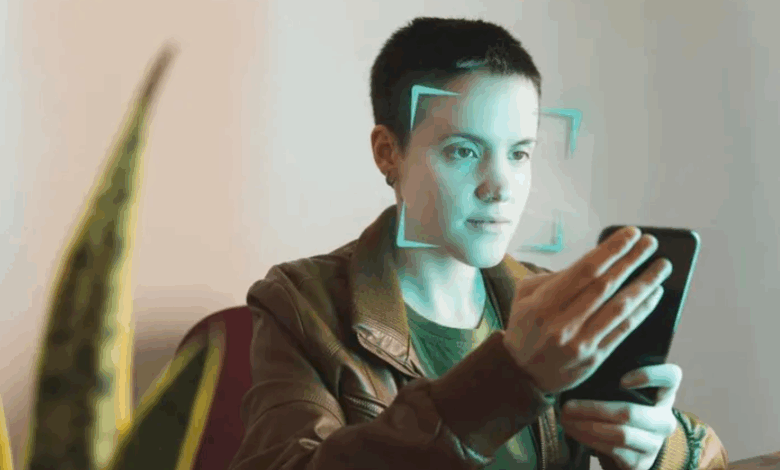
The digital authentication world is evolving rapidly. Technology has introduced new methods of securing our identities and information every year. Old fashion passwords and PINs do not suffice. There is a high demand of intelligent and secure means of checking on users as cyber threats increase. Face and fingerprint recognition has been adopted as a new standard in numerous apps and devices using biometric technologies. Nevertheless, the risks of spoofed identities or fake identities increase with the popularity of biometric systems.
What is On-Device Liveness Detection
Liveness detection is a special technology that developers and companies currently implement to prevent digital fraud. This is a sophisticated technology that verifies the existence of a live individual before the camera during face recognition. It is able to distinguish a real human face and a fake image, video or mask. This will help avoid the use of photos or deepfakes to deceive systems by hackers.
On-device liveness detection implies that all these verifications occur on the device of a user. The picture or video is not sent out of the device and this ensures that the privacy of the user is not compromised. It makes sure that individual information remains confidential and secure even when they are being authenticated. This has made it a reliable solution to companies and users who are concerned about their privacy and safety.




How On-Device Liveness Detection Works
Liveness detection on devices is based on sophisticated artificial intelligence (AI) and computer vision. As the user attempts to log in or authenticate his/her identity, the system will analyze the face within a short time using the camera. It searches tiny natural movements, reflections of lights, and skin textures which are only present in actual, living faces.
The system is capable of detecting counterfeit efforts such as photo, recorded videos, or 3D masks. It does so immediately without necessarily transmitting data to a server. That is why it is referred to as on-device – all the operations take place in the area. This will enhance speed and security as well as assure the users that their biometric data is confidential.
Key Benefits of On-Device Liveness Detection
The technology has many powerful benefits to both users and businesses and developers:
- Improved Security: It prevents identity theft and spoofing because a real person is the only one who is allowed to use a system.
- Enhanced Privacy: Since everything is processed on the device, no personal information or pictures can be uploaded and stored on the Internet.
- Quick Response: On-device detection saves time on verification as it does not use third-party servers.
- Easy to Use: Customers do not have to turn their heads or go through a complex process. It is quick and easy.
- Scalable and Flexible: The technology is compatible with various devices and operating systems, and it can be easily customized to be incorporated into mobile applications, banking platforms, and enterprise systems.
Why Businesses Need Liveness Detection Technology
The current business environment is becoming increasingly vulnerable to fraud and identity theft. Hackers employ fake pictures, deepfakes, and other sophisticated applications to intrude into systems. Liveness detection assists the firms to be ahead of these threats. When this technology is added, organizations will save their customers and minimize losses due to false identities.
This technology is already used in the banking industry, healthcare, insurance, and e-commerce. It assists them in authenticating new accounts, making payment, and gaining access to sensitive information. Businesses can be confident in their verification systems by ensuring a real user is available and enhance customer confidence.
See also: Minimalist Living: How to Keep Your Home Tidy
The Role of Privacy in On-Device Authentication
One of the greatest issues in digital authentication is privacy. A lot of individuals fear that their facial recognition devices are stocking or abusing their pictures. On-device liveness detection addresses this issue. No photo or video is exchanged with cloud servers since everything is analyzed on the device.
This is a process that utilizes the idea of Privacy by Design. It implies that the privacy protection is inherent in the technology. No photos are stored or transferred, no biometric templates are developed and saved. The users are assured of the fact that their identity is confirmed without the risk of losing control over their personal details.
How Developers Integrate On-Device Liveness Detection
On-device liveness can be simply added to apps, with special software development kits (SDKs). Such SDKs can be used with popular programming languages and platforms such as WebAssembly, Python, C#, C++, Android, and iOS. Integration is not complicated and as soon as it is completed, the app will be able to conduct secure facial verification on the device of a user.
Another aspect that the developers like is that this solution employs Edge AI, which is a type of artificial intelligence that operates on the device. Edge AI enables applications to pass data in real-time with high speed and security without the need to connect to the internet. This renders it the perfect one in terms of privacy and performance being of equal importance.
Future Trends in Secure Authentication
The future of digital identity protection will remain the same in terms of security and privacy. This evolution will focus on the liveness detection. The more sophisticated deepfakes and AI-generated content are developed, the more systems able to detect the presence of a real human will be required.
On-device liveness detection is bound to become commonplace in smartphones, banking apps, and online platforms in the next few years. It will not just safeguard individual identities, but will also enhance confidence in online payments. AI, edge computing, and biometric security will create the future of secure and seamless user experiences.
Conclusion
On-device liveness detection is changing how individuals and organizations conceptualize the concept of authentication. It offers a compromise between security and convenience, as it helps users to stay safe against fraud and keep their information confidential. This technology is an indicator that there is no need to sacrifice user experience in order to have advanced security.
Since the digital life keeps growing, secure and confidential authentication will be a major requirement among all people. On-device liveness detection is the answer: it is quick, private, and secure verification, which is indeed the future of safe digital identity.