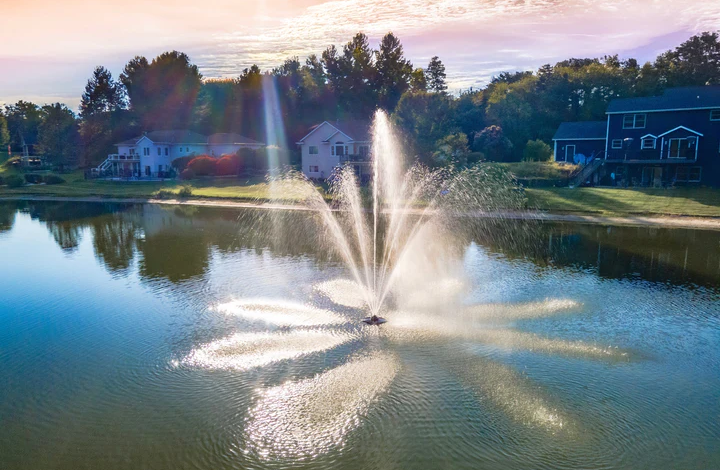
Floating pond fountains seem straightforward. You drop them in the water, plug them in, and watch the pretty spray. Most salespeople won’t mention the stuff that matters until after you’ve already bought one.
Here’s what you need to know before spending your money.
1. Depth Requirements Are Stricter Than You’d Expect
Your pond needs at least 24 inches of water for most floating pond fountains to work properly. Anything shallower causes problems. The intake pulls in sediment and debris from the bottom. This clogs the pump and burns out the motor faster.



Some manufacturers claim their units work in 18 inches of water. Maybe they do, technically. But you’ll spend half your time cleaning the intake screen and dealing with reduced spray height.
Shallow ponds also mean the fountain stirs up bottom muck. Your clear water turns brown within hours. Fish get stressed from constant disturbance. You end up creating more problems than you solve.
Check your pond depth before you buy. Not just in one spot. Walk around and measure in several places. Ponds settle unevenly over time.
2. Your Electric Bill Jumps More Than Expected
A typical floating pond fountain pulls between 500 and 2000 watts, depending on size. Run it eight hours daily, and you’re looking at $20-60 per month in electricity costs during warm seasons.
The salesperson probably quoted you the lowest number. They used the smallest model, running just four hours daily. Your actual costs will be higher.
Larger ponds need bigger fountains. Bigger fountains use more power. A two-acre pond might need a fountain that costs $100 monthly to operate. That’s $500-600 for the summer season alone.
Factor this into your decision. The cheapest fountain to buy often costs the most to run. Check the amp draw and horsepower rating before purchase.
3. Wind Becomes Your Enemy
Nobody mentions wind during sales conversations. But wind pushes floating fountains around constantly. The spray pattern shifts. Water lands on docks, walkways, and even nearby buildings.
Strong winds can blow the entire fountain to one side of your pond. The mooring lines get tangled. You’re out there in a boat trying to reposition everything while getting soaked.
Some pond owners end up turning off their fountains on windy days. That defeats the purpose if you bought it for aeration. Your dissolved oxygen levels drop right when fish need it most during hot, breezy weather.
The fix requires proper anchoring with heavy weights and thick mooring lines. That means extra cost and installation time that nobody warned you about upfront.
4. Maintenance Takes More Time Than Advertised
You’ll hear “maintenance-free” or “minimal upkeep required” in product descriptions. That’s misleading at best.
Floating pond fountains need cleaning every 2-4 weeks during the active season. The intake screen collects leaves, algae, and other debris. Let it go too long, and the water flow decreases. The motor works harder and overheats.
You can’t just rinse the screen from shore. You need to disconnect power, pull the unit to shallow water or onto a dock, disassemble the intake housing, clean everything thoroughly, then reassemble and reposition it.
This takes 30-45 minutes each time. Miss a few cleanings, and you risk permanent motor damage. Repairs cost $300-800, depending on what failed.
Winter storage adds another layer. You need to pull the fountain out, clean it completely, drain all water from internal components, and store it somewhere protected from freezing. Then reverse the process in spring.
5. Not All Spray Patterns Actually Aerate
Pretty spray patterns sell fountains. But looking nice doesn’t mean they’re oxygenating your water effectively.
The tall single-stream patterns create minimal water circulation. They shoot water up; it falls back down in roughly the same spot. Sure, some oxygen gets absorbed during the spray. But you’re not moving water from deeper areas where oxygen depletion happens.
V-shaped and dome patterns work better for aeration. They spread water outward before it falls. This creates horizontal water movement and brings deeper water to the surface for oxygen exchange.
If you bought a fountain mainly for aeration, the spray pattern matters more than height. A shorter, wider spray that moves more gallons per minute beats a tall, narrow stream every time.
See also: What Areas Of Your Home Need Better Insulation?
6. Temperature Changes Affect Performance
Cold water is denser than warm water. Your fountain’s spray height drops by 10-20% as water temperature falls below 60 degrees. The same unit that shot water 15 feet high in July might only reach 12 feet in October.
This matters if you’re trying to aerate deeper ponds. Reduced spray height means less oxygen transfer. Fish can suffer during fall turnover when they need oxygen most.
What This Means for You
Floating pond fountains work. They improve water quality and look good doing it. But they’re not the plug-and-forget solution most advertising suggests.
You need adequate depth, proper anchoring, regular maintenance, and realistic expectations about operating costs. Choose based on your actual pond conditions, not just the prettiest spray pattern in the catalog.
The difference between a fountain that serves you well for years versus one that becomes an expensive hassle often comes down to knowing these details before you buy.