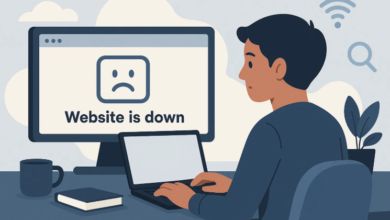
Every founder feels the same pressure when building their first app. Investors are pushing for a release date, competitors are already live, and every week of delay feels like ground slipping away. Under that weight, speed wins every argument. Corners get cut, testing gets skipped, and the architecture is patched just enough to hold. What looks like fast progress often sets up months of bug fixes, rewrites, and difficult conversations with early users.
Speed does matter. It is often the difference between being relevant or forgotten. But speed without stability is not speed at all, rather a debt you will spend months or years repaying. Founders who understand this from day one design their timelines differently and build products that can keep up with their ambition.
The Pressure to Move Fast
Founders operate in a high-pressure environment. Investors expect rapid traction, competitors are always a step behind or ahead, and the startup ecosystem rewards early movers. This often leads to aggressive app development deadlines that are unrealistic given the technical complexity involved. Teams are pushed to cut corners on planning, architecture, and testing in order to meet arbitrary launch dates.




While the desire for speed is understandable, it is often built on the misconception that launching quickly always leads to success. In reality, poorly built products cost far more in the long run, both financially and reputationally. An app that crashes, has security flaws, or fails to scale properly can lose users faster than it gains them.
The Hidden Cost of Rushed Timelines
What founders frequently underestimate are the hidden app development costs that come with moving too fast. A rushed development process often leads to brittle code, mounting technical debt, and unresolved bugs. These problems compound with each new feature, making future updates slower and more expensive.
Consider a startup that skips thorough testing to launch in three months instead of four. On release day, users encounter frequent crashes and slow response times. Negative reviews spread, acquisition costs rise, and engineering resources are diverted from new features to firefighting. What appeared to be speed was actually a detour into a long and costly recovery phase.
The damage extends beyond the app itself. A poor first impression can permanently tarnish a brand. Users are reluctant to return to a product that failed them once, even if later versions improve. Investors lose confidence, hiring talent becomes harder, and the entire venture can stall before it ever finds its footing.
Stability as a Growth Driver
A stable application is not just a technical milestone; it is a business advantage. When an app performs reliably, it builds user trust, lowers churn rates, and creates positive word of mouth. Stability is what keeps users engaged long enough for your growth strategy to work.
Founders who focus on stability from the start are investing in long-term velocity. With fewer bugs and a scalable architecture, teams can ship new features faster in the future. Stability may delay an initial launch by a few weeks, but it dramatically accelerates every subsequent release.
The Myth of Predictable Linear Timelines
Many founders view app development as a predictable, linear process: ideation, design, development, testing, and launch, each with a fixed duration. Reality is far messier. Complex dependencies, third-party integrations, changing requirements, and user feedback all affect timelines. The process is inherently iterative.
Rigid timelines ignore this uncertainty, leading to missed deadlines, frustrated teams, and declining morale. A better approach is to set timelines based on validated complexity estimates, build in buffers for unknowns, and adopt an agile mindset that accepts iteration as part of the process.
Balancing Speed and Stability
True speed is not about skipping steps; it is about creating a foundation that allows rapid, reliable iteration. Founders can strike a balance between speed and stability with these practices:
- Focus on the Core Problem: Prioritise features that solve the core user need. A smaller, more stable MVP is better than a bloated, buggy app.
- Invest in Architecture: Build a scalable backend and clean codebase early. This avoids painful rewrites that slow down future progress.
- Test Relentlessly: Automated tests and code reviews catch issues early, making every release more reliable.
- Collaborate on Timelines: Engineering teams and founders must align on realistic estimates. Arbitrary deadlines often lead to rushed, unstable builds.
- Use Incremental Launches: Rolling out to small user groups first allows faster learning without risking a full-scale public failure.
Learning from Real-World Mistakes
The tech world is full of cautionary tales. Startups that rushed to launch with unstable apps often faced public backlash, investor scepticism, and expensive rebuilds. In contrast, companies that invested in stability—even if they were not the first to market—often won long-term because they could iterate faster after launch and deliver a consistently reliable experience.
Take the example of early-stage fintech startups. Some rushed to release apps to ride the wave of digital banking hype, only to experience downtime during peak usage or expose customer data due to skipped security audits. Others took a few extra months to harden their systems, gaining fewer users initially but eventually overtaking competitors thanks to reliability and trust.
Founders should ask themselves: Is the goal to be first, or to last? A stable app might reach the market weeks later, but it will give users a reason to stay, investors a reason to believe, and teams the breathing room to innovate.
Listing 3 Reliable U.S. App Development Companies Known for Timely and Stable Delivery
1. GeekyAnts (USA)
GeekyAnts has extensive experience helping startups and enterprises navigate complex app development timelines without compromising quality. Their published guides outline realistic timeframes for planning, prototyping, development, and testing phases, typically ranging from 6 to 12 months depending on scope. They emphasise clear feature prioritisation, structured sprints, and transparent effort estimation to avoid rushed, unstable builds. With expertise in frameworks like React Native, Flutter, and scalable backend solutions, GeekyAnts ensures faster delivery while maintaining stability.
Their approach includes risk buffers, early-stage architecture reviews, and agile iteration cycles for reliable launches. Clients benefit from predictable timelines backed by proven engineering processes.
Clutch Rating: 4.9 / 5 (100+ reviews)
Address: 315 Montgomery Street, 9th & 10th Floors, San Francisco, CA, 94104, USA
Phone: +1 845 534 6825
Email: info@geekyants.com
Website: www.geekyants.com/en-us
2. WillowTree (USA)
WillowTree, headquartered in Charlottesville, Virginia, is known for building high-performing mobile and web applications for large enterprises and high-growth startups. Their project planning process includes detailed discovery sessions to create realistic delivery schedules.
They focus on balancing fast time-to-market with scalable, stable architecture to minimise costly post-launch fixes. Agile sprints, continuous integration, and automated testing form the backbone of their development approach. WillowTree works closely with clients to align timelines with feature complexity and technical constraints. This structured methodology supports reliable launches even under challenging deadlines.
Clutch Rating: 4.8 / 5 (90+ reviews)
Address: 107 5th Street SE, Charlottesville, VA, 22902, USA
Phone: +1 888 329 9875
3. MojoTech (USA)
MojoTech, based in Providence, Rhode Island, partners with startups and established companies to deliver scalable digital products within disciplined timelines. Their team emphasises roadmap planning, risk analysis, and phased delivery to avoid the pitfalls of rushed development. They apply a lean approach to feature selection, ensuring that MVPs are stable and ready for real-world use. Agile methodology, code reviews, and automated deployment pipelines keep projects on track without sacrificing quality. MojoTech’s expertise helps clients manage expectations, hit milestones, and maintain long-term development velocity.
Clutch Rating: 4.7 / 5 (65+ reviews)
Address: 56 Exchange Terrace, Providence, RI, 02903, USA
Phone: +1 401 375 6340
Conclusion: Winning Beyond the First Launch
Speed gets you noticed, but stability earns you staying power. A rushed launch may deliver headlines and downloads, yet what matters is whether your product survives its first thousand users, its first surge in traffic, or its first security test. True leadership in product development is not about cutting days off a timeline; it is about making every day of that timeline count.
Founders who value stability early on create the conditions for genuine speed later. They build teams that can iterate confidently, products that inspire trust, and businesses that last beyond the hype cycle. In the end, the startups that win are rarely the ones that moved the fastest at the start—they are the ones that learned to move well, again and again, without breaking what matters most.