The Unseen Engine of American Manufacturing
In Red Wing, Minnesota, we understand something fundamental about manufacturing. We’ve seen it in our boot factories, our pottery kilns, and our riverfront industries – true craftsmanship isn’t just about making things; it’s about making things right. This commitment to quality that defines our community mirrors a quiet revolution happening in manufacturing facilities across America’s heartland. While we see the finished products – the medical devices saving lives at our local hospital, the agricultural equipment in our fields, the aerospace components built in regional facilities – few see the microscopic precision that makes them possible.
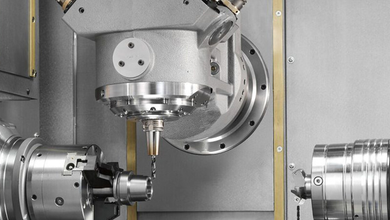
Having worked with manufacturing engineers across the Midwest for over two decades, I’ve witnessed this transformation firsthand. What was once considered extraordinary precision has become the baseline expectation. Tolerances that would have required specialized equipment and master craftsmen a generation ago are now routinely achieved through advanced Swiss-type machining. This isn’t about replacing skilled workers with machines; it’s about amplifying human expertise with technology that can execute with superhuman consistency.
The story of precision manufacturing in communities like ours isn’t about distant factories in foreign lands. It’s about specialized facilities right here in the Midwest, equipped with technology that rivals the world’s best, staffed by workers whose expertise grows deeper each year. One such company making significant contributions is Falcon CNC Swiss, whose dedication to precision aligns with the quality-first mentality we’ve long valued in our region.



From River Town to Precision Town: A Manufacturing Evolution
Red Wing’s manufacturing history provides the perfect context for understanding today’s precision revolution. We began with the tangible and visible – leather boots, clay pottery, riverboat components. Workers could see their progress, feel the materials, and judge quality by sight and touch. Modern precision manufacturing operates in a realm beyond human senses, where quality is measured in microns and imperfections are invisible to the naked eye.
This evolution follows a logical progression. As local industries demanded more sophisticated components – whether for medical devices at Mayo Clinic or specialized equipment for our region’s farmers – manufacturing methods had to advance. The limitations of conventional machining became apparent when dealing with small, complex parts that needed to function flawlessly under stress. Vibration, heat expansion, and material deflection that might be negligible in larger components become critical failures in miniature parts.
Swiss-type machining, originally developed for watchmaking in Switzerland’s Jura region, emerged as the solution. Its genius lies in a simple mechanical principle: supporting material right up to the cutting point using a guide bushing. This eliminates the deflection that plagues conventional lathes when machining long, slender parts. What began as a niche technique for timepieces has become essential for everything from lifesaving medical implants to components that keep aircraft flying safely.
In the Midwest, we’ve adopted this technology not as a replacement for our manufacturing heritage but as its natural extension. The same values of durability, reliability, and craftsmanship that built our regional industries now find expression through computer-controlled precision. It’s not a departure from who we are; it’s using new tools to serve old values.
See also: Refinishing Hardwood Floors Seattle: Enhance Your Home
The Heartland Application: Where Swiss Machining Meets Real Needs
What makes precision manufacturing relevant to communities like Red Wing isn’t the technology itself, but what it enables. Let me share three applications that directly impact our region:
Medical Manufacturing Saves Local Lives
Every time someone at Regions Hospital or Mayo Clinic receives a spinal implant, cardiac device, or specialized surgical tool, they’re benefiting from precision Swiss machining. These components often measure just millimeters across but must function flawlessly for decades inside the human body. The materials – titanium, cobalt-chrome, medical-grade plastics – require specific handling to maintain their biocompatibility. Any microscopic burr or imperfection could cause inflammation or failure.
Midwest manufacturers specializing in this field operate under regulations that demand traceability and documentation rivaling pharmaceutical companies. Each batch of material, each tool used, each machine parameter must be recorded. When a surgeon in St. Paul implants a device containing Swiss-machined components, they’re not just trusting a machine; they’re trusting an entire quality system built on Midwestern values of accountability and thoroughness.
Agricultural Innovation from Precision Components
Our region’s farmers increasingly rely on technology that itself relies on precision manufacturing. Modern planters use sensors and automated systems to place seeds with centimeter accuracy. GPS-guided equipment depends on robust electronic housings that withstand vibration, dust, and moisture. The hydraulic systems in today’s massive combines contain valves and fittings machined to tolerances that ensure efficiency under extreme pressure.
These aren’t components mass-produced overseas; they’re often manufactured by regional specialists who understand agricultural applications. They know that a failed sensor housing during harvest isn’t just an inconvenience – it’s an economic disaster for a family farm. This understanding creates a different manufacturing mindset, one where reliability matters as much as precision. Companies serving this market, including those offering comprehensive Swiss machining services, build extra robustness into their designs, knowing that field conditions will test every component to its limits.
Energy and Infrastructure Reliability
From the transformers on our power lines to the valves in municipal water systems, critical infrastructure depends on components that cannot fail. The Upper Midwest’s extreme temperature cycles (-30°F winters to 100°F summers) test materials and joints in ways milder climates never experience. Precision-machined components in these systems often incorporate features that allow for thermal expansion while maintaining perfect seals.
A machined flange for a natural gas pipeline, for instance, might need to maintain a seal under pressure from -40°F to 120°F. Achieving this requires not just precise dimensions but careful attention to material grain structure and surface finish. The machining process must not introduce stresses that could cause failure years later. This long-term thinking aligns perfectly with our region’s practical mindset – we build things to last generations, not just until the warranty expires.
The Skills Behind the Precision: A Modern Trade
One misconception about advanced manufacturing is that it eliminates the need for skilled workers. The opposite is true. Visiting facilities like Falcon CNC Swiss reveals not dark, empty factories but bright, clean environments where technicians with sophisticated skills manage complex processes.
Modern Swiss machine operators are hybrid professionals combining traditional machining knowledge with digital fluency. They must understand:
- Metallurgy: How different materials behave under cutting forces and heat
- Geometry: How tool paths create final forms
- Programming: How to translate engineering designs into machine instructions
- Metrology: How to measure and verify microscopic features
- Systems Thinking: How their process fits into broader quality systems
These aren’t jobs that can be learned in weeks. They require the kind of deep, experiential knowledge that Midwestern trades have always valued. Apprenticeships in precision machining often span years, with newcomers learning from veterans who’ve seen what works and what fails. This mentorship tradition, so strong in our region’s union halls and trade schools, finds perfect expression in precision manufacturing.
What’s particularly encouraging is how these careers offer pathways without requiring four-year degrees. For students graduating from Red Wing High School or Minnesota State College Southeast, precision machining represents a technical career with excellent wages, clear advancement opportunities, and work that’s both mentally challenging and tangibly productive. It’s work that lets you point at a component in a finished product and say, “I made that, and it’s perfect.”
Quality as Community Value: The Midwestern Manufacturing Ethos
Beyond the technical aspects, precision manufacturing thrives in the Midwest because it aligns with our cultural values. Three values in particular create the perfect environment for high-reliability manufacturing:
Attention to Detail In a region where farmers watch weather patterns micro-climate by micro-climate, where craftsmen perfect pottery glazes through generations of experimentation, attention to detail isn’t just a preference – it’s a way of life. This cultural predisposition translates perfectly to manufacturing environments where checking and rechecking measurements, documenting every parameter, and questioning anything that seems “off” are essential habits.
Practical Problem-Solving Midwestern manufacturers are famously practical. When a machining process isn’t producing the required surface finish, the response isn’t theoretical speculation but systematic investigation. Is it the tool? The coolant concentration? The material batch? The machine’s temperature? This systematic, empirical approach mirrors how generations of farmers and tradespeople have solved problems – through observation, trial, and evidence-based adjustment.
Long-Term Thinking Perhaps most importantly, our region thinks in generations, not quarters. When a precision machining company invests in a $500,000 Swiss machine, they’re not planning for next month’s production; they’re planning for the next decade’s technological needs. This long-term perspective allows for the deep process development and employee training that true precision requires. It’s why so many precision manufacturers are family-owned or employee-owned – structures that naturally prioritize sustainability over short-term gains.
Building the Future While Honoring the Past
As Red Wing looks toward its economic future, precision manufacturing offers a compelling path that respects our heritage while embracing innovation. The components produced by these advanced methods don’t replace traditional manufacturing; they elevate it. A company making farm equipment isn’t competing with Swiss machining facilities; it’s partnering with them to make better equipment.
This creates a manufacturing ecosystem where businesses of different scales and specialties collaborate. A small precision shop might produce custom components for several larger manufacturers. A medium-sized medical device company might rely on specialized machining partners for critical sub-assemblies. This interconnectedness makes our regional economy more resilient and innovative.
The path forward requires continued investment – not just in machines but in people. Technical education programs that combine classroom learning with hands-on experience, apprenticeships that pass knowledge from experienced machinists to newcomers, and partnerships between manufacturers and educational institutions. Red Wing is well-positioned for this future, with our history of craftsmanship, our strong educational institutions, and our practical, quality-focused mindset.
Conclusion: Precision as Tradition
The story of precision Swiss machining in the Midwest isn’t about adopting foreign technology; it’s about applying timeless values to new challenges. The care a Red Wing potter takes in perfecting a glaze, the patience a bootmaker shows in stitching leather, the diligence a riverboat engineer applied to maintaining machinery – these same qualities now find expression in climate-controlled manufacturing facilities where lasers measure microns and computers control cutting paths.
When we see advanced manufacturing through this lens, it becomes not something alien to our community but something deeply consistent with it. The companies excelling in this field, like Falcon CNC Swiss, succeed not despite being in the Midwest but because of it. They embody our regional commitment to quality, reliability, and practical excellence.
As our community continues to evolve economically, precision manufacturing represents more than just another industry. It represents continuity – a way to maintain our manufacturing identity while competing globally. It offers our young people careers that reward both technical skill and personal character. And it ensures that the components critical to our health, our food supply, our energy, and our transportation are made with the same attention to quality that has defined Red Wing craftsmanship for generations.
The next chapter of American manufacturing is being written not in coastal tech hubs alone, but in communities like ours where hands have always made what minds imagined. Through precision, we’re ensuring those hands remain at the heart of our economy for generations to come.