When a home starts to feel cramped, the instinct is often to look at bigger properties. Before going down that road, it is worth asking a simple question: what is actually missing? If the problem is too many belongings, self storage may be enough. If you need an extra room to work or sleep in, a garage conversion could be the answer. And if the house no longer suits your household at all, moving may be the right call. Each option solves a different problem at a very different price.
Start by naming the problem
A useful exercise is to describe your space issue in a single sentence. “We need somewhere for the Christmas decorations and a spare sofa” points clearly towards storage. “We need a quiet office every weekday” suggests a conversion. “We need another bedroom and a shorter commute” points to a property search. This small test can stop you paying for a building project when what you really need is better organisation.
What self storage costs
Self storage is usually charged as monthly rent on a unit of a set size. Stackt’s 2026 market guide gives indicative UK averages of roughly £63 a month for 25 sq ft, £126 for 50 sq ft and £190 for 75 sq ft, including VAT. Local prices vary, and you should also allow for a deposit, insurance, a padlock, transport and any admin charges.



Storage makes the most financial sense when the need is temporary or limited to belongings. Families preparing to sell often move spare furniture and boxes out so rooms photograph and present better. People renovating use it to keep furniture away from dust and damage. Downsizers, students and landlords use it to hold possessions without changing their living arrangements. Providers such as The Storage Team offer units ranging from small lockers up to rooms large enough for a whole house’s contents, with the option to move up or down a size as needs change, which matters because paying for the right size is more efficient than renting a large room indefinitely.
To compare storage with a one-off project, multiply the monthly quote by the number of months you expect to need it. A £150 unit costs £1,800 over a year, £3,600 over two years and £9,000 over five, before extras. That does not automatically make a conversion the better deal after five years, because a conversion brings its own financing, maintenance and professional fees.
See also: How Drone Tech Genuinely Transforms Building Exterior Care in the City
What a garage conversion costs
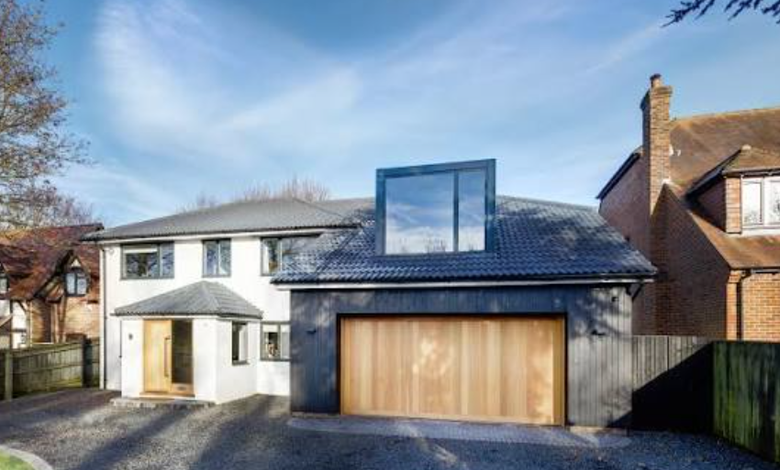
Turning a garage into living space is a significant investment. Checkatrade’s May 2026 guide puts integral garage conversions at around £10,000 to £14,000, attached garages at £10,000 to £20,000 and detached garages at £15,000 to £25,000. A double garage can range from about £20,500 to £45,000 depending on the type and finish.
Those figures can climb if the space needs better insulation, new flooring, heating, plumbing, electrics or structural work. A bedroom or bathroom generally costs more than a simple home office. Ask for a written quote that separates building work, fixtures, professional fees, approvals and a contingency allowance.
Planning rules also need attention before any work begins. The Planning Portal notes that an internal conversion that does not enlarge the building usually does not need planning permission, but restrictions can apply in conservation areas, to listed buildings or where the work creates a separate dwelling. Building regulations approval is often needed regardless, so speak to your local authority early.
The big advantage of a conversion is that it creates space you use every day, whether that is a home office, playroom, gym or guest bedroom. The trade-off is losing whatever the garage currently does. If it is the only home for bikes, tools and garden equipment, those items will need somewhere else to go.
What moving to a bigger house really costs
The cost of moving is much more than the difference between two asking prices. A larger home can mean a bigger deposit or mortgage, higher interest payments, more council tax, higher energy bills and more maintenance. The move itself brings estate agent fees, conveyancing, surveys, removals and often redecorating or repairs before you sell.
Property taxes also vary across the UK. Stamp Duty Land Tax applies in England and Northern Ireland, Scotland uses Land and Buildings Transaction Tax and Wales uses Land Transaction Tax, each with its own thresholds. A survey is another sensible cost to budget for. RICS explains that survey prices vary with the level of inspection and the complexity of the property, and a detailed survey can uncover repairs that change the financial case entirely.
Moving is easiest to justify when the household needs more than storage: an extra bedroom, a different school catchment, outdoor space or a better location. It also makes sense when a conversion would not provide enough room or the existing layout simply does not work.
Is storage cheaper than moving?
For short and medium periods, almost always. Storage avoids transaction costs and a larger mortgage, and moving house purely to gain storage space is financially out of proportion. It is also a low-risk way to test whether a decluttered home solves the problem before committing to something bigger.
Over many years, though, rent adds up. If what you really need is a permanent office or bedroom, a conversion or a move may offer better value because it creates living space. The key is comparing like with like: a converted garage is not a substitute for storing large volumes of possessions, and a bigger house is far more than a storage unit with a kitchen.
Hidden costs to include in every option
For storage, include the rent after any introductory offer, insurance, deposit, padlock, admin fees, transport and packing materials. For a conversion, include surveys, design, building regulations, insulation, damp proofing, windows and doors, electrics, heating, flooring, decorating and contingency, plus the cost of replacing whatever the garage used to store. For a move, include agent fees, legal costs, the survey, mortgage fees, property tax, removals, possible temporary accommodation and storage between homes, cleaning and higher running costs.
Making the decision
Choose storage when the need is temporary, the items are not used daily, or you want a low-commitment way to clear rooms. Choose a conversion when you need permanent living or working space and the structure can be converted at a cost you can fund. Consider moving when the household needs a different layout, location or number of rooms that neither storage nor a conversion can provide.
Whichever way you lean, set a fixed time horizon such as two or five years, add every upfront, recurring and exit cost, and get written quotes for each option. That turns a stressful decision into a straightforward comparison.