Every day, millions of people rely on technologies they never think about. A surgical procedure goes smoothly because the instruments in the surgeon’s hands function exactly as designed. An electric vehicle accelerates silently because the connections in its battery pack deliver power without interruption. A smartphone charges reliably because the contacts in its connector survive thousands of plug-and-unplug cycles. In each case, the performance of the entire system depends on components that are small, precisely made, and completely invisible to the end user.
These components—pins, shafts, connectors, bushings, and fasteners—are the quiet foundation of modern industry. They rarely appear in product marketing or corporate earnings calls. But they determine whether products work as intended or fail unpredictably. And the manufacturing sector that produces them is undergoing significant change.
The Scale of the Precision Component Market
The global precision turned product manufacturing market, which covers these kinds of small, high-tolerance components, grew from approximately USD 121 billion in 2025 to nearly USD 128.4 billion in 2026 and is projected to reach USD 172.3 billion by 2031. The broader precision machining market is expanding even faster, with projections suggesting it will grow from roughly USD 123.5 billion in 2025 to nearly USD 228.8 billion by 2033.



This growth is not driven by volume alone. It reflects a fundamental shift in what industries need. Medical devices are becoming smaller and more complex. Electric vehicles require components that manage higher currents and tighter thermal tolerances. Aerospace systems demand lighter parts without sacrificing reliability. Each of these trends places greater demands on the manufacturers who produce precision components.
See also: Cleveland Business Tech Services: Local Expertise, Global Infrastructure
What Makes Precision Manufacturing Different
Producing a component to a tolerance of a few microns is not simply a matter of buying a better machine. It requires a combination of equipment, process knowledge, and quality systems that take years to develop.
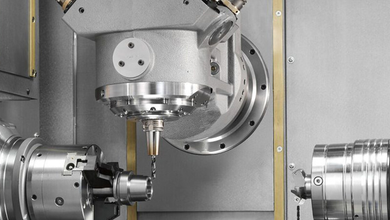
The technology at the center of much of this work is Swiss-type machining. Originally developed for watchmaking, Swiss machines feed material through a guide bushing positioned immediately next to the cutting tool. Unlike conventional lathes, where the workpiece extends unsupported from the chuck, this design keeps the material rigid throughout the cut. The result is the ability to hold tight tolerances on long, slender parts that would otherwise be impossible to machine accurately.
Modern Swiss machining centers integrate turning, milling, drilling, and threading in a single setup. This “done-in-one” approach reduces handling errors, shortens production cycles, and keeps critical features aligned. For industries where every component matters, this consistency is not a luxury. It is a requirement. Falcon CNC Swiss has built its operation around this principle, providing Swiss machining services that combine multi-axis capability with rigorous quality systems and full material traceability.
The Industries That Depend on Precision Components
The applications for precision components span virtually every high-technology sector. In medical device manufacturing, surgical instruments and orthopedic implants must meet tolerances measured in microns. A bone screw that is not perfectly concentric can fail to integrate properly. A catheter component with a rough surface finish can cause tissue damage. These are not abstract risks. They are the daily reality of medical engineering, where quality systems must satisfy stringent regulatory requirements and full traceability is mandatory.
Aerospace presents a similar set of demands. Hydraulic fittings, fuel system components, and actuation mechanisms must withstand extreme temperature variation, vibration, and pressure differentials over decades of service. A single defective fastener can compromise structural integrity. Suppliers must provide full material traceability, first-article inspection reports, and certification packages that satisfy regulatory audits.
Automotive manufacturing, especially with the shift to electric vehicles, has become another major driver. EV architectures replace thousands of mechanical parts with a smaller set of highly accurate, thermally stable components. Stator housings, coolant junctions, battery contact pins, and sensor housings all require the kind of precision that advanced CNC machining delivers.
Consumer electronics represents yet another growth area. Smartphones, wearables, and portable medical devices rely on miniature connectors, contact pins, and structural components that must function reliably through thousands of cycles. The trend toward smaller, denser, more integrated products creates a parallel challenge. The smaller a product becomes, the tighter the tolerances on its individual components must be.
Falcon CNC Swiss has built its reputation on this kind of material expertise, producing precision Swiss machining parts in a wide range of alloys for demanding applications across medical, aerospace, and industrial sectors. The company’s portfolio includes bolts and nuts, inserts and bushings, pins and shafts, connectors and fittings, valves and couplings, and electrical contacts—components that are essential to assemblies but rarely receive attention.
The Materials That Make Precision Possible
The range of materials used in precision components continues to expand. Stainless steel remains the volume foundation, used for medical instruments, aerospace fasteners, and fuel system components. Aluminum has become essential for lightweighting, particularly in electric vehicles and aerospace. Titanium and super-alloys are gaining share in engines, implants, and high-temperature systems, even though they are difficult to machine.
Each material demands specific parameters and tooling strategies. Stainless steel work-hardens rapidly if speeds and feeds are not optimized. Aluminum requires high-speed cutting with careful chip management. Titanium’s poor thermal conductivity concentrates heat at the tool edge, accelerating wear. Suppliers that have developed documented process libraries across multiple material families deliver more consistent results than those still learning on customer orders.
The Skills Challenge Reshaping the Industry
The precision manufacturing sector faces a significant challenge. Demand for skilled machinists has never been higher, yet the supply of qualified workers continues to shrink. Precision machining consistently ranks among the hardest positions to fill because the trade requires years of on-the-job mentoring. As experienced machinists retire, the gap widens.
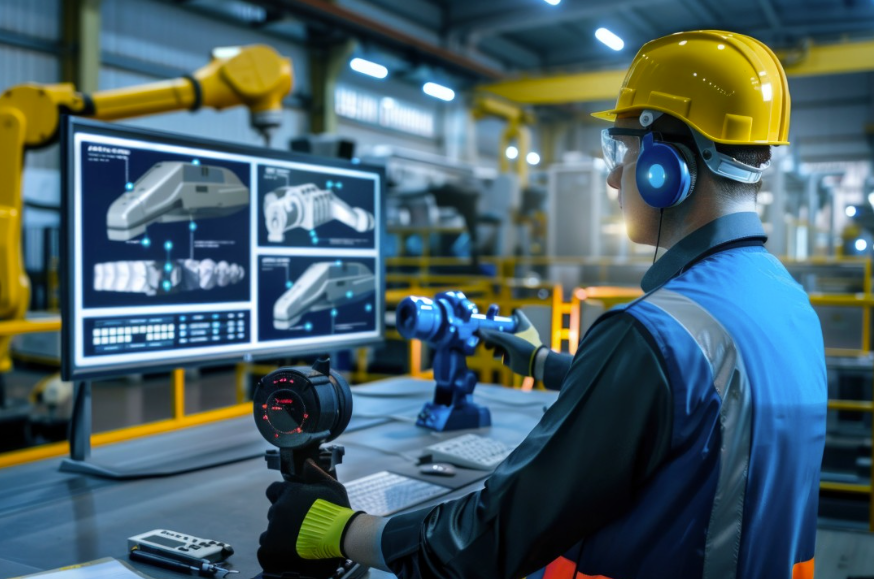
This shortage has created a premium for suppliers that have invested in automation and workforce development. Robot-tended CNC cells, automated bar feeders, and lights-out machining enable manufacturers to maintain production with smaller workforces. Companies that have made these investments are positioned to capture the most demanding programs. Those still relying on manual processes struggle to keep pace.
The Shift Toward Strategic Sourcing
Reshoring and supply chain diversification have changed how companies select manufacturing partners. The lowest quoted price is rarely the lowest total cost when component quality or delivery reliability suffers. Procurement teams now evaluate suppliers on equipment depth, material experience, quality infrastructure, and the ability to scale production without sacrificing tolerances.
For precision components, this shift is particularly significant. A supplier who can produce a perfect prototype but cannot maintain consistency at volume is not a partner. A supplier who lacks traceability documentation cannot serve regulated industries. A supplier who has not invested in automation cannot absorb demand fluctuations. The companies that understand this are building relationships with manufacturers who have made the long-term investments in precision.
Looking Ahead
The market trends point in one direction. Demand for precision components will continue to grow as aerospace recovers, electric vehicles scale, and medical devices become more complex. The suppliers who thrive will be those that combine advanced equipment, documented processes, and skilled workforces. The ones who do not will compete for increasingly scarce commodity work.
For manufacturers, the message is clear. Precision components are not just a procurement line item. They are a strategic asset that determines whether products perform as designed, whether supply chains remain resilient, and whether companies can compete in an increasingly demanding global market. In an era where every component matters, the ability to source high-quality precision parts from a reliable partner is not optional. It is the foundation of lasting competitive advantage.