For decades, granite was the automatic choice for an upscale kitchen. Its natural character and durability made it easy to justify, but today’s homeowners expect more flexibility from their surfaces. They want fewer maintenance demands, greater design control, and materials that suit everything from quiet minimalism to dramatic statement kitchens.
Those priorities help explain why porcelain countertops are appearing in more renovations and new builds. Large-format porcelain slabs offer the polished look homeowners associate with premium stone while addressing several of granite’s limitations. Porcelain is highly resistant to stains, heat, moisture, and UV exposure, and it does not require routine sealing.
More Control Over the Finished Look
Natural granite is inherently unpredictable. When buyers pick a slab, they don’t control its veining, mineral deposits, or colour shifts. That uniqueness appeals to some homeowners. For others, it can make coordinating cabinetry, flooring, backsplashes, and adjoining rooms more difficult.




Porcelain gives designers greater control. Modern manufacturing can reproduce the movement of marble, the depth of natural stone, or the robustness of concrete with remarkable detail. Manufacturers can also produce coordinating slabs, making it easier to plan matching surfaces or create bookmatched installations.
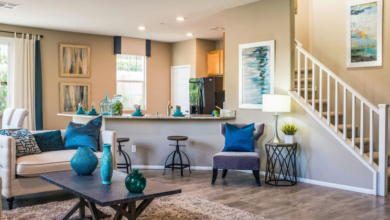
Consistency is especially useful in open-concept homes. When the kitchen is visible from the living and dining areas, the countertop becomes part of a much larger decorating scheme. A predictable pattern and colour palette can help the entire space feel intentional and connected.
See also: About Datrihelminen Life
Large Slabs Create a Cleaner Kitchen
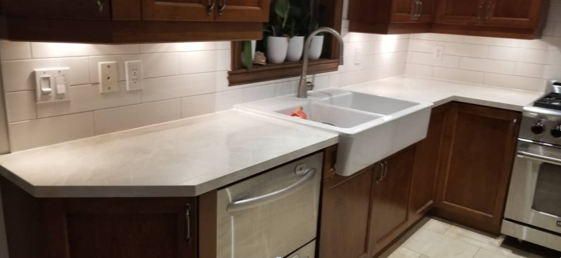
Today’s kitchens favour long islands, full-height backsplashes, waterfall ends, and uninterrupted horizontal lines. Porcelain is well suited to these features because it’s available in large slab formats that can reduce the number of visible seams.
It can also create visual continuity across several surfaces. A homeowner might carry the same porcelain from the countertop up the wall, wrap it around an island, or use it on a nearby beverage station. Instead of introducing another competing finish, the kitchen gains one strong, cohesive design element.
Porcelain slabs are often relatively thin. Fabricators can use mitred edges to create the appearance of a substantial countertop without requiring an equally thick piece of material. This provides more freedom to customize the visual weight of an island or perimeter counter.
Performance Fits the Way People Cook
Granite is durable, but it’s porous and generally needs periodic sealing to reduce its susceptibility to staining. Porcelain has very low water absorption, so common kitchen spills are less likely to penetrate the surface. Its resistance to heat also makes it practical around cooktops and other busy preparation areas.
Sunlight is also important to consider. Porcelain’s colour stability allows it to perform well in kitchens with large windows and in suitable outdoor applications. Granite can also work outdoors, although certain varieties and sealants may respond differently to prolonged exposure.
No countertop is indestructible. Porcelain edges can chip if struck by a heavy object, and improper handling during fabrication may cause cracks. It’s still a sensible idea to use cutting boards and trivets, even on a surface that offers strong everyday resistance.
Skilled Fabrication Makes the Difference
Porcelain requires specialized tools, careful transport, and experienced handling. Large slabs can be challenging to cut, especially when a design includes sink openings, cooktops, mitred edges, or complex seam placement.
A qualified fabricator will assess cabinet support, plan cutouts carefully, and determine where seams will be least noticeable. This technical prep has a direct effect on both how your countertops look and perform over the long haul. In other words, you should compare fabrication experience as closely as you do colours, patterns, and pricing.
A New Standard for Modern Kitchens
While granite might still be the kitchen countertop material of choice for some homeowners, porcelain is gaining ground because it aligns more closely with how kitchens are being designed and used now. Before choosing a surface based on tradition, view full slabs in person and speak with an experienced fabricator before deciding which will work best in your space.