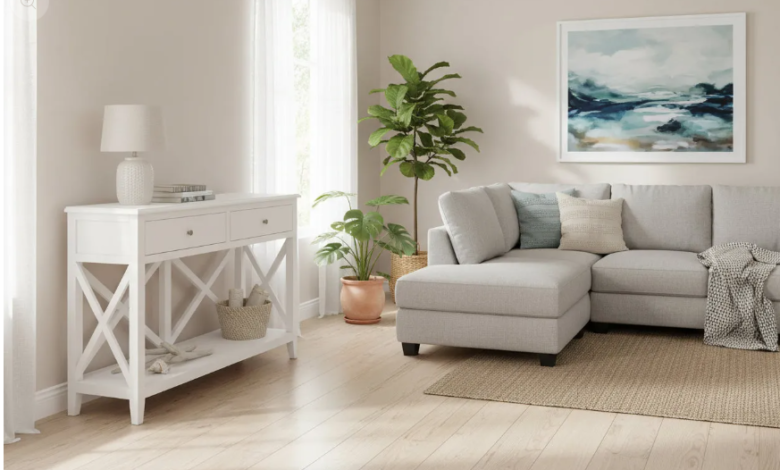
An entryway sets the tone for the rest of the home, and a well-chosen wood console table does more work in that space than almost any other single piece of furniture. It’s often the first thing seen upon walking in the door, and the last thing touched on the way out, which makes getting the choice right more important than it might first appear.
Understanding What Makes a Console Table Different
Unlike a sideboard or a regular table, a console table is designed to sit flush against a wall, which means proportion and depth matter more than they would elsewhere in the home. A wood console table that’s too deep can crowd a narrow hallway, while one that’s too shallow can look out of place against a larger wall. Measuring the available space carefully before shopping avoids one of the most common furniture-buying mistakes.
Why Solid Timber Suits This Role
Because console tables often double as a landing spot for keys, mail, bags, and the occasional decorative piece, they take more daily wear than many people expect. A solid wood console table handles this kind of repeated use far better than composite or veneer alternatives, which tend to show scuffs and edge damage much sooner under the same conditions. Timber also tends to develop a richer patina with age rather than simply looking worn.



Matching Style to the Rest of the Home
The entryway is usually one of the first transitional spaces between a home’s exterior and its interior style, so the console table chosen there has an outsized influence on first impressions. A simpler, cleaner-lined wood console table tends to suit contemporary or minimalist interiors, while a piece with more traditional joinery and detailing complements period homes or more classic decorating styles. It’s worth considering the console table almost as a stylistic bridge between what’s outside the door and what’s beyond it.
See also: The Boston Business Upgrade Nobody Talks About Enough
Practical Features Worth Considering
Beyond the tabletop itself, many wood console tables include a lower shelf or drawer, and these small additions can make a meaningful difference to everyday usability. A lower shelf offers a spot for baskets or shoes, while a drawer keeps smaller items like keys and mail out of sight. Deciding in advance how the table will actually be used helps narrow down which features are worth prioritizing versus which are simply nice extras.
Considering Scale and Wall Proportion
A console table that’s dramatically shorter or narrower than the wall behind it can look visually unbalanced, particularly if there’s artwork or a mirror hung above it. As a general guide, a console table roughly two-thirds the width of the wall space it occupies tends to create the most balanced look, though this can flex depending on other furniture nearby.
Caring for Timber in a High-Traffic Space
Because entryways often see more temperature and humidity fluctuation than other rooms, particularly near an exterior door, timber furniture placed there benefits from a slightly more attentive care routine. Wiping down spills promptly, avoiding direct exposure to rain or excessive sun through a nearby window, and periodic polishing all help preserve both the finish and the structural integrity of a wood console table over time.
Bringing It All Together
Choosing a wood console table isn’t just about filling an empty stretch of wall — it’s about selecting a piece that will genuinely hold up to daily use while setting the right tone for the home. Taking the time to consider proportion, timber quality, and practical features before buying results in a piece that continues to earn its place in the entryway for years to come.