The Trades That Switched to Aluminium First — and the One Problem Each Was Trying to Escape

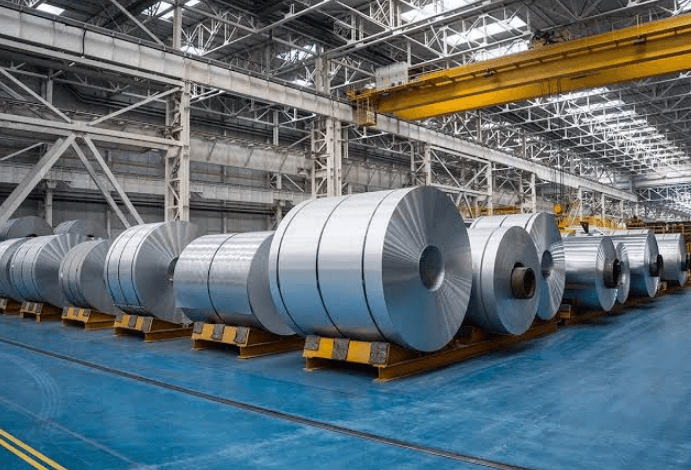
Early industries switched to aluminium to limit physical, logistical, and structural constraints. Because aluminium is lightweight, corrosion-resistant, and highly conductive, it offers distinct advantages over the heavy metals initially used.
The first trades to switch to aluminium were looking to do more with less.
The aerospace and aviation industry, which faced the problem of excessive weight of wood and steel, severely limited early flight and capacity range. The Wright brothers also struggled to create a functional aeroplane until they used a custom aluminium to considerably lower the weight.



Aluminium provides the ideal solution because its alloys provide a superior strength-to-weight ratio, allowing an aircraft to carry heavier payloads, fly farther, and safely withstand high-stress flight dynamics.
The electrical engineering and power transmission industries had to contend with the skyrocketing cost of copper and the tendency of copper cables to sag under their own immense weight over long spans.
Aluminium was the ideal solution, as it has high electrical conductivity and is lightweight, allowing companies to string power lines much farther with fewer structural constraints on towers, creating an affordable and reliable power grid.
The packaging and beverage industry faced the problem of heavy environmental litter from steel tin cans and the rapid degradation of beverage flavours in tinplate.
Beverage companies decided to transition to aluminium cans because they were lightweight, chilled much faster, didn’t affect the beverage’s taste, and could be infinitely recycled without losing structural integrity.
The cookware and culinary manufacturing industry faced the problem of cumbersome maintenance of cast iron, which was extremely heavy, prone to rusting, and took a long time to heat evenly.
The solution was to switch from cast iron to aluminium cookware for its lightweight, rust-proof, and heat-conductive properties. This meant pots and pans heated up much faster and more evenly on early stoves.
Construction in bushfire-prone areas must consider the materials selected for projects rather than aesthetics alone.
Timber has long been a popular structural material, but it is highly combustible, posing an obvious challenge in high-risk bushfire zones. Builders needed alternatives that complied with increasingly demanding building standards while reducing combustible elements in construction projects.
Aluminium became an important choice due to being an option for applications including verandas, external staircases, deck framing, shade structures, and carports,
Because aluminium is non-combustible, it allows builders to reduce fire-related vulnerabilities in many external applications.
Rather than replacing every material on a project, aluminium often became the preferred solution wherever exposed framing created higher fire risks.
The problem it solved wasn’t just merely durability; it helped construction project managers minimise combustible construction elements in challenging environments.
Pest management professionals face challenges due to Australia’s termite activity, which has shaped building practices for decades. Traditional timber framing needs careful management in termite-prone areas through barriers, inspections and ongoing maintenance.
Although no building material eliminates the need for proper pest management, aluminium framing reduces a major vulnerability because it can’t be damaged by termites.
For builders looking to repair termite-related structural damage, aluminium is an attractive choice for a range of framing applications.
Instead of worrying about hidden structural deterioration in timber, aluminium offers a material termites cannot destroy.
The problem solved was not structural strength; it was the elimination of one of Australia’s most persistent maintenance issues.
Precision builders requiring high levels of dimensional accuracy also found value in aluminium.
See also: The Boston Business Upgrade Nobody Talks About Enough
One key issue with timber was that it expanded, contracted, twisted, and warped in response to changes in environmental conditions. Even well-seasoned timber experienced movement with time.
For projects that require precision, such as architectural features. Modular construction, prefabricated systems, and custom structural assemblies. These movements could cause alignment problems.
One key attribute of aluminium is its dimensional stability under normal building conditions, which helps maintain installation tolerances throughout the structure’s life.
This stability lowers callbacks for adjustments while improving the long-term performance of connected components.
Aluminium structures can be seen around the world and are found across residential, commercial and industrial construction because they continue to address real-world issues.