For centuries, mosaics have been one of the most enduring materials in interiors and architecture. Once associated primarily with ancient architecture and Mediterranean villas, they have now found a renaissance and appear everywhere from boutique hotels to minimalist kitchens and spa-inspired bathrooms. According to recent kitchen and bath industry reports, textured surfaces and artisanal finishes continue to rank among the top renovation priorities for homeowners seeking individuality and longevity in design. In that landscape, mosaics feel especially relevant: tactile, customizable, and surprisingly versatile. So, if you love mosaics and want to incorporate them into your home, which interior design style would create the most harmonious combination?
Mediterranean Style
Perhaps the most intuitive pairing, Mediterranean interiors have embraced mosaics for centuries. Rooted in the coastal homes of Greece, Spain, Morocco, and southern Italy, this style celebrates warmth, texture, and decorative detail. Mosaic tile backsplashes, stair risers, fountains, and courtyard walls feel entirely at home within this aesthetic.
Today’s interpretation is notably more restrained than the heavily ornate versions popular in the early 2000s. Designers are favoring sun-washed neutrals, terracotta, limestone, and handmade finishes paired with subtle geometric tilework. Blue-and-white palettes remain classic, but earthy olive, sand, and rust tones are increasingly popular for creating a softer, more contemporary atmosphere.




Modern Organic Interiors
The rise of modern organic design has dramatically expanded the use of mosaics in contemporary homes. Characterized by natural materials, curved silhouettes, and muted palettes, this style seeks to soften minimalism with tactile elements.
In these interiors, mosaics are often used sparingly but strategically. Think zellige-inspired walls in warm ivory, pebble mosaics in wet rooms, or tonal stone compositions surrounding fireplaces. Rather than acting as a decorative centerpiece, the mosaic becomes part of the room’s texture story.
This aligns with broader industry trends emphasizing wellness-focused interiors. Designers increasingly prioritize materials that create sensory richness and emotional comfort, particularly in bathrooms and relaxation spaces.
Art Deco Revival
Art Deco has returned in a more refined form, and mosaics are central to its revival. The style’s signature glamour, defined by symmetry, metallic accents, and bold geometry, pairs beautifully with intricate tilework.
Unlike Mediterranean mosaics, Art Deco applications tend to emphasize precision. Black-and-white geometric floors, fan motifs, brass inlays, and jewel-toned glass tiles all reflect the era’s fascination with luxury and craftsmanship. Designers are especially drawn to mosaic installations in powder rooms, bars, and entryways where dramatic visual impact matters most.
This resurgence coincides with growing interest in statement interiors. As open-plan homes become increasingly streamlined, smaller spaces are often treated as opportunities for experimentation.
Japandi Style
At first glance, Japandi interiors don’t seem like a natural fit for mosaics. The hybrid aesthetic, combining Japanese minimalism with Scandinavian functionality, typically favors clean lines and understated materials. Yet mosaics can work beautifully here when approached with discipline.
The secret is scale and tone. Tiny, highly contrasted patterns would feel visually disruptive, but tonal mosaics in natural stone, concrete, or matte ceramic integrate seamlessly. Soft greys, warm beiges, charcoal, and off-white compositions support the calm atmosphere central to Japandi design.
Mosaics are particularly effective in bathrooms within this style. Floor-to-ceiling applications in muted textures can create a serene, spa-like effect without introducing unnecessary ornamentation.
See also: Home Construction Paperwork Checklist for 2026
Maximalist Eclecticism
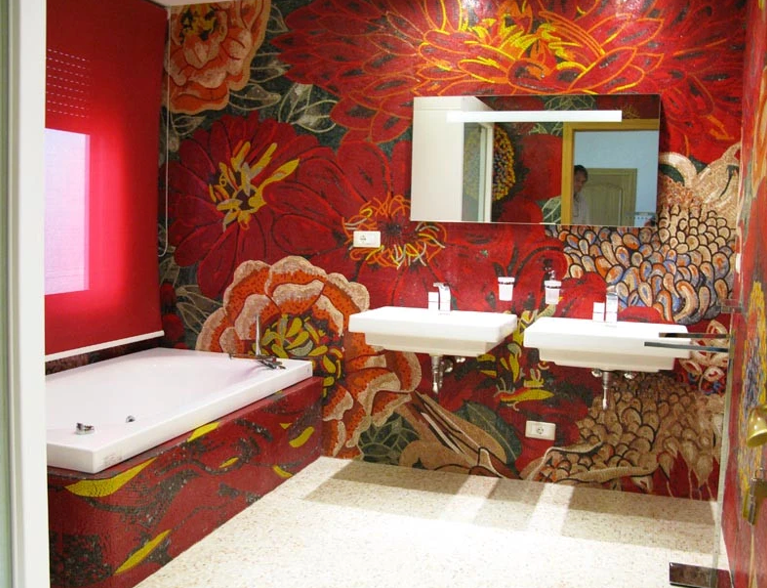
On the opposite end of the spectrum, maximalist interiors offer limitless opportunities for mosaics. Rich color layering, vintage furnishings, patterned textiles, and collected objects naturally complement expressive tilework.
In these homes, mosaics often become focal points rather than supporting details. Dramatic kitchen backsplashes, artistic tabletops, tiled archways, and custom murals all contribute to the layered storytelling that maximalism embraces.
Importantly, contemporary maximalism is less about clutter and more about intentional personality. Designers frequently mix historical references with modern silhouettes, allowing mosaics to bridge eras and influences. Glass, marble, ceramic, and mixed-media applications can coexist within a single space when unified by color and scale.
The renewed appreciation for handcrafted mosaics also reflects consumers’ growing interest in artisanal production and one-of-a-kind interiors. In an age of mass manufacturing, bespoke surfaces offer a sense of permanence and individuality that many homeowners now prioritize.