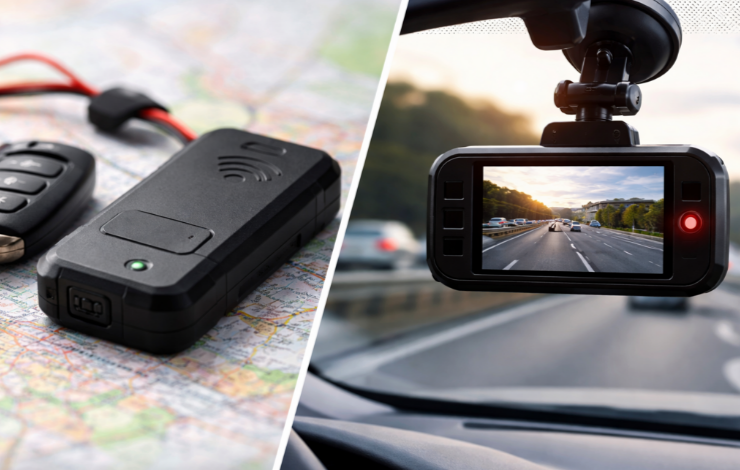
For businesses that rely on vehicles, field teams, or mobile assets, investing in tracking and monitoring technology is no longer optional—it’s a strategic necessity. Among the most common solutions, two options often come into consideration: a GPS Tracker and a dash cam with GPS. While both tools aim to improve visibility and operational control, they deliver value in different ways, making the return on investment (ROI) highly dependent on business needs, priorities, and scale.
Understanding which solution delivers better ROI requires more than just comparing features. It involves analyzing cost structures, operational impact, risk mitigation, and long-term scalability. This article explores these dimensions in depth to help businesses make informed, objective decisions.
Understanding the Core Differences
A standalone GPS tracking system primarily focuses on location data. It provides real-time updates on vehicle movement, route history, idle time, and in many cases, driver behavior metrics such as speeding or harsh braking. These systems are widely used across logistics, delivery, and service industries where efficiency and coordination are critical.




On the other hand, a dashcam GPS tracker combines location tracking with video recording. It not only shows where a vehicle is but also captures what is happening on the road. This includes footage of accidents, driver actions, and environmental conditions. As a result, it serves both as a monitoring tool and an evidence-gathering device.
The fundamental distinction lies in data type: one delivers quantitative location data, while the other adds qualitative visual context.
Cost vs Value: The Foundation of ROI
When evaluating ROI, cost is often the first factor businesses consider. Standalone tracking systems typically have lower upfront costs and simpler installation processes. Subscription fees are also generally more affordable, making them accessible for small to mid-sized businesses.
Dashcam-based solutions, however, tend to have higher initial costs due to hardware complexity, including cameras, storage, and sometimes AI-powered analytics. Ongoing costs may also be higher because of video storage and data processing requirements.
However, focusing solely on cost can be misleading. ROI is not just about saving money—it’s about value creation over time. While a tracking system may reduce fuel costs and improve route efficiency, a camera-enabled solution can prevent costly legal disputes, reduce insurance premiums, and protect against fraud.
The trade-off here is clear:
- Lower cost and efficiency-focused benefits vs
- Higher cost but broader risk mitigation and accountability
Operational Efficiency and Productivity
One of the strongest advantages of a GPS tracking system is its ability to optimize daily operations. Businesses can monitor routes, identify inefficiencies, and reduce unnecessary mileage. Dispatchers can assign jobs more effectively, and managers gain real-time insights into field activity.
This directly translates into measurable ROI through:
- Reduced fuel consumption
- Increased job completion rates
- Better time management
A dashcam GPS tracker contributes to efficiency in a different way. While it may not directly optimize routes, it improves driver accountability. Knowing that driving behavior is being recorded often leads to safer and more responsible driving. Over time, this can reduce accidents, downtime, and vehicle wear and tear.
The challenge for businesses is deciding which type of efficiency matters more:
- Operational efficiency (routes, fuel, time)
- Behavioral efficiency (driver conduct, safety, compliance)
In many cases, the highest ROI comes from aligning the solution with the primary operational bottleneck.
Risk Management and Liability Reduction
Risk is one of the most underestimated factors when calculating ROI. Accidents, disputes, and fraudulent claims can result in significant financial losses, often far exceeding the cost of monitoring technology.
A standalone tracking system provides location-based evidence, which can be useful in verifying routes or timelines. However, it lacks visual proof, which can be critical in legal or insurance scenarios.
A camera-enabled solution, by contrast, offers direct video evidence. This can:
- Protect businesses from false claims
- Speed up insurance processes
- Reduce legal expenses
- Improve claim success rates
For industries with high exposure to road risks—such as logistics, transportation, or ride-sharing—the ability to provide visual evidence can dramatically improve ROI.
The trade-off here involves balancing preventive efficiency with reactive protection. While one reduces the likelihood of issues, the other minimizes the impact when issues occur.
Driver Behavior and Safety Impact
Driver behavior plays a major role in both operational performance and risk exposure. Monitoring and improving this behavior can lead to significant long-term savings.
A GPS tracking system can track metrics like speed, idling, and harsh driving. These insights allow managers to coach drivers and enforce safety policies. However, the data is often limited to numerical indicators, which may not provide full context.
A dashcam GPS tracker enhances this by adding visual insights. Managers can review actual driving situations, identify risky behaviors, and provide more effective training. This not only improves safety but also fosters accountability.
The impact on ROI comes from:
- Fewer accidents
- Lower maintenance costs
- Reduced insurance premiums
- Improved employee performance
However, implementing camera-based monitoring can also introduce challenges, such as employee resistance or privacy concerns. Businesses must carefully manage communication and policies to ensure adoption without affecting morale.
Data Management and Complexity
Another important factor in ROI is how easily a system can be implemented and managed. Simpler systems often deliver faster returns because they require less training and integration.
A GPS tracking system is generally easier to deploy and use. It provides clear, actionable data without overwhelming users. This makes it ideal for businesses that need quick results without investing heavily in training or IT infrastructure.
A dashcam GPS tracker, while more powerful, introduces complexity. Managing video data, analyzing footage, and integrating insights into daily operations can require additional resources. Without proper processes in place, the added data may not translate into meaningful ROI.
This highlights a critical challenge:
More data does not always mean more value.
Businesses must ensure they have the capability to use the data effectively; otherwise, the potential benefits may remain unrealized.
Scalability and Long-Term Growth
As businesses grow, their technology needs evolve. A solution that works for a small fleet may not be sufficient for a large, multi-location operation.
A GPS tracking system is highly scalable and cost-effective for expanding fleets. It allows businesses to maintain visibility and control without significantly increasing complexity or cost.
A dashcam GPS tracker also scales, but with higher costs and infrastructure requirements. However, for larger enterprises, the added insights and risk protection can justify the investment.
The key consideration here is future readiness. Businesses must evaluate whether their current needs will remain the same or become more complex over time. Investing in a more advanced solution early on may lead to higher ROI in the long run, even if the initial costs are higher.
Industry-Specific Considerations
ROI is not universal—it varies significantly by industry. For example:
- Logistics and delivery companies often prioritize route optimization and fuel savings, making a tracking-focused solution highly effective.
- Construction and equipment-based businesses may benefit from both tracking and visual monitoring, especially for theft prevention and asset protection.
- Service-based businesses may value scheduling efficiency but also need accountability for customer interactions.
- High-risk industries such as transportation or ride-hailing often see greater ROI from camera-enabled solutions due to liability concerns.
Understanding the specific challenges and priorities of an industry is essential for making the right investment decision.
Balancing Trade-Offs for Maximum ROI
Choosing between these solutions is not about identifying a universally “better” option. Instead, it’s about balancing trade-offs based on business goals.
A tracking-focused approach offers:
- Lower costs
- Faster implementation
Strong operational efficiency
A camera-enabled approach offers:
- Enhanced safety and accountability
- Better risk management
- Stronger legal protection
The challenge lies in determining which benefits have the greatest financial and strategic impact. In some cases, businesses may find that combining both approaches delivers the highest ROI, even though it requires a larger upfront investment.
The Importance of Business Impact
When making decisions about monitoring technology, businesses must look beyond features and consider overall impact. This includes:
- How the solution affects daily operations
- Its influence on employee behavior and productivity
Its role in reducing risks and protecting assets - Its ability to support long-term growth
ROI should be viewed as a combination of financial returns, operational improvements, and risk reduction. A solution that excels in one area but falls short in others may not deliver the best overall value.
Final Thoughts
The decision between a standalone GPS Tracker and a dash cam with GPS ultimately depends on what a business values most: efficiency, safety, or a balance of both. A GPS tracking system is often the best choice for organizations focused on optimizing operations and controlling costs, while a dashcam GPS tracker provides greater value in environments where safety, accountability, and risk management are critical.
There is no one-size-fits-all answer. The highest ROI comes from aligning the chosen solution with specific business needs, industry challenges, and long-term objectives. By carefully evaluating trade-offs and considering the broader impact, businesses can make informed decisions that deliver meaningful and sustainable returns.