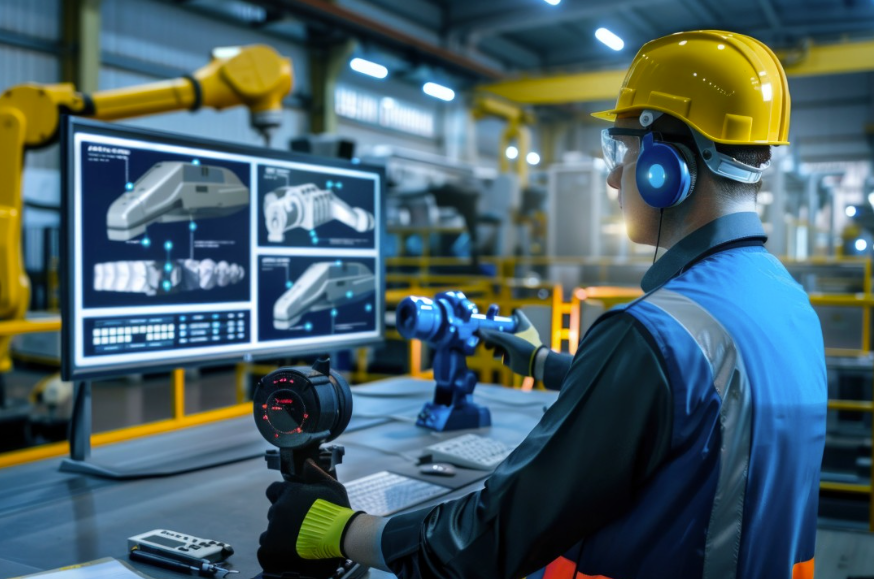
Robotic welding machines have become essential tools in modern manufacturing, delivering exceptional precision and efficiency. They are commonly used across industries such as automotive, construction, aerospace, and shipbuilding to perform complex welding tasks. These machines ensure consistent quality, reduce production times, and enhance workplace safety.
Once limited to large factories, robotic welding is now being adopted in many different industries. This article explores the diverse applications of robotic welding machines and their growing role in shaping the future of industrial operations.
Overview of Robotic Welding Technology
Robotic welding technology uses automated systems to perform welding tasks with precision, speed, and safety. It is commonly used across industries like automotive, aerospace, shipbuilding, and general manufacturing.


Types of Robotic Welding
MIG/MAG Welding Robots:
These robots use Gas Metal Arc Welding (GMAW), also called MIG or MAG welding. They are fast, flexible, and ideal for large-scale production, especially when welding thicker metals.
TIG Welding Robots:
These robots use Gas Tungsten Arc Welding (GTAW), also known as TIG welding. They provide very high precision and are best for thin materials or parts that require clean, strong, and high-quality welds.
Spot Welding Robots:
These robots use resistance welding to join thin metal sheets at specific points. They are commonly used in the automotive industry because they create strong, localized welds quickly and efficiently.
Laser Welding Robots:
These robots use a focused laser beam to melt and join materials. They offer very high precision with minimal heat distortion, making them ideal for delicate, complex, or high-accuracy parts.
See also: tech support phone number
Components of a Robotic Welding System
Robot Arm:
The robot arm moves and positions the welding tool during operation. Many have a hollow wrist that allows cables and cooling systems to pass through, helping manage heat and protect components.
Welding Torch:
The welding torch guides the welding arc to the metal being worked on. It is designed with protective coatings and hidden cable routing to withstand heat, sparks, and other harsh welding conditions.
Sensors and Vision Systems:
These systems locate weld seams, check weld quality, and make real-time adjustments to ensure accuracy and precision during welding.
Control Software:
The control software sets the robot’s movements and welding parameters. It also uses feedback from sensors to adjust settings and optimize welding performance in real time..
Robotic welding technology improves efficiency, ensures consistent quality, and enhances safety. It is a valuable tool in modern manufacturing, helping industries meet high production demands while reducing risks and costs.
Applications Across Different Industries
Robotic welding is changing manufacturing by making work faster, more accurate, and safer. These machines can handle both large-scale and delicate tasks, producing consistent results that are hard to achieve manually. Here’s how different industries use robotic welding:
Automotive Industry
Applications: Spot welding car body panels, assembling frames, and welding engine parts.
Benefits: Faster production, precise and uniform welds, lower labor costs, and fewer workplace injuries from repetitive tasks.
Aerospace Industry
Applications: Welding aircraft engines, structural frames, fuselage sections, and landing gear.
Benefits: High accuracy and consistent quality, reduces human errors, and handles complex, precision tasks safely.
Construction and Infrastructure
Applications: Welding structural steel for buildings, bridges, and pipelines.
Benefits: Strong, precise welds, faster assembly, and less risk to workers from heat, sparks, and heavy materials.
Shipbuilding Industry
Applications: Hull assembly, structural welding of ships, and underwater welding with specialized robots.
Benefits: The benefits of robotic welding include creating a safer work environment, allowing precise welding of large components, and reducing construction time, even in challenging conditions.
Electronics and Precision Engineering
Applications: Welding small, delicate parts for smartphones, tablets, and other electronic devices.
Benefits: Consistent quality, enables miniaturization, and performs precise welds that are hard for humans.
Other Emerging Applications
Energy Sector: Welding parts for wind turbines, solar frames, and pipelines.
Agricultural Machinery: Making parts for tractors, harvesters, and other equipment.
Customized Manufacturing: Tailored solutions for specialized or small-batch products.
Robotic welding improves speed, precision, and safety across industries. From large-scale automotive and aerospace production to tiny electronics and energy projects, these robots increase efficiency, reduce costs, and protect workers. Their flexibility also helps manufacturers quickly adapt to changing needs, making them essential in modern manufacturing.
Advantages of Robotic Welding in Industries
Robotic welding has many advantages over manual welding. It helps industries work faster, improve quality, keep workers safe, and save money.
Increased Productivity and Efficiency
Robotic welding makes production faster and more efficient because robots can work much longer and more consistently than people. While human welders use equipment only 10–30% of the time, robots can run up to 90% of the time in mass production. One robotic welding unit can do the work of up to five welders, increasing output. Since robots work continuously, they reduce downtime, keep work flowing smoothly, and speed up production.
Consistent Quality and Precision
Robotic welding provides precise and uniform welds, which reduces defects. Programming accuracy removes human errors, improving product quality. Advanced monitoring systems can also detect faults during welding, ensuring consistent precision and reliability.
Reduction in Waste and Consumable Usage
Robotic welding reduces waste by precisely controlling welding parameters and using only the needed amount of material. This prevents over-welding, spatter, and other common manual errors. Consistent welds also cut down on rework, saving extra materials, labor, and time.
Enhanced Workplace Safety
Robotic welding creates a safer work environment by keeping workers away from risks such as heat, sparks, UV radiation, and harmful fumes. This reduces the risk of burns, eye damage, and respiratory issues common in manual welding.
Long-Term Cost-Effectiveness
Robotic welding has a high initial cost, but over time it saves money by reducing labor expenses, minimizing material waste, and lowering rework. This makes it a cost-effective solution for large-scale and complex production.
Capability to Handle Complex and Dangerous Tasks
Robotic welding can safely perform complex jobs that are too risky or challenging for humans, such as welding in tight spaces, underwater, or with large and heavy components.
Robotic welding enables faster, safer, and more accurate factory work while reducing waste. These benefits help industries save money, work more efficiently, and maintain consistent production.
Future Trends in Robotic Welding Technology
Robotic welding is rapidly evolving with the integration of AI, machine learning, collaborative robots (cobots), and advanced sensors. These technologies are making welding robots smarter, more efficient, and easier to implement across various industries.
- AI and Machine Learning: AI optimizes welding parameters, enables real-time adjustments, and simplifies programming, improving weld quality and productivity.
- Collaborative Robots (Cobots): Cobots work safely alongside humans, automating repetitive tasks, reducing labor costs, and increasing consistency, making them ideal for small and medium-sized enterprises.
- Expansion into New Industries: Robotic welding is now used in new fields like energy and agriculture. It helps make welding more precise, speeds up production, and keeps workers safer.
- Smart Sensing and Adaptive Welding: Advanced sensors monitor welding conditions in real-time, enabling predictive maintenance, quality control, and process optimization. IIoT connectivity allows remote monitoring and data-driven decision-making.
Robotic welding will become smarter, more precise, and easier to use, working safely alongside people in many industries.