In the world of material processing, few machines are as versatile and widely used as the hammer mill. From agriculture and food production to pharmaceuticals, mining, and recycling, hammer mills play an essential role in reducing particle sizes to precise specifications. Their efficiency, durability, and adaptability make them an indispensable tool across industries.
Among companies specializing in precision milling equipment, DP Mills has earned a reputation for engineering excellence. Through advanced designs in jet mills, pin mills, air classifier mills, and especially hammer mills, DP Mills continues to meet the growing demand for reliable size reduction solutions.
This comprehensive guide explores the fundamentals of hammer mills — their history, design, applications, and future innovations — while highlighting why platforms like dpmills.com are key resources for businesses seeking cutting-edge milling technologies.



What Is a Hammer Mill?
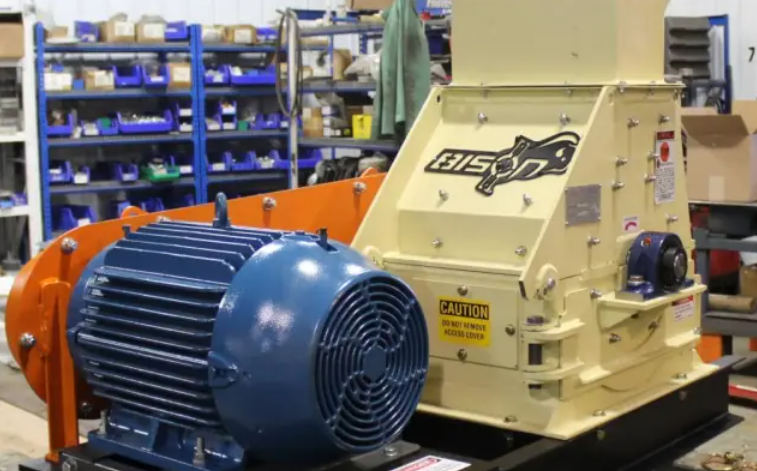
A hammer mill is a mechanical device used for crushing, pulverizing, and grinding materials into smaller, uniform particles. It operates by using high-speed rotating hammers that strike material fed into the chamber, forcing it through a perforated screen for size reduction.
Key features include:
- Rotor with hammers: Can be fixed or swing-type depending on design.
- Grinding chamber: Where size reduction occurs.
- Screens: Control the final particle size.
- Feed mechanism: Determines throughput and efficiency.
Historical Background of Hammer Mills
The concept of hammer-based crushing dates back to ancient civilizations. Stone hammers were used for rudimentary crushing, but the industrial revolution brought mechanization. By the early 20th century, hammer mills had evolved into versatile machines for agriculture (grinding grains) and mining (ore crushing).
Today, with advancements in engineering and metallurgy, modern hammer mills are highly efficient, durable, and customizable — serving industries from pharmaceuticals to construction.
Working Principle of Hammer Mills
The basic operation is straightforward but highly effective:
- Material Feeding: Raw material is fed into the chamber through a hopper or conveyor.
- Impact Action: Rotating hammers strike the material at high speed.
- Shattering & Fracture: The kinetic energy breaks the material into smaller particles.
- Screening: A screen controls the size of particles allowed to exit.
- Discharge: Finished product is collected for use or further processing.
The efficiency of size reduction depends on factors such as hammer design, rotor speed, screen size, and feed rate.
Types of Hammer Mills
Different designs serve specific industries and requirements:
1. Gravity Discharge Hammer Mills
- Simplest type.
- Ideal for grinding grains, biomass, and spices.
- Relies on gravity for product discharge.
2. Full Circle Screen Hammer Mills
- Maximum screen coverage ensures finer output.
- Often used in food processing and animal feed industries.
3. Horizontal In-Feed Hammer Mills
- Designed for grinding longer or irregular materials (e.g., wood pallets).
- Common in recycling and waste reduction.
4. Air-Swept Hammer Mills
- Incorporate airflow for efficient discharge.
- Useful in chemical and pharmaceutical industries.
5. Industrial High-Production Hammer Mills
- Heavy-duty construction.
- Built for mining, minerals, and large-scale industrial operations.
See also: Top Garage Storage System Ideas for Every Home
Applications of Hammer Mills Across Industries
1. Agriculture
- Grinding grains for animal feed.
- Processing biomass for biofuels.
- Milling spices and herbs.
2. Food Industry
- Creating fine powders (flour, sugar, coffee).
- Producing food additives and seasonings.
3. Pharmaceuticals
- Precision size reduction of active ingredients.
- Ensures consistency in dosage and formulation.
4. Mining and Minerals
- Crushing ores and rocks.
- Preparing materials for further processing.
5. Waste Management & Recycling
- Shredding e-waste, plastics, and wood.
- Reducing bulk waste volume for disposal or reuse.
6. Chemical Industry
- Milling pigments, resins, and fertilizers.
- Particle size control in specialty chemicals.
This wide range of uses underscores why hammer mills remain a cornerstone of size reduction technology.
Advantages of Hammer Mills
Hammer mills offer several benefits compared to other milling machines:
- Versatility – Suitable for a broad spectrum of materials.
- Adjustable particle size – By changing screens and hammers.
- High throughput – Can handle large volumes efficiently.
- Durability – Robust construction ensures longevity.
- Ease of maintenance – Simple design with replaceable parts.
- Cost-effectiveness – Lower operating costs compared to other mills.
Limitations of Hammer Mills
While highly effective, hammer mills do have some limitations:
- Heat generation – Can affect heat-sensitive materials.
- Wear and tear – Hammers and screens require periodic replacement.
- Noise and vibration – Require soundproofing in certain environments.
- Energy consumption – High-speed operation may demand significant power.
These limitations can often be mitigated through modern engineering designs, like those available through DP Mills.
Hammer Mills vs. Other Milling Technologies
Hammer Mills vs. Pin Mills
- Hammer mills use impact; pin mills use shear and impact.
- Pin mills are better for ultra-fine powders.
- Hammer mills handle tougher, fibrous materials.
Hammer Mills vs. Jet Mills
- Jet mills use compressed air for ultra-fine grinding.
- Jet mills are ideal for pharmaceuticals requiring very fine particles.
- Hammer mills are more cost-effective for bulk reduction.
Hammer Mills vs. Ball Mills
- Ball mills rely on grinding media and rotational force.
- Hammer mills are faster for large-volume reduction.
- Ball mills are better for uniform, extremely fine powders.
Choosing the right mill depends on material properties and desired outcomes. Consulting experts at dpmills.com helps industries make the right choice.
Designing and Customizing Hammer Mills
Modern hammer mills are not one-size-fits-all. Engineers at companies like DP Mills consider factors such as:
- Rotor design (fixed vs. swing hammers).
- Screen size and configuration.
- Material hardness and abrasiveness.
- Feed method (gravity vs. pneumatic).
- Dust collection systems for clean operations.
Customization ensures efficiency, safety, and cost savings for every application.
Innovations in Hammer Mill Technology
As industries evolve, so does hammer mill technology. Some of the latest innovations include:
- Energy-efficient motors reducing power consumption.
- Wear-resistant alloys for longer hammer and screen life.
- Automation and controls for real-time monitoring.
- Noise reduction systems for compliance with safety standards.
- Integration with air classifiers for precise particle size control.
These innovations keep hammer mills relevant even as alternative milling technologies emerge.
Safety Considerations in Operating Hammer Mills
Proper operation is essential to ensure safety:
- Always use protective gear.
- Keep hands and tools away from moving parts.
- Maintain dust control systems to prevent explosions.
- Regularly inspect for wear and tear.
- Follow manufacturer guidelines strictly.
Adhering to these practices extends machine life and protects operators.
Case Study: Hammer Mills in Sustainable Processing
In recent years, hammer mills have been pivotal in recycling and sustainable practices:
- E-Waste Recycling: Hammer mills break down circuit boards for material recovery.
- Biomass Energy: They grind agricultural waste into feedstock for biofuels.
- Plastic Reuse: They shred plastics for remanufacturing into new products.
These applications demonstrate their importance in achieving sustainability goals.
Choosing the Right Hammer Mill Partner
Selecting the right supplier is as important as choosing the machine itself. Reliable partners provide:
- Expertise in multiple milling technologies.
- Custom engineering solutions.
- After-sales support and maintenance.
- Proven track record in industrial applications.
This is where DP Mills shines. With expertise in hammer mills, jet mills, pin mills, and air classifier mills, they deliver end-to-end solutions for industries requiring precision size reduction. Their website, dpmills.com, offers valuable resources for understanding and sourcing the right milling equipment.
The Future of Hammer Mills
The future looks promising with trends like:
- AI-powered automation for predictive maintenance.
- Green engineering to reduce environmental impact.
- Hybrid designs combining impact and air classification.
- Global adoption in developing markets for agriculture and recycling.
These advancements ensure hammer mills remain central to industrial progress.
Conclusion
Hammer mills have stood the test of time as one of the most reliable and adaptable size reduction machines. From grinding grains to recycling e-waste, their impact spans industries and geographies. With ongoing innovations in design, sustainability, and automation, they continue to play a vital role in global manufacturing and processing.