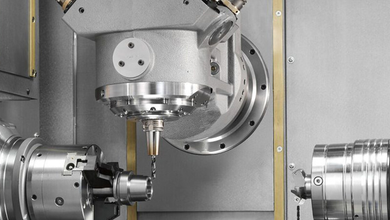
Small CNC routers used to be seen as entry-level tools for hobbyists. That reputation doesn’t hold up anymore. The compact machines hitting the market today aren’t just scaled-down versions of their industrial counterparts. They’re built around different engineering priorities entirely, and that shift is why small-format CNC has become a strategic asset for shops that care about agility, fast iteration, and lower-risk capital spending.
A good way to think about a small CNC router for small businesses is to stop comparing it to a full-size industrial machine on raw horsepower. Their real performance advantage is speed of deployment. A compact router can be installed without major electrical upgrades, runs on standard power, and doesn’t require special ventilation. That means zero downtime while waiting for infrastructure changes. For entrepreneurs and manufacturers and fabricators pushed to accelerate prototyping cycles, the “time to first cut” matters more than the size of the gantry.
They Can Still Deliver Precision
Yes, small routers have lighter frames, but that doesn’t automatically translate into sloppy tolerances. Many modern benchtop units now use ball screws instead of lead screws, closed-loop stepper or servo systems rather than open-loop motors, and spindle mounts engineered to reduce deflection. These choices are deliberate. They’re designed around the reality that small-format CNC often handles high-detail work: electronics housings, fixtures, signage components, packaging prototypes, custom jigs, and even short-run production of consumer goods. In other words, accuracy is a product decision, not a size decision.



Impressive Tooling Performance
The tooling side is where small routers quietly outperform expectations. Since material removal is distributed across smaller passes, heat buildup is easier to manage. That greatly reduces the risk of melting or tear-out in plastics and composites. Shops working with acrylic, HDPE, polycarbonate, carbon fiber, or aluminum composites often see cleaner edges from a small router than from a large machine pushing heavier loads. The lower mass of the machine also simplifies vibration control, which is a major factor in finish quality.
See also: Smart Tech: How to Create a Safer Home Office
Picking the Right Tool
From a business perspective, small routers solve a different set of problems than large ones. They create a lucrative on-ramp for digital fabrication without forcing a six-figure investment. In fact, the desktop (small/compact) CNC-machine market is projected to reach USD 6 billion by 2037 with a compound annual growth rate (CAGR) of approximately 9.5 %.
More importantly, they allow teams to decentralize production tasks. A design team can run a prototype in their own workspace. A packaging engineer can build test fixtures without waiting for the main production machine. A sign shop can dedicate a compact machine to fine engraving instead of tying up its primary router.
There’s also an overlooked strategic benefit: risk isolation. On a large industrial CNC, every job carries an opportunity cost. A setup mistake, tool break, or material issue knocks out a key production resource. With a small router, experiments, tests, and unusual materials can be run safely on a separate machine.
But small routers aren’t a magic bullet. They require careful attention to rigidity, workholding, and tool selection. The shorter Z-axis limits the height of fixtures and stock. And while many compact models can cut aluminum, doing so consistently requires proper lubrication, conservative feeds and speeds, and good fixturing. Treating a small router like a large production machine leads to frustration. Understanding its strengths turns it into a massively flexible tool.
In short, the question isn’t whether a small CNC router can deliver big results. It’s whether you’ll use what it’s best at. When you do, those results are often bigger than expected.