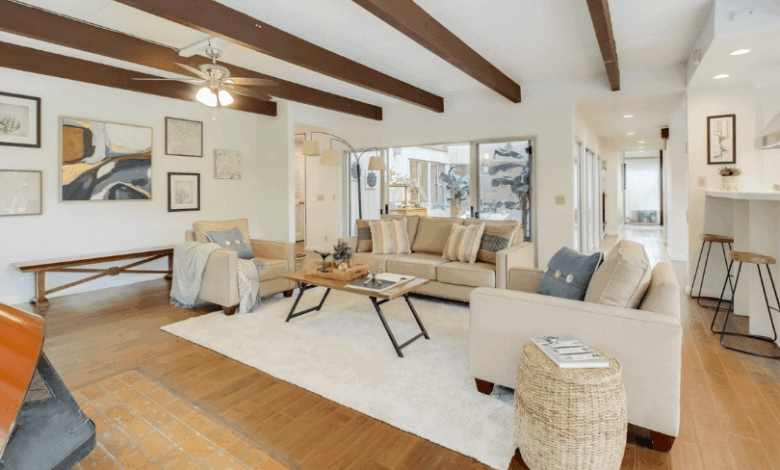
When staging a property for sale, artwork is one of the most powerful tools at your disposal. It can define the atmosphere of a space, guide the buyer’s eye, and transform blank walls into curated, elegant focal points. For interior designers working in high-end real estate, understanding how to place art effectively can make the difference between a listing that lingers and one that inspires immediate interest.
Start with the Entryway
First impressions are everything. The entryway sets the tone for the entire viewing experience, so placing a single striking artwork here can create an immediate emotional response. Choose a piece that complements the architecture without overpowering it. Avoid clutter—this is a moment for simplicity and impact. Position the artwork at eye level, centred if possible, to create a sense of welcome and cohesion.
Use Art to Anchor the Room
Each room should have a visual anchor that draws people in, and art can serve this purpose exceptionally well. In a living room, a large canvas above the sofa brings focus and structure to the seating area. In the dining room, a horizontal piece can elongate the space and enhance symmetry. Always relate the artwork’s size to nearby furniture: the ideal width is usually around two-thirds the width of the furniture it hangs above. For tailored support in achieving this balance, professional services such as hangitup.com.au help ensure rooms feel well-proportioned and professionally styled.




See also: Avoid These Mistakes in Your Next Home Improvement Project
Align the Centre of Art with Eye Level
While a good rule of thumb is to hang art so its centre is around 145 to 155 cm from the floor, this isn’t a hard rule. In rooms with high ceilings or architectural features, adjust the height so the piece sits in harmony with the space. In seating areas, lower the height slightly so it aligns with the viewer’s sightline when seated. Uniform hanging height throughout the home also helps maintain visual flow, especially during viewings.
Create Cohesion Through Colour and Theme
Artwork should support the interior’s design narrative. Choose pieces that echo the property’s palette or enhance its mood. For a beachside home, soft blues and neutrals might enhance the connection to the outdoors. In an urban penthouse, monochrome or abstract works may speak to a modern, sophisticated lifestyle. A well-composed arrangement relies on visual hierarchy to ensure the art integrates seamlessly into the space. Cohesion doesn’t require matching every room—rather, the artwork should feel like part of a considered whole.
Consider the Viewing Distance
When selecting and placing art, consider how close or far a viewer will typically be when they see it. A bold, detailed piece might be perfect for a hallway, where people pass by closely. In contrast, large open-plan living areas benefit from statement works that hold visual weight from across the room. Always test the view from different angles, particularly from entrances and key pathways through the property.
Avoid Overcrowding
Minimalism is key when staging for sale. Too much art can overwhelm a space and distract buyers from architectural features. One large piece is often more effective than several small ones. If using multiple pieces, ensure consistent spacing and alignment. Gallery walls can work in informal spaces like hallways or stairwells, but they must be meticulously arranged—always lay them out on the floor first before installing.
Turning Walls into Selling Points
Art placement is more than aesthetic—it’s strategic. Done well, it brings cohesion, adds emotional depth, and enhances the marketability of a home. For interior designers in the luxury property space, mastering this skill is not just valuable; it’s essential.