Ottawa’s weather can be unpredictable and severe. From fierce thunderstorms and ice storms to heavy snowfall and strong winds, our trees take a serious beating throughout the year. When a storm rolls through and leaves behind broken branches, split trunks, or uprooted trees, knowing exactly what to do — and in what order — can protect your property, your family, and your trees.
This step-by-step guide walks you through everything you need to do after storm damage, from the moment it’s safe to go outside, all the way through cleanup and long-term recovery.
Step 1: Stay Safe — Don’t Rush Outside
Before you do anything else, wait until the storm has completely passed. This seems obvious, but many injuries happen when homeowners venture outside too early. Here’s what to watch for before stepping out:




• Downed power lines near or on trees — always assume they are live and deadly
• Unstable hanging branches (called ‘widow-makers’) that can fall without warning
• Leaning trees or root systems that appear compromised
• Slippery surfaces from ice, wet leaves, or debris
Pro Tip: If you see downed power lines touching any tree or fence on your property, call Ottawa Hydro or Hydro One immediately and keep everyone — including pets — away from the area.
Step 2: Assess the Damage from a Safe Distance
Once it’s safe, do a visual walkthrough of your property to assess the full scope of storm damage. Take photos and notes — these will be useful if you’re filing an insurance claim. Look for:
• Broken, cracked, or hanging branches
• Split or forked trunks
• Uprooted or tilted trees
• Trees that have fallen on structures, fences, or vehicles
• Exposed roots or disturbed soil around the base of trees
Not all storm-damaged trees need to be removed. Some can be saved with proper pruning and care — but that assessment should be made by a qualified arborist, especially for large or mature trees.
Step 3: Call a Professional Tree Service — Don’t DIY Major Damage
We understand the temptation to grab a chainsaw and start cutting. But storm-damaged trees are unpredictable. Branches under tension can spring back violently. Trees leaning on structures can shift suddenly. What looks manageable from the ground can be extremely dangerous once you start working.
A professional tree service Ottawa,Ontario homeowners rely on will have the right equipment, training, and insurance to handle the job safely. Here’s what professionals bring to the table:
• Certified arborists who can properly evaluate tree health and structural integrity
• Heavy equipment for large tree removal and debris hauling
• Liability insurance to protect your property during the work
• The knowledge to identify which trees can be saved and which pose ongoing risks
Step 4: Remove Hazardous Trees and Branches First
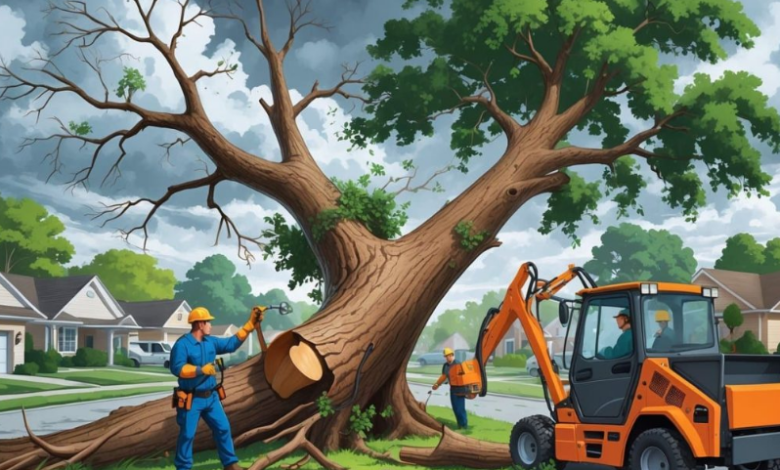
Once professionals are on-site, the first priority is always hazard elimination. This means removing or securing any trees or branches that pose an immediate risk to people or property. Common emergency situations include:
• Trees leaning over your home, garage, or shed
• Large branches hanging over walkways, driveways, or play areas
• Trees with damaged root systems that could topple in the next windstorm
• Split trunks that could suddenly give way
Step 5: Proper Pruning for Damaged but Salvageable Trees
Not every storm-damaged tree is a lost cause. Many trees can recover fully with the right care. If a tree has lost less than 50% of its canopy, it may be a good candidate for recovery pruning. A certified arborist will:
• Remove broken and torn branches cleanly to promote healthy regrowth
• Shape the remaining canopy to reduce wind resistance in future storms
• Treat any exposed wood to reduce vulnerability to disease and pests
• Cable or brace co-dominant stems if the structure can be made safe
Important: Avoid topping trees (cutting off the main leader or large upper branches indiscriminately). While it may look like a quick fix, topping weakens the tree, accelerates decay, and leads to unsafe regrowth. Proper pruning makes a world of difference to a tree’s long-term health.
See also: Cleveland Business Tech Services: Local Expertise, Global Infrastructure
Step 6: Don’t Forget the Stump — Why Tree Stump Removal Matters
After a tree has been removed following storm damage, many homeowners make the mistake of leaving the stump behind. It seems harmless enough — but stumps create more problems than most people realize.
Why leftover stumps are a problem:
• Safety hazard: Stumps are easy to trip over, especially in low light or under leaf cover
• Pest magnet: Rotting stumps attract termites, carpenter ants, and wood-boring beetles that can spread to your home
• New growth: Many trees will send up sprouts from the stump, leading to a cluster of weak, weedy growth
• Lawn damage: Stumps and surface roots make mowing difficult and can damage lawnmower blades
• Property aesthetics: Stumps are eyesores that can reduce curb appeal and even affect property value
Tree stump removal Ottawa homeowners trust is done through a process called stump grinding, where a specialized machine grinds the stump and surface roots down below ground level. The wood chips left behind can be used as mulch or hauled away. The area is then ready to be replanted, sodded, or landscaped.
We recommend handling stump removal at the same time as tree removal to save on mobilization costs and get your yard back to normal faster.
Step 7: Check Your Remaining Trees for Hidden Damage
Storm damage isn’t always visible on the surface. After a major storm, it’s worth having an arborist inspect all the trees on your property — not just the ones that obviously suffered damage. They’ll look for:
• Internal decay or hollow sections that weakened in the storm
• Bark wounds that create entry points for disease
• Root damage from soil movement or flooding
• Structural weaknesses that could fail in the next wind event
Catching these issues early can save a tree — and prevent much more costly emergency work down the road.
Step 8: Contact Your Insurance Company
Storm damage to trees can sometimes be covered under your homeowner’s insurance policy — especially if the tree has fallen on an insured structure like your home or fence. Here are a few tips when filing a claim:
• Document everything before cleanup with photos and video
• Get a written estimate from your tree service company
• Ask your arborist for an assessment letter if needed by your insurer
• Keep all receipts related to emergency tree work
Note that coverage varies by policy. Generally, a tree that falls on your home may be partially covered, while a tree that falls in your yard without hitting anything may not be. Check with your insurer for specifics.
Step 9: Plan for Replanting and Long-Term Tree Health
Once the emergency cleanup is complete, think about the long game. Trees add enormous value to your property — both financially and environmentally. If you’ve lost trees to the storm, consider replanting with species that are better suited to Ottawa’s climate and more resilient to wind and ice:
• Sugar Maple — a beautiful Ottawa staple with strong structural branching
• White Oak — slow-growing but extremely wind-resistant once established
• Eastern White Cedar — great for privacy and very hardy in our winters
• Serviceberry — a smaller ornamental tree that handles our freeze-thaw cycles well
Your arborist can also recommend a regular maintenance schedule — including annual pruning and health inspections — that significantly reduces the risk of major storm damage in the future.
Act Fast — Storm Damage Gets Worse with Time
The longer damaged trees are left unaddressed, the greater the risk to your property — and the harder it becomes to save trees that could otherwise recover. Exposed wood begins to rot. Pests move in quickly. A tree that’s borderline today can become a definite hazard within weeks.
Whether you’re dealing with a single broken branch or an entire tree that came down in last night’s storm, our team is here to help.