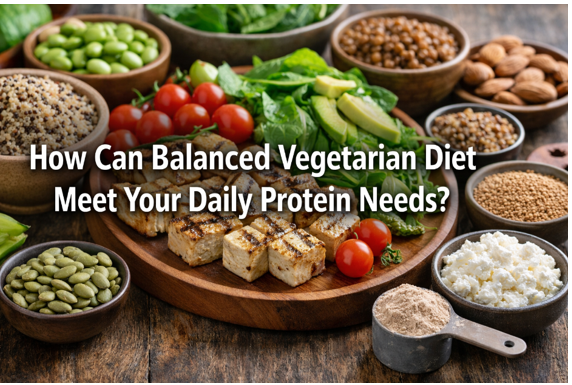
You are interested in eating more meals from plant sources, but one question continually arises: Will you be getting enough protein?
Perhaps you are concerned about losing muscle, not having enough energy, or being hungry too soon. Maybe you have heard that vegetarian diets are incomplete diets and are lacking in essential amino acids. At the same time, you appreciate healthy and clean ingredients, ordered nutrition, as well as meals that help you maintain your performance, weight, or overall health.
Protein confusion is frequently based on outdated assumptions as opposed to nutritional science.




When planned correctly, a vegetarian diet can provide sufficient consumption of protein while helping to fulfill metabolic health goals and body composition goals.
This article outlines how a balanced vegetarian diet can meet your daily protein needs with smart planning, macronutrient awareness, and strategic food combinations.
1. Prioritize Structured Protein Planning Over Guesswork
If you go about vegetarian eating casually, you may have protein gaps. However, if you outline your consumption in a well-thought-out way, your meals can be satisfying and nutritionally sound. A carefully planned healthy meal 健康餐 built around plant protein sources ensures that you achieve the goals for getting enough calories while avoiding unnecessary caloric and processed ingredients.
First, know what your daily protein requirement is. Most adults require about 0.8 grams of protein per kilogram of their weight. However, if you exercise on a regular basis, want to lose fat, or are trying to maintain lean muscle mass, that number rises to 1.2-1.6 grams per kg.
The next thing to do is spread out the protein throughout the day. Instead of concentrating it in one meal, you should aim for 20-30 grams in one meal. This method is more beneficial to muscle protein synthesis than one large serving.
In addition to this, construct each plate intentionally. Anchor your meals around legumes, tofu, tempeh, lentils, dairy (if included), or high-protein grains. Then fill in around that base with vegetables, whole grains, and healthy fats. As a result, your diet is balanced and not carb-heavy.
When structure is substituted for guesswork, protein adequacy can become possible and predictable.
2. Combine Plant Proteins Strategically for Complete Amino Acid Coverage
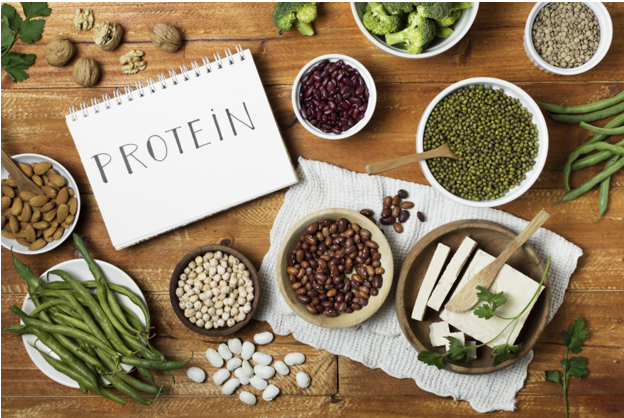
Protein quality is dependent on amino acid composition. While many plant proteins have lower amounts of one or more of the essential amino acids, combining complementary sources helps to overcome this problem in a very efficient way.
See also: How Family Support Enhances Mental Health Treatment Success
For example:
- Legumes are usually deficient in methionine but high in lysine.
- Grains contain methionine but are low in lysine.
- Nuts and seeds provide additional amino acid diversity.
When combining food groups, for example, the amino acid level is more complete with rice beans, lentils, quinoa, or hummus, and whole-grain bread. Importantly, these combinations do not have to occur in the same bite. Having complementary proteins throughout the day is sufficient.
In addition, soy-based foods such as tofu, tempeh, and edamame contain complete proteins. Greek yogurt and cottage cheese, included in your vegetarian plan, have complete amino acid profiles of high bioavailability.
Therefore, instead of thinking of “complete vs. incomplete,” think of dietary diversity. The variety naturally leads to a better balance of amino acids.
3. Utilize High-Protein Plant Foods as Daily Staples
Although vegetables do provide protein, they are not really your main source of protein. Instead, depend on concentrated plant protein foods in order to meet targets on a consistent basis.
Here are effective options:
Legumes and Pulses
- Lentils (18g protein per cooked cup)
- Chickpeas (14-15g per cup)
- Black beans (15g per cup)
Soy Products
- Tofu (15-20g per serving)
- Tempeh (20g per serving)
- Edamame (17g per cup)
Dairy (if included)
- Greek yogurt (15-20g per serving)
- Cottage cheese (20-25g per cup)
Whole Grains
- Quinoa (8g per cup)
- Buckwheat
- Farro
Nuts and Seeds
- Chia seeds
- Hemp seeds
- Almonds
- Pumpkin seeds
To maximize results, at least one primary protein source should be included in every meal. For example, add tofu to salads, lentils to soups, or Greek yogurt to breakfast bowls.
Furthermore, pay attention to portion sizing. Protein gaps frequently occur from the underestimation of serving sizes. In order to know how much protein you are really eating, measure once in a while.
Consistency is more important than occasionally high-protein days.
4. Align Protein Intake With Your Health Goals
Protein requirements vary depending on what you are trying to achieve. Therefore, your vegetarian diet should go hand in hand with your objective.
For Weight Management:
Increased protein consumption leads to increased satiety and contributes to appetite hormone regulation. As a result, you are less likely to consume totally refined carbs in excess. Incorporating legumes, tofu, and high-protein dairy can stabilize blood sugar and reduce cravings.
For Maintenance of Muscles or Athletic Performance:
As long as protein intake is adequate and evenly spread, plant-based athletes are able to thrive. Focus on post-workout meals that provide 25-30 grams of protein, when combined with soy products or dairy and whole grains for glycogen replenishment.
For General Wellness and Longevity:
Balanced protein intakes promote immune function, enzymes, and cell repair. Pair moderate protein levels with fiber-rich vegetables and healthy fats for metabolic balance.
Instead of following a vegetarian template, particular to your lifestyle, tailor the ratio of macronutrients according to your lifestyle. Precision improves outcomes.
5. Pay Attention to Bioavailability and Digestibility
Quantity alone does not determine effectiveness. Digestibility and absorption also influence protein utilization.
Plant proteins contain fiber and anti-nutrients that may slightly reduce absorption. However, simple preparation methods improve bioavailability:
- Soaking beans before cooking
- Sprouting legumes
- Fermenting soy into tempeh
- Cooking rather than consuming raw pulses
These techniques enhance digestibility and nutrient uptake.
Additionally, spreading protein intake across meals improves absorption efficiency. Extremely high doses at one sitting may not translate into proportional muscle synthesis.
If necessary, high-quality plant protein powders (such as pea or soy protein isolate) can supplement whole foods, especially for individuals with elevated protein requirements. Nevertheless, whole foods should remain the foundation.
When digestion is optimized, protein utilization improves.
Final Thoughts
A balanced vegetarian diet can meet your daily protein needs when approached strategically and implemented with consistent daily discipline. The key lies in structure, variety, portion awareness, and goal alignment.
Instead of focusing on what is missing, focus on what you can build: diverse plant proteins, balanced macronutrients, and meals designed with intention. When protein is distributed properly, combined intelligently, and supported by whole ingredients, vegetarian nutrition becomes both effective and sustainable over the long term.
With careful planning and consistency, your plant-based diet can support strength, satiety, and long-term metabolic health without compromise while maintaining culinary variety and nutritional precision.