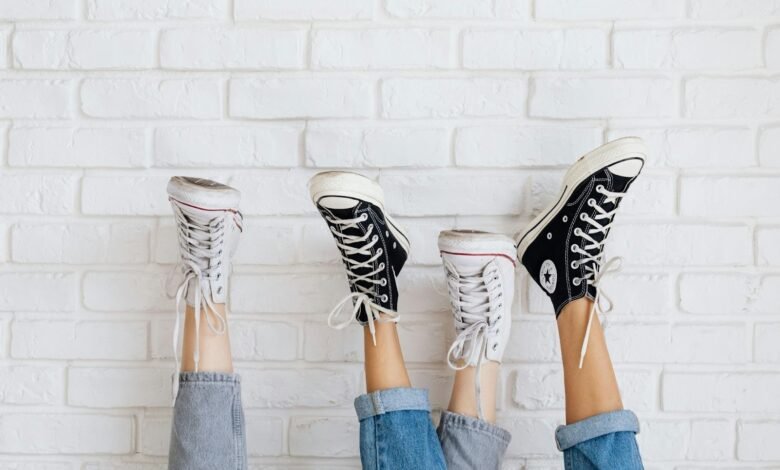
Most sneakers promise comfort but deliver a padded cage for your feet. High-top minimalist sneakers flip the script. They give your feet room to breathe, flex, and actually work the way nature intended — all while keeping your ankles covered.
Think of it this way. A single foot houses 26 bones, 33 joints, and well over 100 muscles — all working together. Traditional shoes treat all of that like it doesn’t matter. Minimalist high-tops respect the architecture. And once you try them, going back feels like stuffing your feet into cardboard boxes.
This article breaks down ten real benefits of making the switch. No hype. Just facts — and maybe a few reasons to rethink your shoe rack.



How High-Top Minimalist Sneakers Support Natural Foot Movement
Your foot was built to move. It bends, grips, twists, and adapts to terrain with every step. Conventional footwear blocks most of that with stiff soles and narrow toe boxes.
Minimalist sneakers strip away the interference. A thin, flexible sole lets your foot roll through its full range of motion. A wide toe box gives your toes space to splay and push off naturally. That matters more than most people realise.
When your toes can spread, your foot distributes pressure more evenly. Your gait becomes more efficient. You stop fighting your shoes and start moving with them. It’s the difference between typing with gloves on and typing with bare hands — suddenly everything just clicks.
Ankle Stability and Protection Without the Extra Bulk
The first worry most people raise — will my ankles pay the price? Fair question. That’s exactly where the high-top design earns its keep.
The extended collar wraps around your ankle joint, providing a layer of support without restricting movement. You’re not getting a rigid brace. You’re getting a gentle reminder that keeps your ankle aligned during lateral movements, uneven surfaces, and quick direction changes.
It’s protection that doesn’t come at the cost of freedom. Heavy boots lock your ankle in place. High-top minimalist sneakers let it move — just within a safer range. For hikers, casual athletes, and everyday walkers, that’s a winning combination.
Why Minimalist High-Tops Help Improve Posture and Balance
Bad posture rarely starts at the spine. It starts at the ground. Thick-soled shoes elevate your heel, tilt your pelvis forward, and throw your whole chain out of alignment. You’ve been compensating for your footwear your entire life — you just didn’t know it.
Minimalist sneakers use a zero-drop or near-zero-drop sole. That means your heel and forefoot sit at the same height. Your body stacks properly: ankles over feet, hips over ankles, shoulders over hips.
Balance improves, too. Feeling the terrain under your feet speeds up your body’s reaction time. Proprioception — your brain’s awareness of where your body is in space — sharpens with every step. If you’re looking for high-top barefoot shoes that deliver these benefits, the options have grown significantly in recent years.
See also: Learn Life-Saving Skills with Professional Training
Foot and Leg Strength Gains From Wearing Minimalist Sneakers Daily
Traditional shoes do the work for you. Arch support props up your foot. Cushioning absorbs impact before your muscles can respond. Over time, those muscles weaken from disuse. If your foot muscles never have to work, they won’t bother staying strong.
Switching to minimalist sneakers is like taking your feet to the gym. Here are the key strengths:
- Intrinsic foot muscles activate with every step, rebuilding arches that years of support have softened
- Calf muscles and Achilles tendons adapt to a more natural loading pattern
- Shin splints decrease as lower leg muscles strengthen and balance out
- Toe grip strength improves, which directly affects stability and athletic performance
- Knee and hip alignment corrects as the entire kinetic chain relearns proper mechanics
Don’t expect overnight results. Foot strength builds gradually, like any other training. But within a few months, most people notice their feet feel more capable and resilient than they have in years.
High-Top Minimalist Sneakers for All-Day Comfort and Versatile Style
Comfort and style don’t have to be enemies. High-top minimalist sneakers look sharp enough for a coffee run, a casual Friday at the office, or a weekend trail walk. They pull double duty without breaking a sweat.
The lightweight construction means your feet won’t feel drained by evening. No clunky soles dragging you down. No pinched toes screaming for relief at 3 PM. Just clean lines, breathable materials, and a fit that lets your foot do its thing.
They pair well with joggers, jeans, or chinos. The high-top silhouette adds visual interest without looking bulky. Form meeting function — that’s the sweet spot.
Who Should Wear High-Top Minimalist Sneakers — and When to Start
Almost anyone can benefit from minimalist footwear. But the transition matters.
If you’ve spent decades in cushioned shoes, your feet need time to adjust. Start by wearing them for short walks — thirty minutes to an hour. Gradually increase wear time over several weeks. Rushing the process invites sore calves and achy arches.
People who stand all day, walk regularly, or deal with chronic foot fatigue are strong candidates. So are runners looking to correct form issues, and athletes wanting better ground feel. If you have existing foot conditions like plantar fasciitis, consult a podiatrist before making the switch.
Kids and teens benefit too. Their feet are still developing, and minimalist shoes let that development happen without interference. Starting young means building a foundation of natural foot strength from the ground up — literally.
High-Top Minimalist Sneakers — A Smarter Step for Healthier Feet
Your feet carry you everywhere. They deserve better than being stuffed into overbuilt shoes that do more harm than good.
High-top minimalist sneakers offer real, measurable advantages: stronger feet, better posture, improved balance, and all-day comfort wrapped in a versatile design. The high-top cut adds ankle coverage without sacrificing the freedom your feet crave.
The shift to minimalist footwear isn’t a trend. It’s a correction. And once your feet remember what they were built to do, you’ll wonder why you waited so long.
Frequently Asked Questions
Are high-top minimalist sneakers good for flat feet?
Often, yes. Flat arches usually mean lazy foot muscles. Minimalist sneakers wake them up. Go slow, though — Rome wasn’t built in one walk.
Can I run in high-top minimalist sneakers?
Sure, but don’t sprint a marathon on day one. They’re great for short runs and cross-training. Your calves will have opinions initially.
How long does it take to adjust to minimalist sneakers?
Give it four to eight weeks. Your feet have been on vacation for years. Returning to work takes time. Soreness is normal; sharp pain isn’t.
Do high-top minimalist sneakers work for wide feet?
Wide feet and minimalist shoes are basically soulmates. The roomy toe box lets toes spread freely — no more sardine-can situations with conventional sizing.
Are minimalist sneakers suitable for older adults?
Yes, with patience. Better balance and ground feel are huge wins at any age. Start indoors, go slow, and maybe loop in your doctor.