How Event Organizers Use Portable Stage Systems to Create Professional Concert Stage Setups

Live events have evolved significantly over the past several decades. Audiences now expect high production values whether they are attending a music festival, community concert, university event, corporate gathering, or cultural celebration. At the same time, organizers face increasing pressure to manage budgets, streamline logistics, and adapt to diverse venues. These demands have led many event professionals to adopt flexible staging solutions that can be transported, assembled, and reconfigured efficiently while still delivering the polished appearance audiences expect.
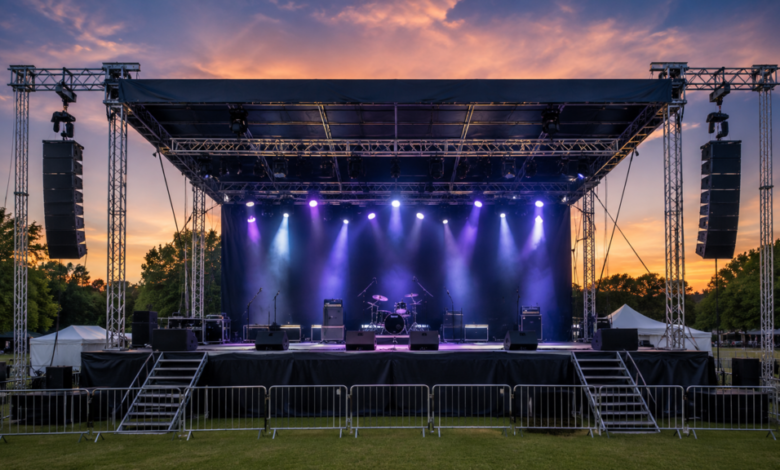
One of the most common approaches involves using a portable stage system to create a professional concert stage environment. Rather than relying exclusively on permanent installations or custom-built structures, organizers can utilize modular platforms that provide flexibility, scalability, and cost control. However, selecting and implementing the right staging solution requires careful consideration of numerous factors, including safety, audience experience, transportation requirements, venue constraints, and long-term operational goals.
Understanding how event planners balance these competing priorities can help organizations make informed decisions when investing in staging equipment or planning future events.



The Growing Need for Flexible Staging Solutions
Modern events occur in a wide range of environments. A performance may take place in a city park one weekend, a university auditorium the next, and a convention center shortly afterward. Each location presents unique requirements regarding space, accessibility, load capacity, and audience size.
Traditional fixed installations can provide stability and a professional appearance, but they often lack the flexibility needed for organizations that host events in multiple locations. Modular staging systems offer an alternative by allowing event teams to configure platforms according to specific venue requirements.
This adaptability has become increasingly important as organizers seek to maximize the use of their equipment. Instead of purchasing separate structures for different event types, many organizations prefer systems that can accommodate multiple applications, ranging from musical performances and speaking engagements to graduations and community celebrations.
The result is greater operational efficiency and a broader range of event possibilities.
Creating a Professional Appearance
Audience expectations play a major role in staging decisions. Regardless of event size, attendees often associate visual presentation with professionalism and credibility.
A well-designed performance platform serves as more than just a raised surface. It becomes the focal point of the entire event experience. Proper stage height, clean lines, coordinated skirting, integrated lighting, and organized equipment placement all contribute to a polished appearance.
Event organizers frequently use modular systems to achieve this professional look while maintaining flexibility. Platforms can be arranged into various configurations, allowing planners to customize dimensions and layouts based on performer requirements and venue conditions.
However, creating a professional presentation often involves tradeoffs. Larger structures may enhance visibility and visual impact but can increase setup complexity, transportation costs, and labor requirements. Smaller configurations may reduce expenses but could limit audience engagement and performer flexibility.
Finding the appropriate balance depends on the goals and scale of the event.
Balancing Portability and Structural Performance
One of the primary advantages of modular staging systems is ease of transportation. Lightweight components can often be moved with fewer personnel and less specialized equipment than traditional structures.
Yet portability introduces important considerations regarding durability and load-bearing performance.
Event organizers must evaluate factors such as:
- Expected audience size
- Number of performers
- Audio and lighting equipment weight
- Dynamic movement during performances
- Environmental conditions
A platform designed for speeches or presentations may not provide sufficient support for energetic musical performances involving multiple performers and heavy equipment.
As a result, organizers frequently face a balancing act between mobility and structural strength. Systems built with lighter materials may improve transportation efficiency but may require careful evaluation to ensure they meet performance demands. Heavier-duty systems often provide greater stability but can increase shipping, storage, and setup costs.
The most effective solution depends on the specific needs of each organization and event schedule.
Adapting to Different Venue Types
Venue diversity presents both opportunities and challenges for event planners.
Indoor facilities typically provide controlled environments, stable flooring, and protection from weather-related disruptions. Outdoor locations, however, introduce additional variables that can affect staging decisions.
Uneven terrain, changing weather conditions, wind exposure, and ground stability all influence platform selection and setup procedures. Organizers must often account for environmental factors that may not be relevant in indoor settings.
Modular systems offer flexibility because they can be adjusted to accommodate varying site conditions. Height adjustments, leveling capabilities, and customizable layouts enable event teams to create safe and functional performance areas in diverse environments.
Nevertheless, increased flexibility can require additional planning and expertise. Teams must carefully assess site conditions and follow manufacturer guidelines to ensure proper installation.
Failure to do so can compromise safety and event quality.
The Importance of Audience Experience
Successful events depend heavily on audience satisfaction. Even technically flawless performances can be negatively affected by poor sightlines, inadequate accessibility, or overcrowded viewing areas.
Staging decisions directly influence how attendees experience an event.
Height is a particularly important consideration. A platform that is too low may limit visibility for attendees farther from the performance area. Conversely, excessive elevation may create barriers between performers and audiences or introduce additional safety requirements.
Organizers must also consider stage dimensions relative to audience size. Larger crowds often require wider performance areas and enhanced visibility features, while smaller gatherings may benefit from more intimate layouts.
Accessibility represents another critical factor. Event planners increasingly recognize the importance of ensuring that performers, presenters, and support staff can safely access elevated platforms regardless of mobility needs.
Incorporating ramps, guardrails, and accessible pathways contributes to a more inclusive event experience while helping organizations meet applicable regulations and standards.
Managing Setup and Labor Requirements
Labor efficiency is often a major consideration in event planning budgets.
Traditional custom-built structures may require extensive assembly time and larger crews. In contrast, modular systems are frequently designed to simplify installation and reduce labor demands.
Faster setup can provide several benefits:
- Reduced staffing costs
- Shorter venue rental periods
- Greater scheduling flexibility
- Lower operational complexity
However, pursuing maximum speed may involve compromises.
Systems optimized for rapid deployment may offer fewer customization options compared to highly specialized structures. Event organizers must determine whether the benefits of quicker installation outweigh any limitations in design flexibility.
Training also plays an important role. Even user-friendly systems require personnel who understand proper assembly procedures and safety protocols. Organizations that invest in staff training often experience improved efficiency and reduced risk during event preparation.
Safety as a Central Priority
Safety remains one of the most important considerations in any staging decision.
Professional event organizers understand that audience satisfaction and operational efficiency mean little if safety standards are not maintained. Structural failures, improper assembly, and inadequate load management can create serious risks for performers, crew members, and attendees.
Consequently, event planners typically evaluate staging systems based on:
- Load capacity ratings
- Material quality
- Engineering standards
- Stability features
- Compliance with applicable regulations
Safety planning extends beyond the platform itself. Lighting equipment, audio systems, rigging components, and crowd management strategies all contribute to overall event safety.
While organizations may seek cost-effective solutions, prioritizing price over safety can create significant long-term risks. The potential consequences of accidents often far outweigh any short-term savings achieved through lower-cost equipment choices.
Storage and Transportation Considerations
The usefulness of a staging system does not end when an event concludes.
Organizations that host recurring events must consider how equipment will be stored, maintained, and transported between venues.
Modular systems are often attractive because they can be disassembled into manageable components that require less storage space than permanent structures. This can be particularly beneficial for schools, municipalities, event rental companies, and organizations with limited warehouse capacity.
Transportation logistics also affect total ownership costs. Equipment that fits efficiently into available vehicles can reduce transportation expenses and simplify event operations.
However, minimizing storage requirements may require additional assembly time at event sites. Larger preassembled components may accelerate setup but increase transportation challenges.
Once again, organizers must balance competing priorities based on their operational needs.
Cost Versus Long-Term Value
Budget considerations influence nearly every event planning decision.
Many organizations initially focus on acquisition costs when evaluating staging solutions. While upfront expenses are important, experienced planners often examine total cost of ownership instead.
Long-term value may include factors such as:
- Equipment lifespan
- Maintenance requirements
- Transportation costs
- Labor efficiency
- Adaptability across event types
- Replacement part availability
A lower-priced system may appear attractive initially but could require more frequent repairs or replacements. Conversely, a higher-quality solution may deliver greater value over time through improved durability and operational efficiency.
Evaluating both short-term and long-term financial impacts helps organizations make more informed purchasing decisions.
Technology Integration and Modern Expectations
Contemporary events increasingly incorporate sophisticated production technologies.
Lighting systems, LED displays, audio equipment, streaming capabilities, and interactive elements have become common features of many live experiences. Staging systems must often accommodate these technologies without compromising structural integrity or operational efficiency.
Organizers frequently select modular platforms that can support evolving production requirements. This adaptability allows them to enhance event experiences while preserving the flexibility needed for future growth.
The challenge lies in balancing current needs with future possibilities. Overinvesting in capabilities that may never be used can strain budgets, while underinvesting may limit future event opportunities.
Careful planning helps organizations align staging investments with realistic long-term goals.
Sustainability Considerations
Environmental responsibility is becoming an increasingly important factor in event management.
Reusable modular systems can contribute to sustainability efforts by reducing material waste associated with temporary custom-built structures. Equipment that serves multiple event types over many years may also reduce the need for frequent replacements.
Transportation efficiency can further influence environmental impact. Systems that require fewer vehicle trips or less fuel consumption may support broader sustainability objectives.
At the same time, durability remains essential. Equipment that wears out quickly may generate additional waste despite offering certain environmental advantages.
Organizations seeking sustainable event solutions often evaluate the entire lifecycle of staging equipment rather than focusing on a single environmental metric.
Final Thoughts
Professional event production requires far more than simply providing a platform for performers. Organizers must balance appearance, safety, flexibility, logistics, budget considerations, audience experience, and long-term operational goals when selecting staging solutions.
Modular staging systems have become a popular choice because they offer the adaptability needed to support diverse venues and event formats. Their ability to combine mobility, scalability, and professional presentation makes them valuable tools for concerts, festivals, educational events, corporate functions, and community gatherings.
However, no single solution is ideal for every situation. Decisions regarding staging equipment should account for structural requirements, transportation logistics, storage capacity, labor resources, safety standards, and future growth plans.
By carefully evaluating these factors and understanding the tradeoffs involved, event organizers can create professional performance environments that meet audience expectations while supporting efficient and sustainable event operations.