Choosing the right apparel decoration method can make or break your branded merchandise program. Whether you’re outfitting a corporate team, launching a clothing line, or fulfilling custom orders for clients, the decoration method you pick affects your cost, quality, turnaround time, and the types of garments you can work with. Screen printing, embroidery, and DTF transfers each have a real place in the market, but they’re not interchangeable. Knowing the difference helps you make smarter decisions for your brand and your budget.
This guide breaks down all three methods honestly, so you can match the right decoration technique to the right job every time.
Screen Printing: The Industry Standard for High-Volume Orders
Screen printing has been the go-to apparel decoration method for decades, and for good reason. It produces bold, vibrant graphics that hold up wash after wash. The process involves pushing ink through a stenciled mesh screen directly onto the fabric, one color at a time. When done well, the results are sharp, long-lasting, and cost-effective at scale.



The key advantage of screen printing is its cost structure. Setup fees can feel steep for small runs because each color in your design requires a separate screen. But once those screens are made, the per-unit cost drops significantly as your order quantity increases. At 72 or more pieces, screen printing is almost always the most affordable decoration option for t-shirts, hoodies, and other flat-surface garments.
If you’re sourcing blank apparel for a large print run, working with a reliable wholesale supplier matters as much as finding a good printer. Apparel O’Clock carries a wide range of print-ready blanks from brands like Gildan, Bella + Canvas, and Next Level Apparel, all known for smooth fabric surfaces that hold screen print ink cleanly.
When Screen Printing Works Best
Screen printing is the right call when you have a large order (typically 24 or more pieces), a design with limited colors (1 to 6 works best), and flat garments like t-shirts, sweatshirts, or tote bags. It’s widely used for event merchandise, team apparel, band tees, and promotional giveaways. The prints are durable, the colors are saturated, and the per-unit cost is hard to beat at volume.
Where screen printing falls short is with small runs, photorealistic artwork, gradient-heavy designs, or garments with structured surfaces like caps and bags. In those cases, you’ll want to look at the other methods.
Embroidery: The Premium Look for Professional Apparel
Embroidery stitches your design directly into the fabric using thread. The result is a textured, three-dimensional look that reads as professional and high-end. It’s the decoration method of choice for corporate uniforms, polo shirts, caps, jackets, and bags, anywhere you want a logo to look polished and permanent.
Unlike screen printing, embroidery is priced by stitch count rather than color count. A simple left-chest logo with 5,000 to 8,000 stitches is the most common application and one of the most cost-effective. Larger, more detailed designs drive the stitch count up and raise the price, but for standard logo embroidery on polos or outerwear, the cost is very manageable even at smaller quantities.
Embroidery also has excellent durability. The stitching doesn’t crack, fade, or peel the way some prints can over time. For uniform programs where garments go through frequent washing, that longevity is a real advantage.
When Embroidery Is the Right Choice
Choose embroidery when you want a premium, professional finish on structured garments. It’s ideal for polo shirts, corporate jackets, baseball caps, and work uniforms. It works at lower quantities than screen printing; some decorators will run embroidery jobs starting at just 12 pieces. And because the setup is digital (a digitized file rather than physical screens), there are no color-count restrictions, the way there are with screen printing.
The limitation is design complexity. Embroidery doesn’t handle fine details, gradients, or photorealistic images well. It works best with clean, bold logos and simple text. If your artwork is complex or requires precise color matching across large areas, embroidery may not be the right fit.
DTF Transfers: The Flexible Option for Modern Decoration
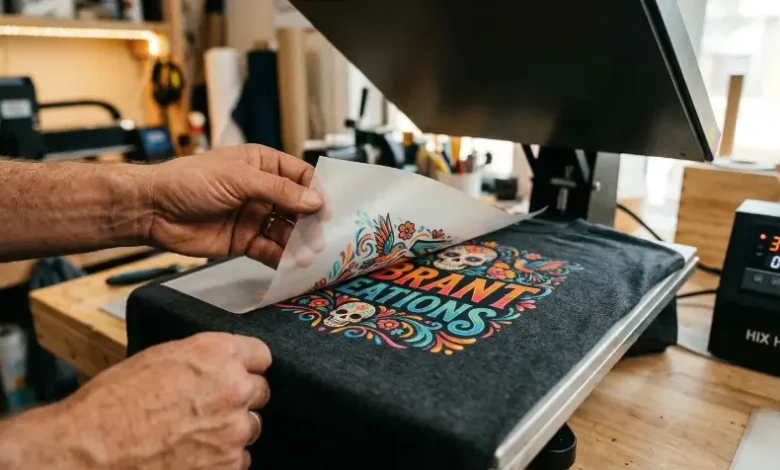
DTF, direct-to-film, is the newest of the three major decoration methods, and it’s grown quickly because of how flexible it is. The process involves printing your artwork onto a special film, applying a powder adhesive, curing it, and then heat-pressing the transfer onto the garment. The result is a full-color, detailed print that works on virtually any fabric type.
What makes DTF stand out is that it has no minimum order requirements, no setup fees per color, and it handles complex artwork beautifully. Gradients, fine lines, photorealistic images, DTF handles all of it without the color limitations of screen printing or the design constraints of embroidery.
For businesses running smaller batches or offering on-demand custom orders, DTF is a game-changer. Suppliers like Wholesale District Apparel offer a variety of blank garments that work seamlessly with DTF decoration, giving businesses a cost-effective way to produce custom apparel without committing to large print runs.
See also: Cleveland Business Tech Services: Local Expertise, Global Infrastructure
When DTF Makes the Most Sense
DTF is best for small to medium runs, one-off custom orders, complex artwork, and situations where you need to decorate different fabric types without switching methods. It’s widely used in the print-on-demand space, by custom merchandise sellers, and by businesses that need fast turnaround on smaller quantities.
The tradeoff is cost at high volume. For large runs of simple designs, screen printing will almost always be more economical than DTF. But for anything under 48 pieces, especially with full-color artwork, DTF is often the smarter choice.
Side-by-Side Comparison: Which Method Fits Your Needs?
Here’s a straightforward way to think about it. If you’re producing 72 or more pieces with a simple, bold design on flat garments, screen printing is your best bet on cost and durability. If you’re decorating polo shirts, jackets, or caps for a corporate uniform program and want a professional look, embroidery is the standard. If you need flexible quantities, full-color artwork, or want to produce smaller custom runs without setup costs, go with DTF.
Many businesses use a combination of all three. A restaurant group might use embroidery on manager polos, screen printing on staff t-shirts, and DTF for limited-run seasonal merchandise. No rule says you have to pick just one.
Final Thoughts on Choosing the Right Decoration Method
Screen printing, embroidery, and DTF are all solid decoration methods when used in the right context. The mistake most brands make is defaulting to one method for everything, or choosing based on what their current decorator offers rather than what the job actually calls for.
Start with the garment type and the order quantity. Then factor in your artwork complexity and your budget. Those three variables will almost always point you to the right decoration method without much guesswork.
And remember, the blank apparel you start with matters just as much as the decoration on top. Choosing quality, print-ready garments from trusted wholesale sources sets up your decorator for success and ensures the final product looks as good as it should.